If the automatic transmission jerks when moving, during slow manoeuvring or after shifting from P to D or R, don't assume a single cause. A light single jerk can result from operating conditions, but repeated knocks, slip, a transmission warning, limp mode, a fluid leak or an overheat message require diagnostics.
The most sensible first step is to check the symptoms, fault codes, leaks and the fluid level and condition.
Does a light jerk from the automatic always indicate a fault?
No, a single light jerk does not necessarily mean a damaged transmission, but it should not be ignored if it recurs or worsens. Automatic transmissions differ in design: torque-converter transmissions behave differently from dual-clutch units, and transmissions with extensive electronic control behave differently again.
Therefore the single symptom “jerks when moving” is too imprecise for a diagnosis.
The timing of the problem matters. Different causes are considered when the car jerks only when cold, when the problem appears after warming up, or when the knock occurs when switching D/R while parking.
It's also important whether the engine revs rise without proportional acceleration, whether the transmission delays shifting, whether there is a smell of overheated oil or a message on the instrument cluster.
When is it safe to drive cautiously and when should you stop?
You can usually drive to a workshop if the jerk is minor, the car accelerates normally, there are no warnings on the dashboard, you don't smell burning and there is no visible leak under the car. In that situation drive gently: avoid harsh pull‑aways, over‑revving and prolonged manoeuvring under load.
— Stop driving if there is a transmission overheat message that does not clear after stopping and allowing the car to cool.
— Do not continue driving if the transmission enters limp mode, locks gears or the car loses the ability to move off smoothly.
— Stop safely if you see a fresh transmission fluid leak under the vehicle or smell clear signs of overheating.
— Prompt diagnostics are indicated when jerking is accompanied by slip, vibrations, delayed response after selecting D/R or a transmission warning.
— Don't try to ‘drive the problem away’ if symptoms worsen after a few minutes of driving or return after each warm‑up.
What can the driver check without tools?
Without tools you can collect information that helps separate guesswork from proper diagnostics. This is not about dismantling the transmission, but calmly observing exactly when the jerk occurs and what accompanies it. The more precise the description, the easier it is to narrow the area to check.
1. Check whether the problem occurs with a cold engine, after warming up, or in both situations.
2. Note whether it jerks on the first pull‑away, during manoeuvring, when shifting from D to R, or also while driving.
3. Inspect where the car was parked and the underside of the vehicle for fresh oil spots.
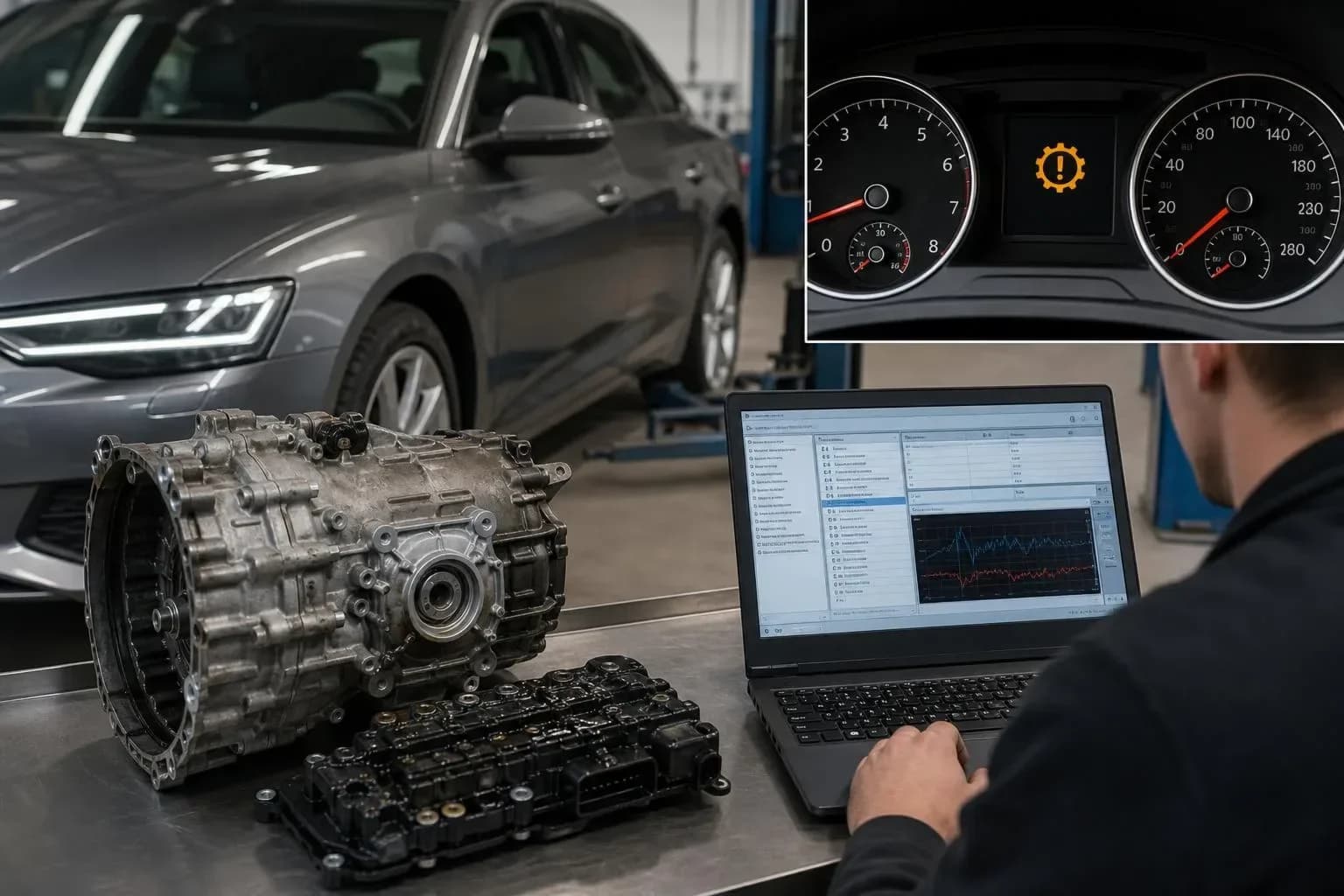
4. Record or photograph messages on the dashboard, especially transmission warnings and limp mode messages.
5. Assess whether the revs rise while the car moves away with delay, as this may indicate slip or a control issue.
6. Do not top up random fluid or clear adaptations without identifying the transmission type and the correct service procedure.
Will changing the transmission fluid fix the jerking?
Changing the fluid can help only if the problem is actually related to the condition, level or handling of the fluid, but it is not a universal fix for jerking. Manufacturers and transmission suppliers stress the importance of the correct fluid, proper level and service procedure.
If the transmission already has stored faults, overheating, worn hydraulic components, clutch issues or mechatronic faults, replacing the fluid alone may not remove the cause.
Therefore before deciding on a fluid service it is worth establishing the transmission type, service history, operating temperature, presence of leaks and any logged faults. In some cases an oil and service maintenance is needed, but carried out according to the correct procedure, not by topping up a random fluid “as a test”.
Why adaptation or clearing fault codes alone is not enough?
Clearing faults or adaptations without finding the cause may only temporarily change the transmission's behaviour. Modern controllers record information about transmission operation, temperatures, slip events, control pressures and electrical faults.
If there are stored DTCs, transmission warnings, vibrations or limp mode, a computer diagnosis combined with assessment of symptoms during vehicle operation is required.
In dual‑clutch transmissions a jerk can be related to clutch operation, the mechatronic unit, software or overheating. In torque‑converter transmissions considerations include fluid level and condition, hydraulic components and the method of engaging gears. These remain lines of investigation, not a definitive diagnosis based on a single symptom.
When are transmission diagnostics the best next step?
Transmission diagnostics are the best next step when the symptom repeats, impedes moving off or occurs together with warnings. In practice it is worth combining fault‑code reading with leak checks, fluid condition assessment, a road test and determining under which conditions the transmission jerks.
The Transmission and drivetrain service is the right course of action when the problem concerns moving off, switching D/R, slip, vibrations or the operation of an automatic transmission.
The summary is simple: not every jerk indicates a serious fault, but it is not worth changing the fluid, clearing adaptations or topping up fluid blindly. If the automatic transmission jerks more often, limp mode appears, an overheat message, a leak or slip occur, limit driving and arrange an inspection.
The earlier the problem is identified, the easier it is to avoid unnecessary, random repairs.