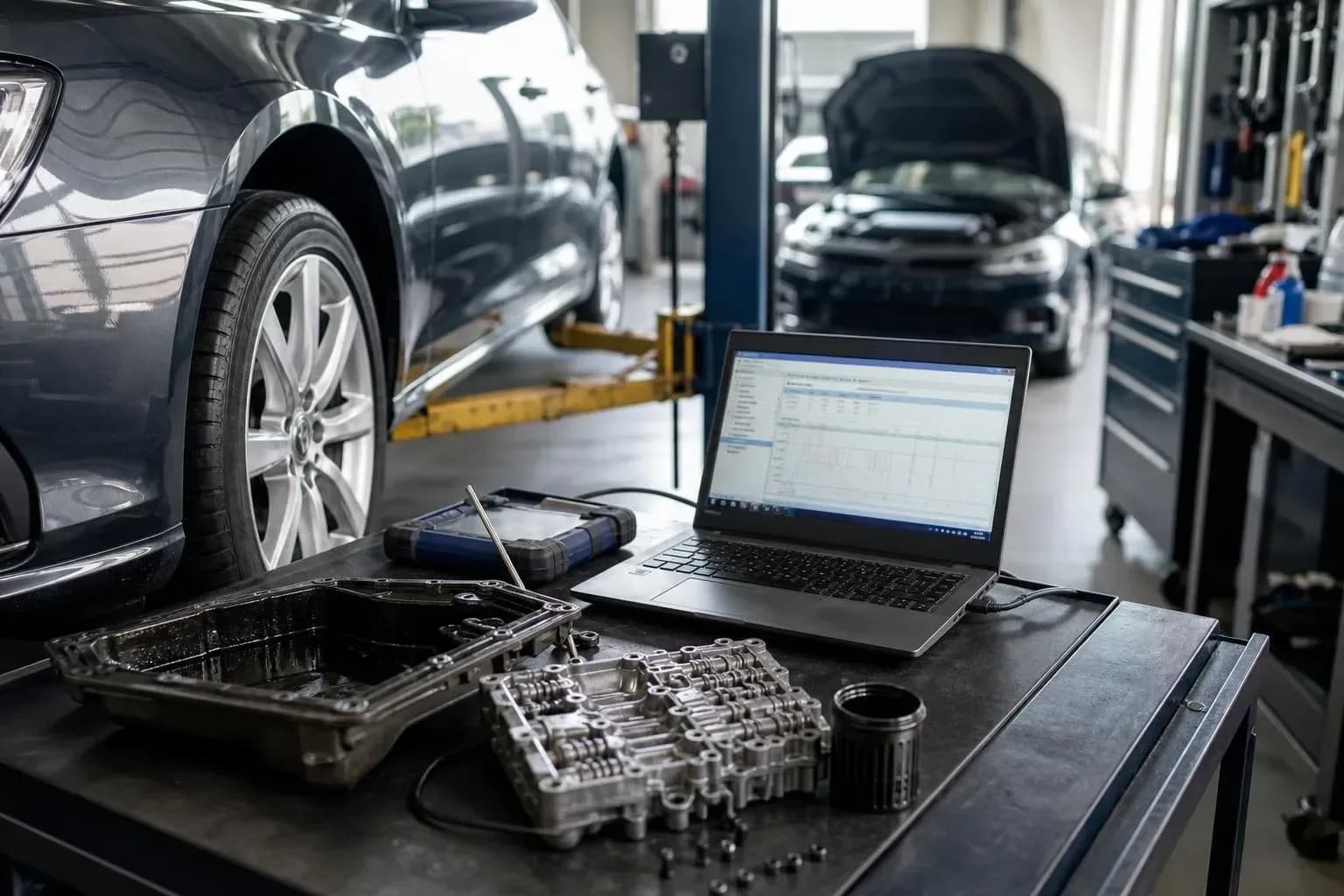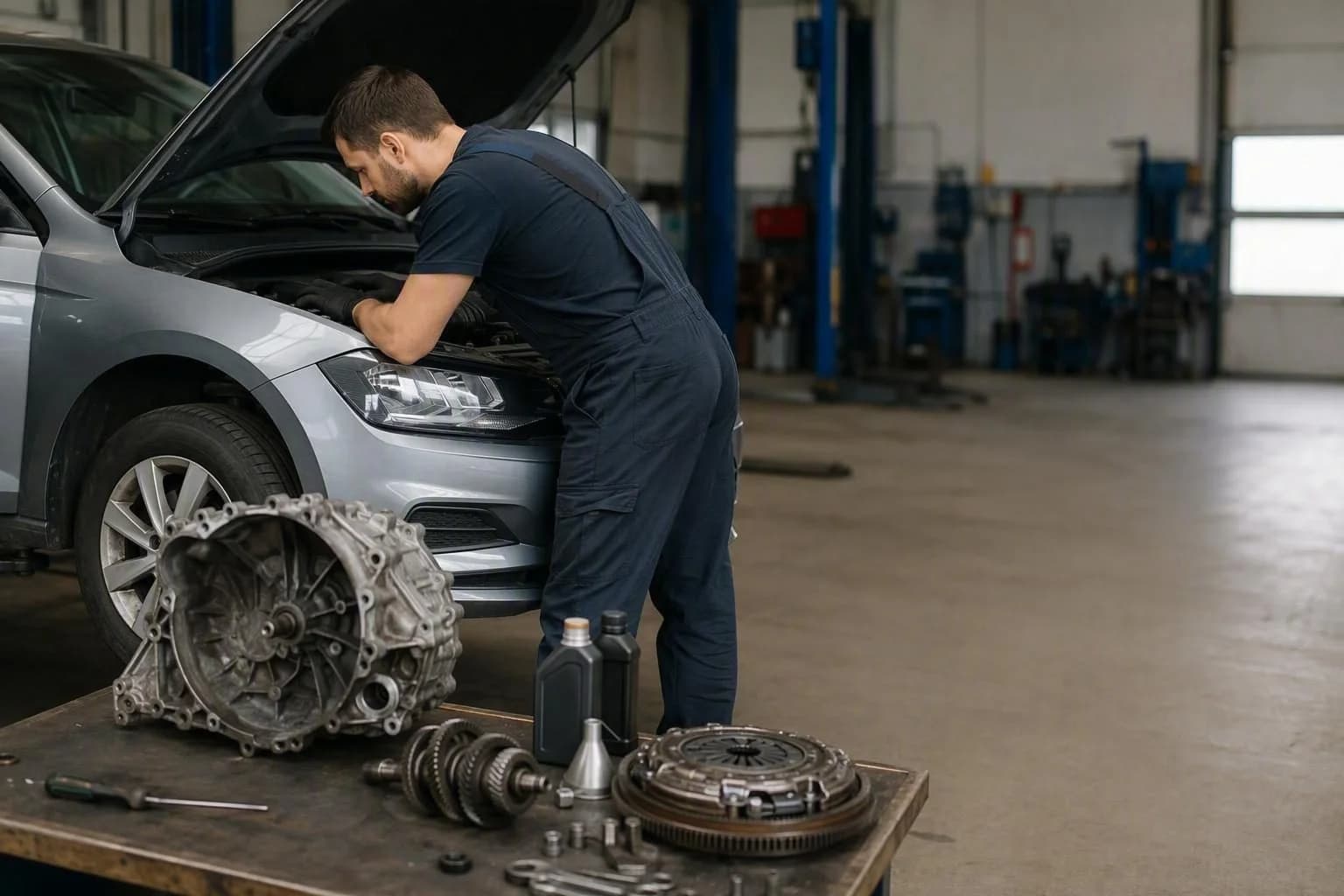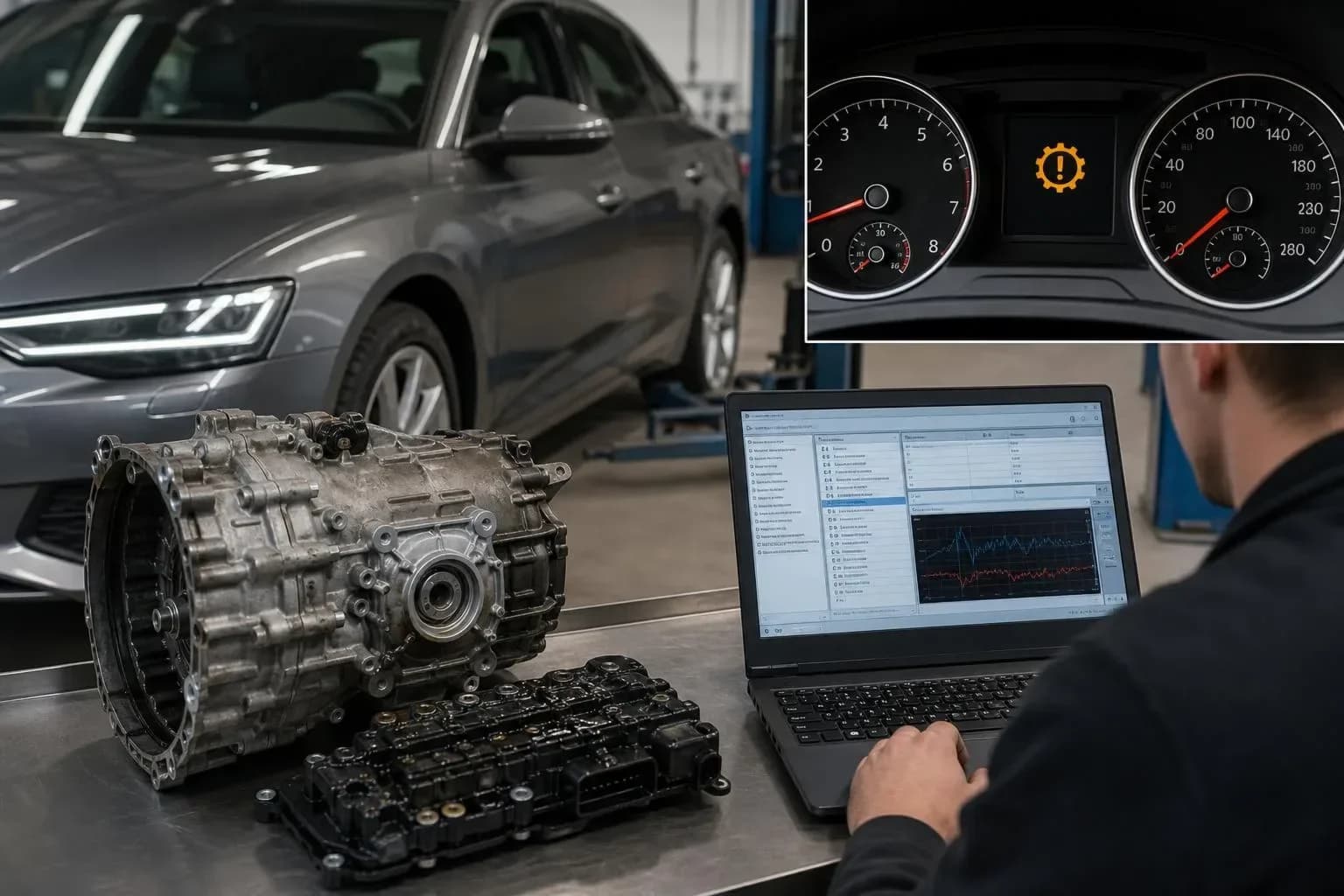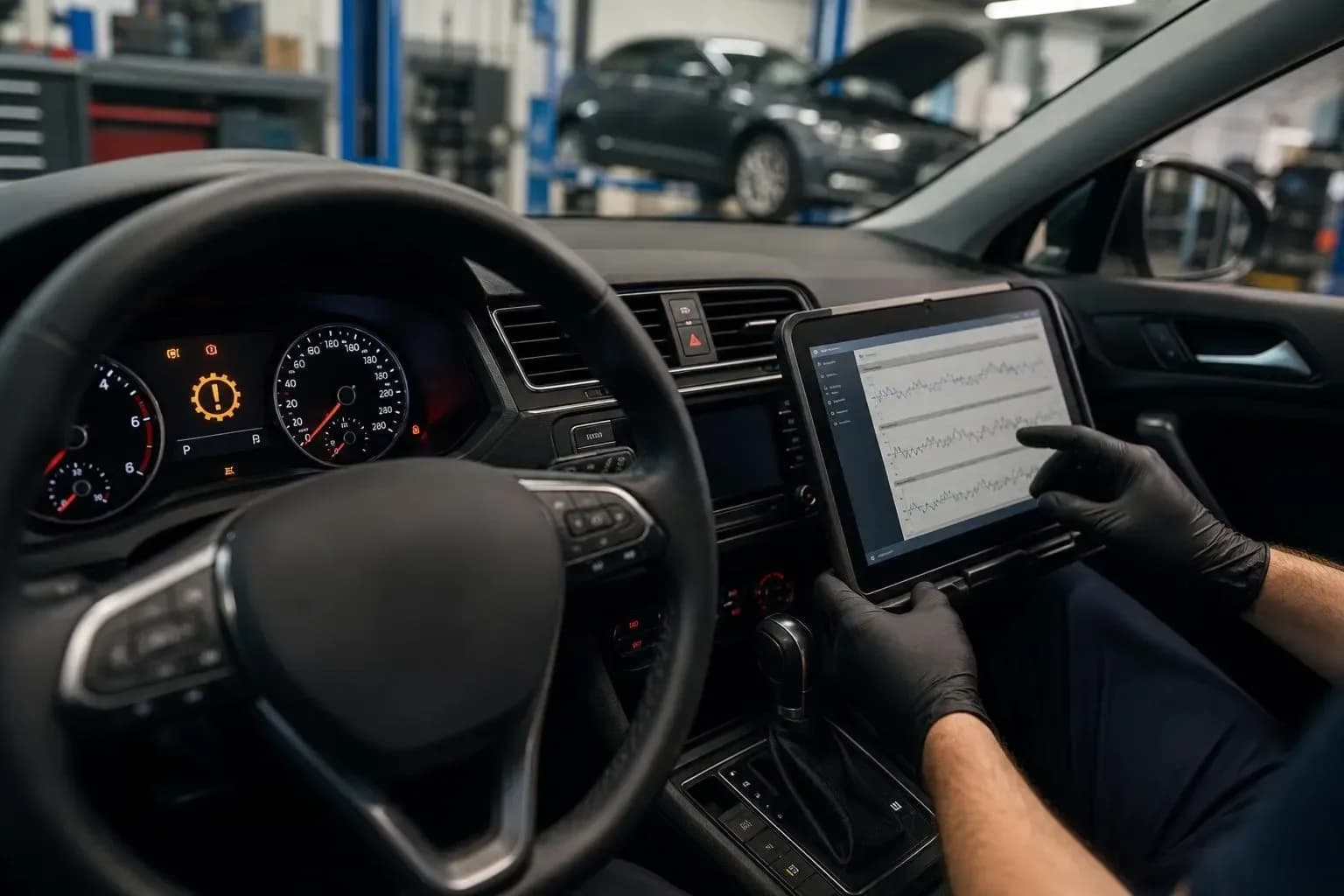
If a DSG or S-tronic jerks on take-off, delays shifts, vibrates when manoeuvring or shows a gearbox warning, don’t assume a single cause. In VAG cars the same symptom can come from oil, clutches, mechatronics, mounts, adaptations or even uneven engine running.
The sensible first step is to establish exactly what the gearbox is doing and in which conditions. A description of the symptom given remotely helps narrow the problem but is not confirmation of a fault. Be especially cautious if the car has no confirmed history of transmission oil changes.
Can you keep driving with a jerking DSG or S-tronic?
A single light jerk in traffic or after a cold start does not always mean an immediate failure. If the transmission operates normally, there are no warnings, it does not slip and the symptom does not worsen, you can monitor the car and plan a check.
Don’t prolong driving if the jerking repeats daily, the transmission bangs in D or R, the car hesitates to move off, revs rise without proportional acceleration or a gearbox warning appears. Then transmission diagnostics are needed, not guesses based solely on the feel at the wheel.
– Stop safely and do not continue driving if the car warns of transmission overheating or recommends stopping.
– Limit further driving when the transmission goes into limp mode, reverse disappears, gears won’t engage or the gear indicator flashes.
– Do not perform hard accelerations or tow a trailer if the transmission has started to slip, jerk under load or makes unusual noises.
– If you see oil leaking from around the transmission under the car, do not assume it is minor. Low oil level can quickly worsen the gearbox’s operation.
Jerking on take-off and during manoeuvres
Jerking on take-off is often most noticeable in a car park, in traffic, when slowly approaching a junction, or after switching from P to D or R. It can involve the clutches, mechatronics control, adaptations, engine and transmission mounts or the way the engine delivers torque at low revs.
In wet and dry versions of DSG the driver’s sensations may be similar, but the causes and inspection procedures do not have to be the same. Therefore a DSG service should begin by identifying the specific gearbox, not by automatically replacing parts.
Delayed shifts, lugging and bangs
If the transmission holds a gear for too long, downshifts late, or bangs when changing from 1 to 2 or from 2 to 3, you need to check both the transmission control and the engine’s operating conditions. Uneven engine running, ignition, injection, intake or torque control issues can be felt as a gearbox fault.
Vibrations, humming and shaking under load
Vibrations during acceleration do not always come from the transmission itself. In VAG cars it’s worth checking the CV joints, half-shafts, dual-mass flywheel, engine and transmission mounts, tyres and the engine/transmission mounting. Such a drivetrain check helps avoid an expensive diagnostic mistake.
Gearbox warning, limp mode and flashing gear indicator
A gearbox warning, limp mode or a flashing gear indicator are signals not to ignore. Causes can be electrical, hydraulic, temperature-related, mechanical or an error in parameter assessment by the control unit. Only reading fault codes and analysing the data can separate these scenarios.
DSG oil change: important, but not always enough
Transmission oil in a DSG or S-tronic is not just a lubricant. In many gearboxes it helps remove heat, transfer loads, support hydraulic operation and carry away contaminants. When it’s worn, contaminated or at an incorrect level, the gearbox may operate worse.
There is no single universal oil-change interval for all DSG and S-tronic units. Model, year, gearbox type, engine version, market and the specific service schedule for the vehicle matter. Wet-clutch units are handled differently than constructions commonly called dry DSGs.
If you don’t have documents, invoices or service entries confirming maintenance, don’t base decisions on the claim that the oil is “lifetime”. In practice you must first determine the gearbox type and check recommendations for the specific vehicle, and only then decide whether transmission oil service is needed.
Important: changing the transmission oil can improve operating conditions but will not fix worn clutches, damaged mechatronics, leaks, wiring problems or uneven engine running. If before the oil change there are heavy shocks, slipping or warnings, computer diagnostics and mechanical inspection are needed first.
If you want to understand the oil decision first, a guide to transmission oil service is helpful, but for DSG/S-tronic it still needs to be related to the specific gearbox version.
What should a workshop check with DSG symptoms?
A good DSG diagnosis is not just erasing the fault or a short drive around the workshop. The symptom must be linked to oil temperature, load, driving mode, service history and engine behaviour.
1. Transmission identification: determine the gearbox type, control version and service requirements for the specific vehicle.
2. Driver interview: when the symptom occurs, whether the transmission is cold or warm, whether the problem appears on take-off, downshifting, reversing or heavy acceleration.
3. Check history: invoices, service entries, mileage, previous repairs, information on whether the transmission oil was changed according to the requirements of that version.
4. ECU diagnostics: transmission, engine and related systems’ fault codes, and frozen data if the control unit recorded it.
5. Analyse live data: transmission operating parameters, oil temperature, clutch behaviour, reaction to load and any adaptation values, depending on the capabilities of the control unit.
6. Check for leaks and external condition: transmission housing, oil cooler area, seals, hoses, mounts and electrical harnesses.
7. Road test: preferably in the conditions where the driver actually feels the problem, observing engine and transmission behaviour.
8. Assess cooperating components: engine and transmission mounts, half-shafts, CV joints, dual-mass flywheel, ignition or fuel injection system and other sources of vibration.
Transmission adaptations can be part of the procedure, but should not be treated as a universal cure. If there is a mechanical fault, leak, worn clutches or an engine problem, adaptation alone may not solve the issue.
What are the risks of ignoring symptoms?
Continuing to drive with increasing jerking can deepen clutch wear, overload the dual-mass flywheel, half-shafts and drive mounts. If the problem concerns overheating or incorrect oil pressure in the transmission, the risk of damage increases faster.
Ignoring warnings can also make later diagnosis more difficult. Some faults are stored with conditions of occurrence, but after a long drive with many symptoms it’s easier to confuse cause and consequence. Therefore it’s better to check the problem when symptoms are just starting to repeat.
Audi, Volkswagen, Skoda, Seat and Cupra: similar logic, different gearbox versions
In the VAG group drivers often use DSG and S-tronic interchangeably, but the specific gearbox can differ in design and service requirements. Audi with S-tronic, Audi with DSG, Volkswagen with DSG, Skoda with DSG and Seat or Cupra with DSG require an approach based on the data for the specific vehicle, not general online opinion.
If the issue concerns a car with the four rings, the appropriate reference point is Audi service and Audi procedures taking into account the specific S-tronic or DSG version. For VW models treat Volkswagen service similarly, because servicing a Volkswagen with DSG also depends on gearbox type, engine and vehicle history.
In the case of a Volkswagen with DSG used mostly on short local trips, symptoms may appear more often during manoeuvring and in traffic. For a Volkswagen with DSG bought without a full history it’s worth first organising documents, mileage and prior repairs, and only then planning service.
How to prepare for a workshop visit?
Before the visit, note when the transmission jerks: when cold or warm, on take-off or downshifting, on light throttle or under load. Also note whether a warning, limp mode, the smell of overheated oil, a leak or unusual noises appeared.
Prepare documents confirming previous service, especially invoices for gearbox oil and filter if they were changed. If the car was recently purchased, take all materials from the previous owner. Lack of history does not determine a fault, but changes the order of service decisions.
Depending on the result, a check, oil service, fixing a leak, verifying engine operation or further inspection of mechatronics and clutches may be sufficient.