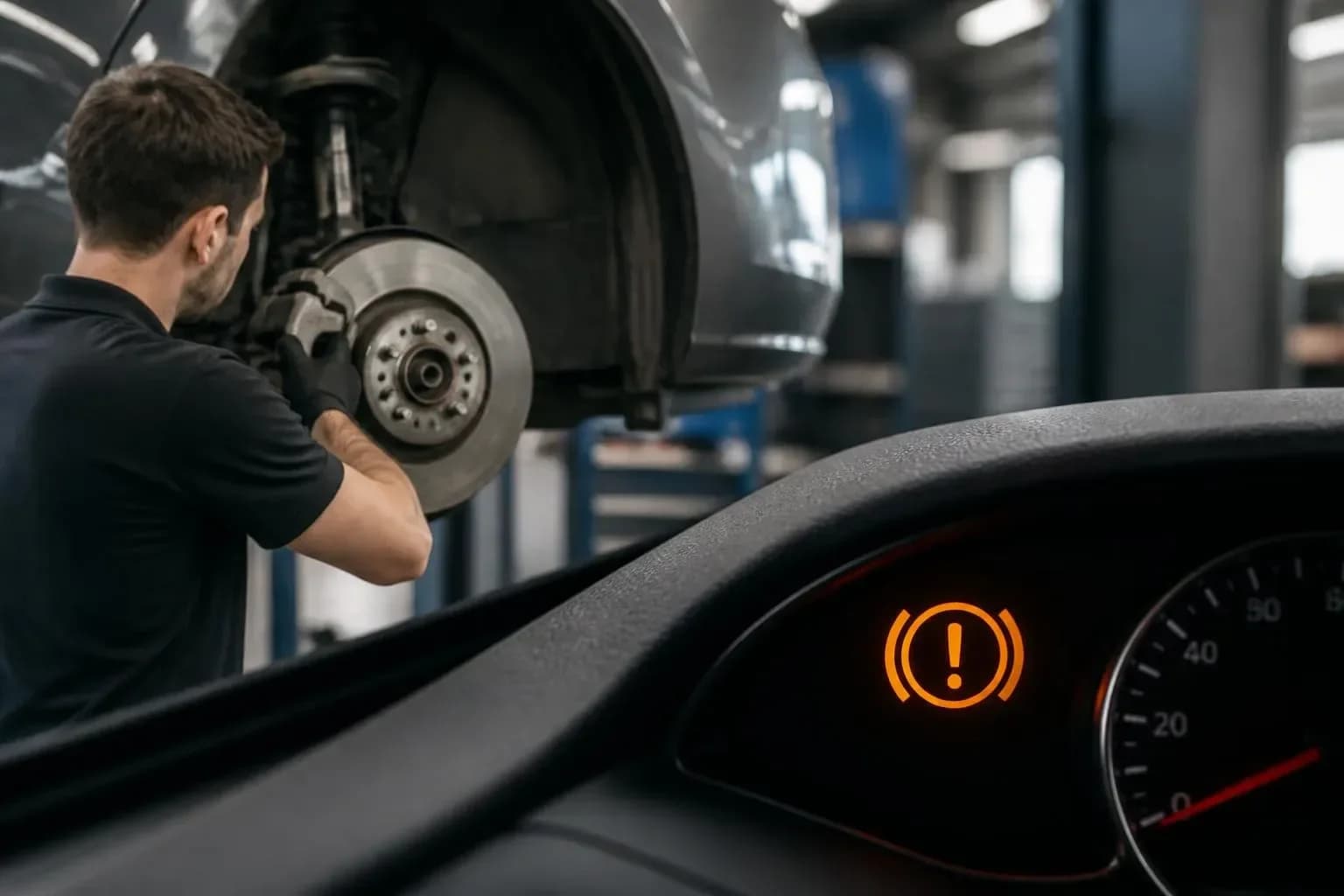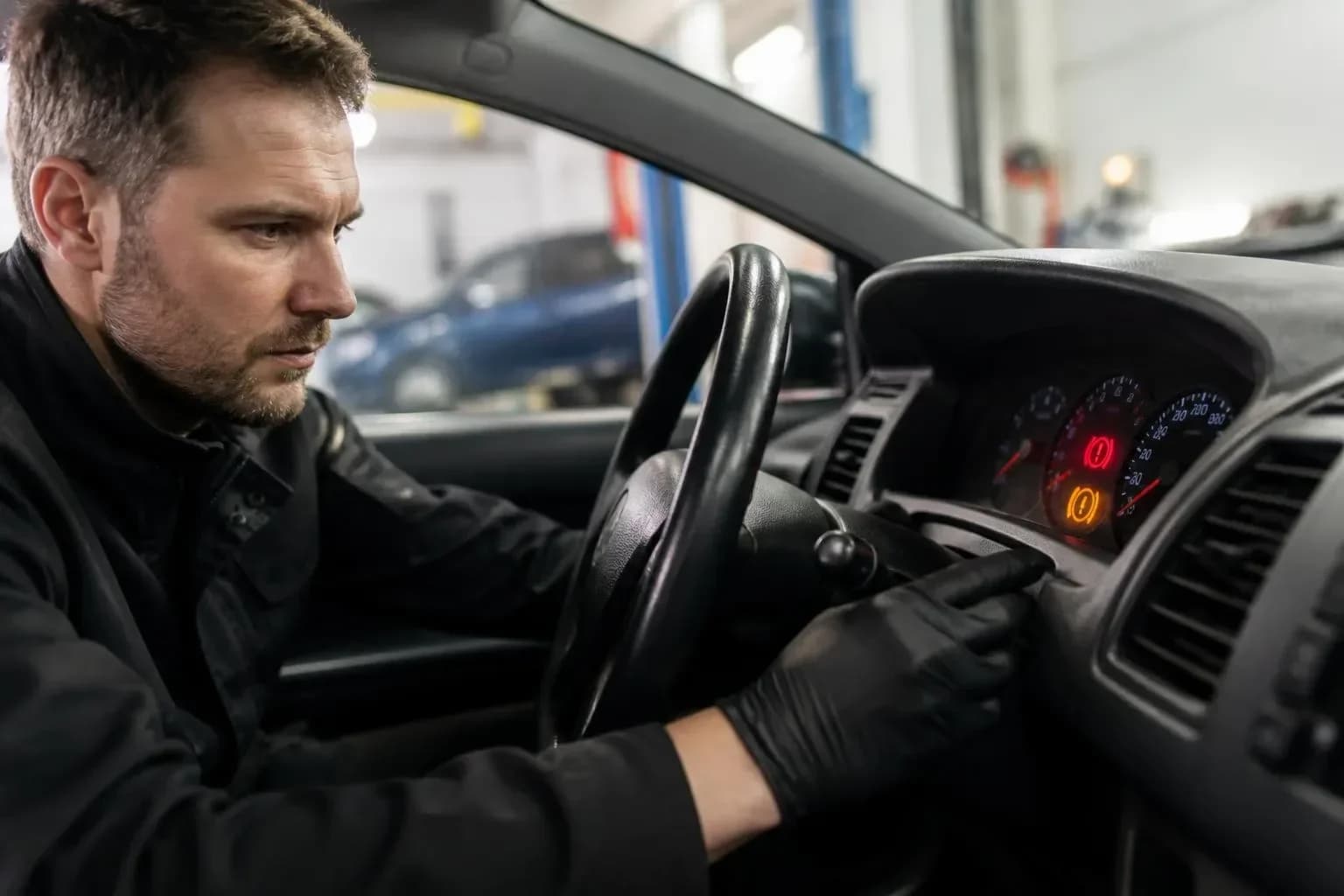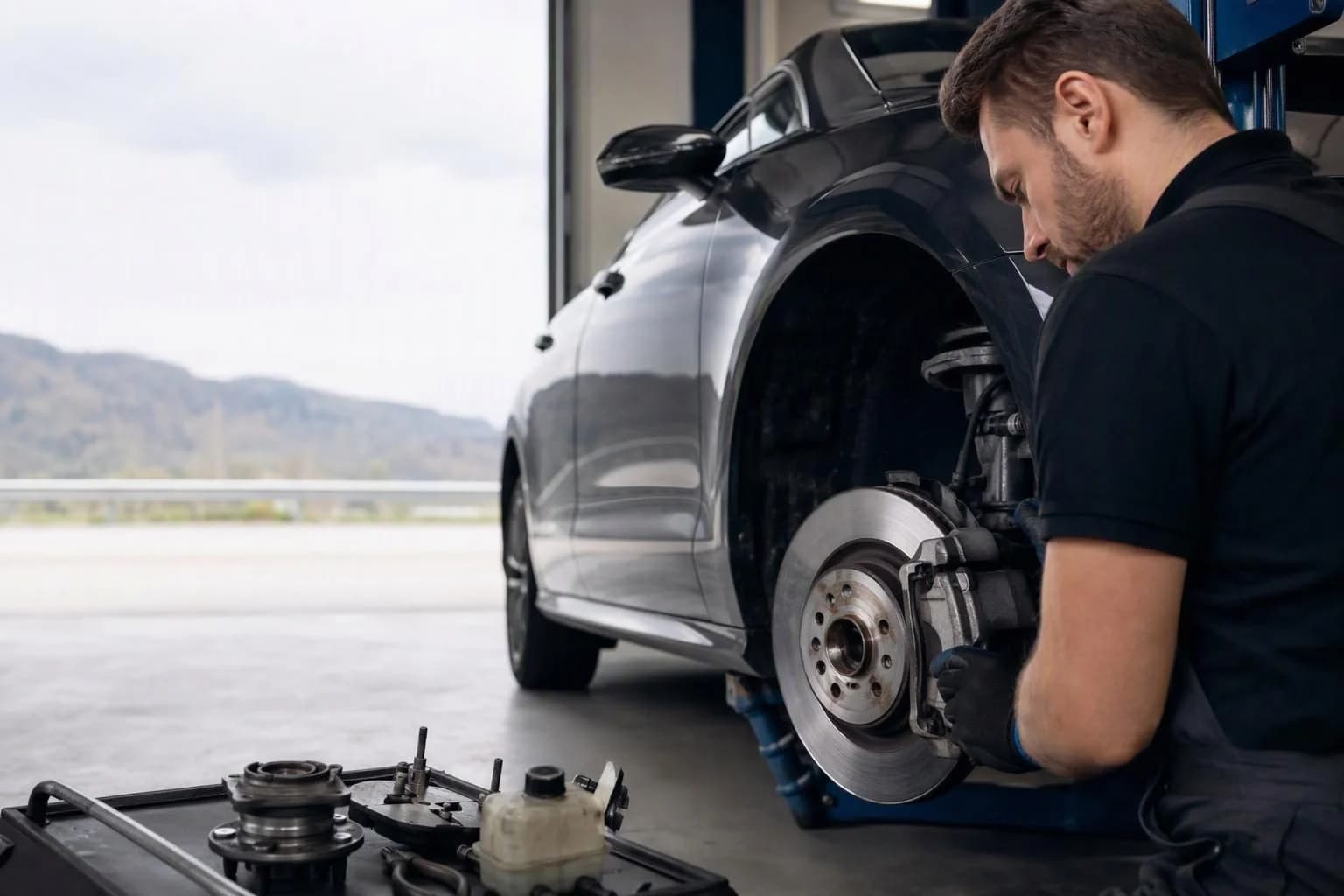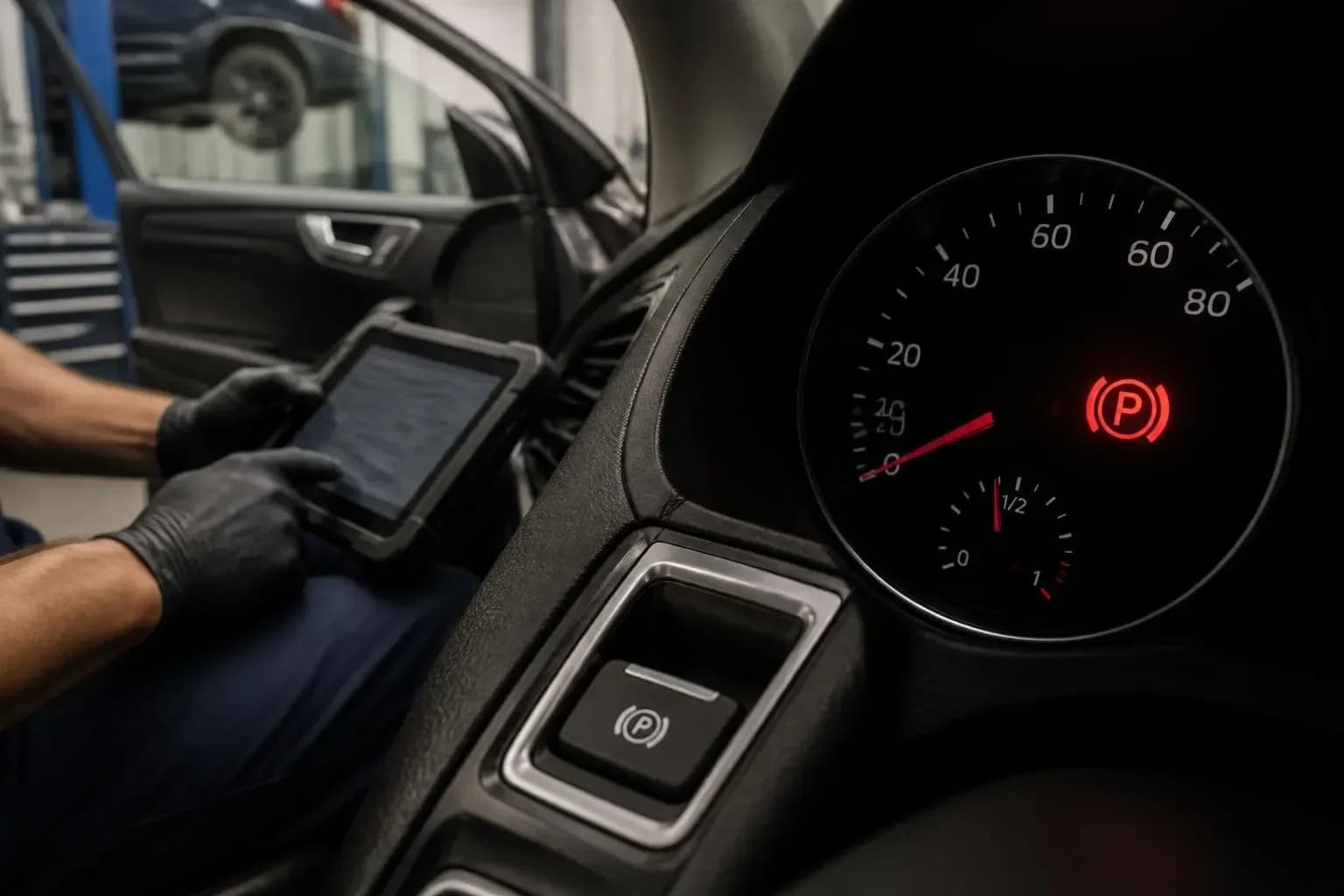
If the handbrake won't hold, sticks or the EPB warning light is on, don't assume a single fault. On cars with an electric parking brake the issue can be the switch, power supply or control unit, or calipers, actuators at the wheels, or the mechanical condition of the brakes.
The key question is whether the car still stands securely when parked and whether the system releases the brake in a predictable way every time. If the EPB works sometimes and not others, or the car won't move after it has been applied, that's a sign the system needs checking rather than just clearing the message.
EPB symptoms to watch for
– the parking brake doesn't hold the car as it used to, especially on a slope
– the EPB warning light is steady, flashing or an error message appears
– the brake releases unevenly, with delay or only partially
– when applying or releasing you hear unusual noises from the wheels area
– the car won't move after the brake is released or you must use an unusually large force
– after an overnight stop one wheel seems to be held
A single episode after frost, a wash or a weak battery doesn't necessarily mean a major repair. If the symptom returns, worsens or is accompanied by other warning lights, assume the fault may be persistent.
Voltage drop or poor power supply
EPB is an electrical system, so it is sensitive to voltage drops. A weak battery, a charging problem or momentary power interruptions can trigger a controller error, incomplete brake release or no response to the switch.
Switch, wiring or control module
Sometimes the issue starts with the switch itself or a signal in the wiring. Then the car may behave inconsistently: the brake works one time and not the next. Without diagnostics you can't reliably tell a faulty switch from a module or wiring error.
Calipers, actuators and mechanics at the wheels
In many cars the EPB operates a mechanism at the rear calipers. If a caliper begins to seize, guide pins move with difficulty or an actuator struggles, the brake may not hold evenly or may not release after driving off.
Wear of brake components
Worn pads, discs, corrosion, seized guides or uneven operation after a long stand can also produce symptoms similar to an electronic fault. Therefore an EPB message alone does not yet prove the module is to blame.
Can you safely drive to a workshop
It depends on the symptoms. If the parking brake operates, releases and the car brakes normally, a cautious drive to the workshop is usually possible. Drive calmly and don't rely on the EPB more than you normally would, especially on steep parking spots.
Do not continue driving if the brake does not release, one wheel is clearly held, there's a smell of overheated brakes, the car has limited ability to move or additional brake-related or power warnings appear on the dash.
In such a case it's better not to risk further damage to a caliper, disc or the wiring. Continuing to drive may also lead to overheating of the brakes and reduced braking effectiveness.
What the driver can check before the visit
1. Check whether the EPB message appears constantly or only briefly after starting the car.
2. Note whether the parking brake holds on flat ground and on a slight incline.
3. Listen for unusual noises at the rear of the car when applying or releasing the brake.
4. Look to see if one wheel shows signs of overheating, a burning smell or noticeably different rolling resistance.
5. If the battery has recently been weak, discharged or replaced, remember that and tell the workshop.
Such checks won't replace a repair, but they help judge whether the problem looks electrical or mechanical. That matters because it determines the scope of diagnostics and whether the car can still be used safely.
What diagnostics usually include
At the workshop diagnostics start with reading fault codes and checking system parameters. A technician can assess the power supply, controller communication, switch operation and the EPB response to open and close commands.
Next the components at the wheels are checked: calipers, actuators, guides, pads, discs and any signs of seizure. If the symptom points to a voltage or communication issue, the wiring and charging system are also inspected.
In practice it's advisable to combine this check with computer diagnostics, because a dash message alone does not identify which component is actually faulty.
Why you shouldn't postpone it
An EPB problem is not only an inconvenience. If the brake doesn't hold, the car may move while parked. If it doesn't release, overheating and accelerated wear of pads, discs or a caliper can occur.
If additional warnings from the braking or power system appear, such as ABS or ESP lights, treat the matter more seriously. The braking system and electronics are often linked, so one fault can trigger multiple messages.
If an EPB symptom is accompanied by voltage drop, unreliable starting or the battery warning light while driving, don't delay checking the charging system. In such cases the issue may be broader than the parking brake alone.
What to do now
If the handbrake doesn't hold reliably, sticks or the EPB warning keeps returning after clearing, arrange a brake system check and electronic diagnostics. That's the fastest way to determine whether it's the power supply, switch, caliper, actuator or another component.
If the symptom repeats or worsens, book a workshop inspection. Before the visit note when the problem occurs, which warning lights illuminate and whether the car's behaviour changes after warming up.