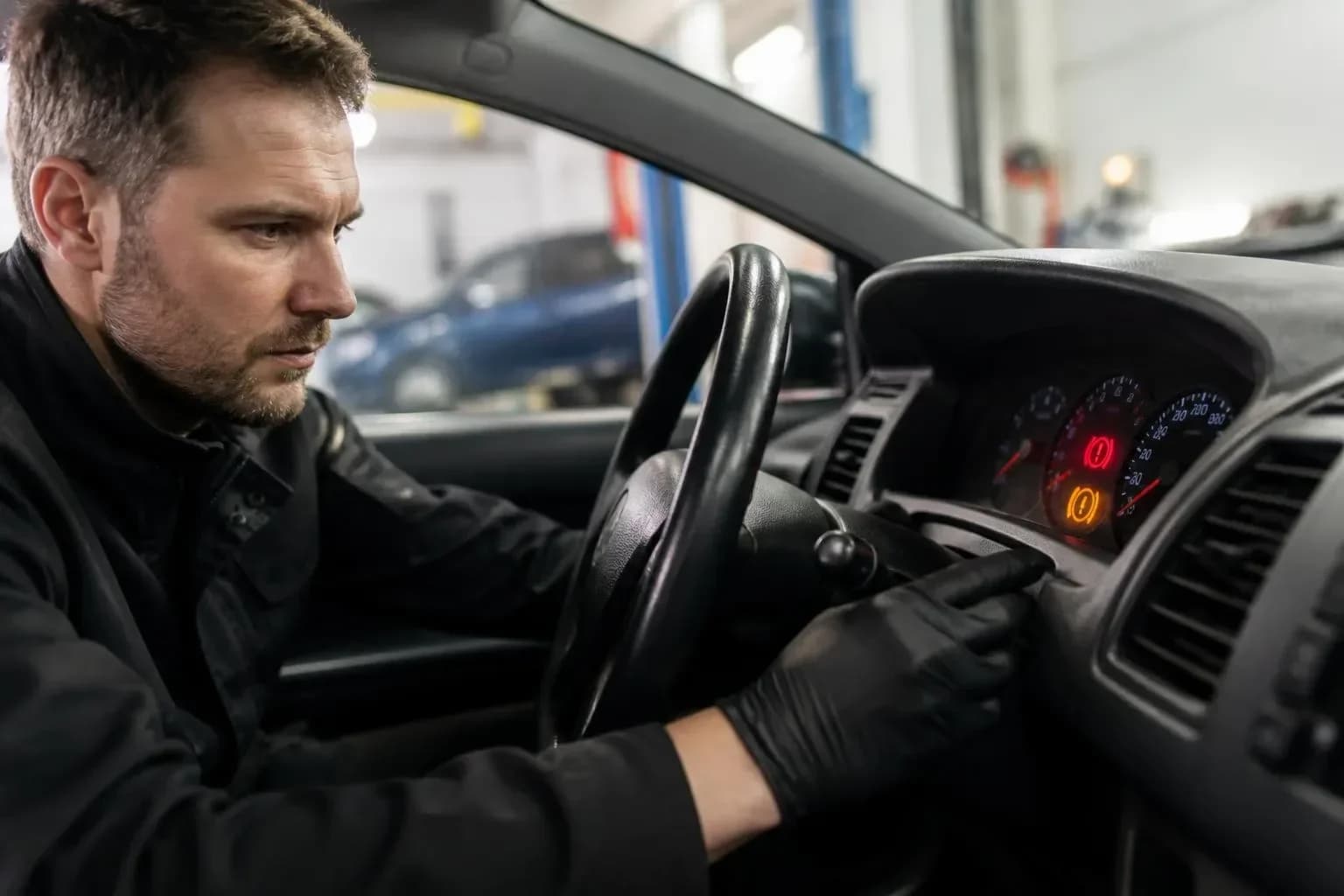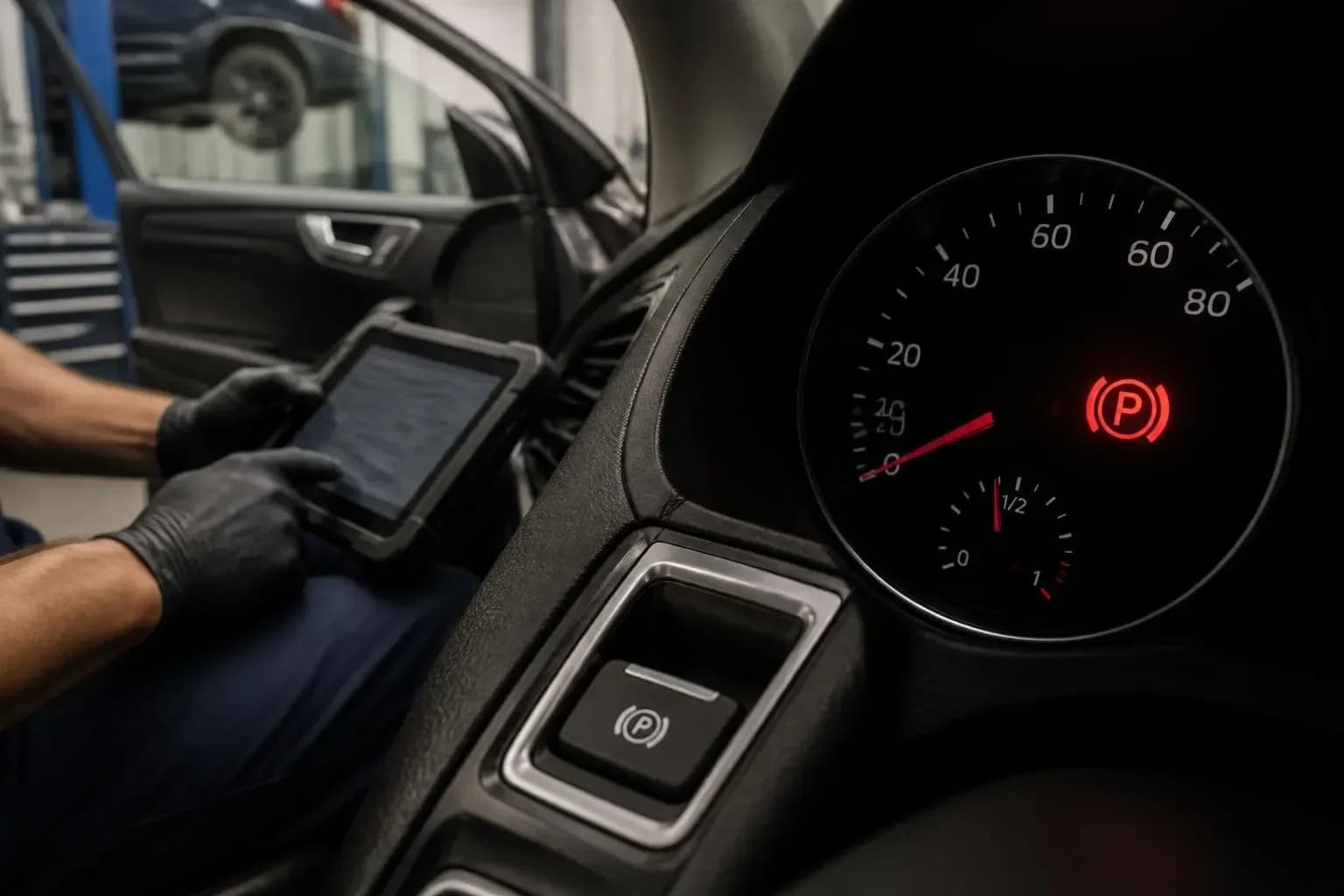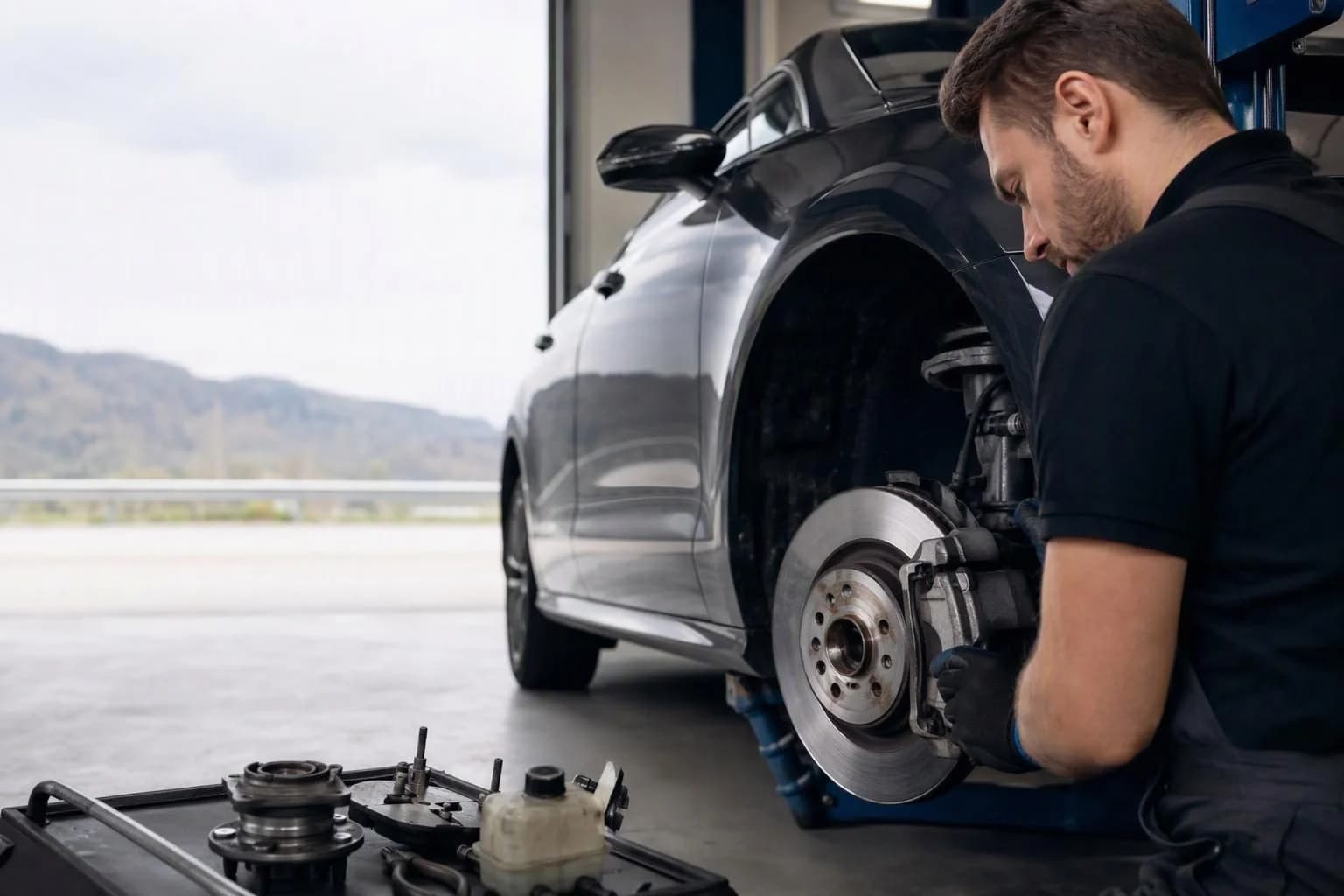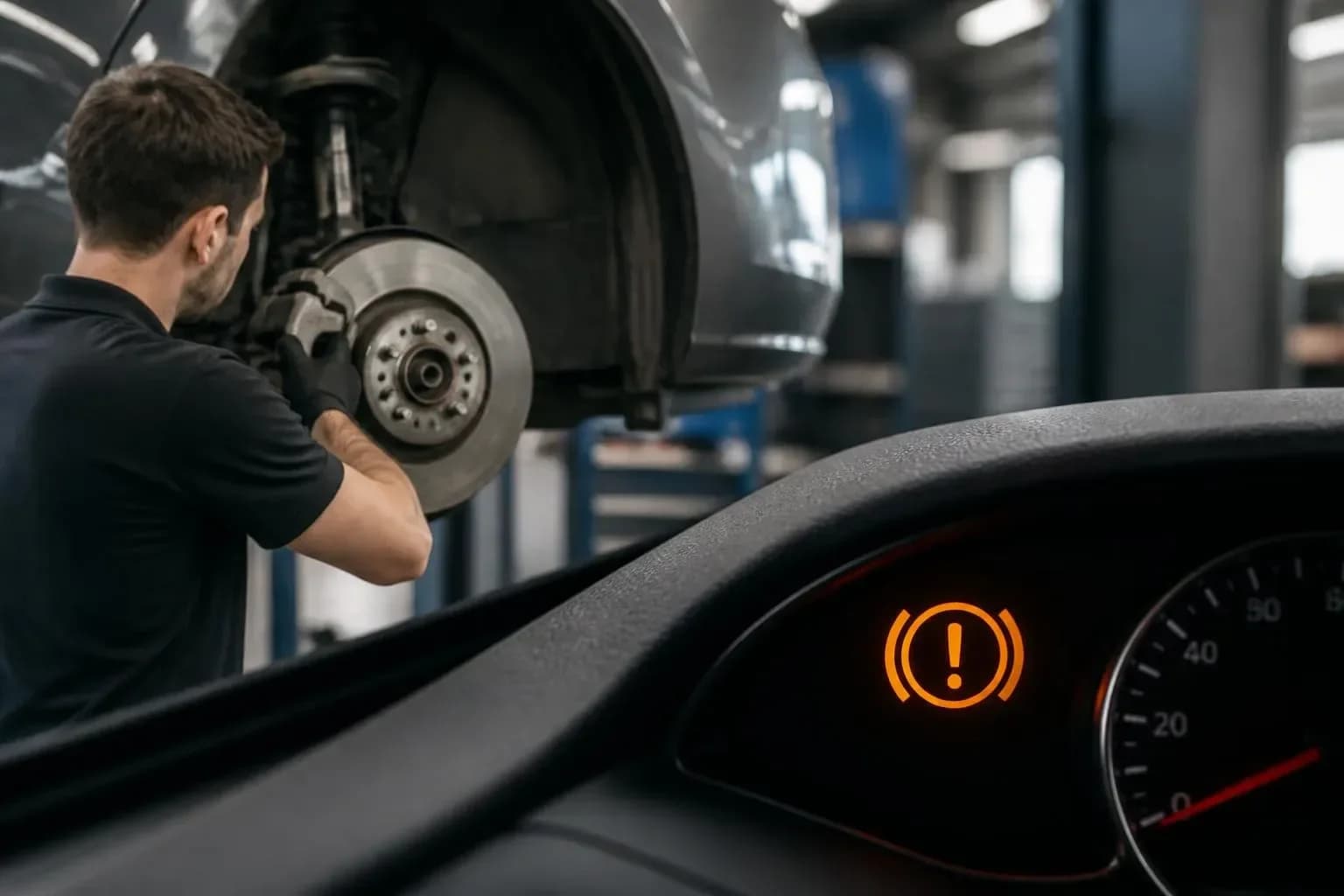
A brake pad wear warning light or a 'service brakes' message usually does not indicate an immediate failure, but signals that the braking system is approaching a service threshold. In practice it is most often worn pads, sometimes a wear sensor, and in some cars a different issue with fluid level, hoses or the warning electronics.
This matters because the warning on the dashboard does not confirm a single fault. In one model the message will mean only that the pad linings are nearing their limit, while in another it may appear together with additional alerts that require caution or stopping the vehicle.
What this message usually means
The most common scenario is simple: a wear sensor has detected that the friction material on a pad is close to the minimum thickness. The manufacturer then gives the driver time to plan a visit before metal contacts the disc.
If the warning appeared suddenly, after washing the car, after heavy rain or after hitting a pothole, there may also be a problem with the sensor wire, connector or the sensing element itself. In that case the message can be a real service signal, but it does not always mean pad wear to the extent the warning suggests.
You can usually drive calmly if
- the message is lit on its own, without other brake warning lights;
- the car brakes evenly and does not pull to one side;
- there is no metallic rubbing or loud grinding noise;
- the brake pedal behaves normally, without sinking or a noticeably longer travel;
- the brake fluid level is within the normal range and there are no fresh leaks.
In this situation it is usually a planned check rather than an immediate immobilisation of the car. It is still advisable to drive gently, avoid hard braking and not postpone the visit for many days.
Stop driving or do not continue if
- the brake fluid warning light or another red brake-related alert is lit alongside the message;
- the pedal is soft, sinks deeply or braking has clearly weakened;
- you hear metal-on-metal friction or a loud screech with every braking;
- the car brakes unevenly, pulls or the pedal vibrates strongly;
- after opening the bonnet you can see a drop in brake fluid level or a fresh leak at a wheel.
In such a case further driving is not sensible, because it is unclear whether the issue concerns only the pads or the effectiveness of the whole system.
Causes other than the pads themselves
The warning light alone does not give a full answer. The most common causes include worn pads, but a technician also considers discs, the condition of guide pins and calipers, the wear sensor wiring and the brake fluid level.
It also happens that a damaged sensor or a broken wire triggers the warning. Then the pads may still have some life left, but the system reports an error that cannot be confirmed without an inspection and data readout.
In cars with more complex electronics a 'service brakes' message may appear together with other warnings. If ABS or ESP is also lit, or the pedal behaves unusually, you should not assume it is only pad wear.
What to check before the workshop visit
Before you go to the garage you can collect a few simple facts. That makes the conversation easier and speeds up the path to a correct diagnosis.
1. Exactly when the message appeared: on engine start-up or while driving.
2. Whether you hear squealing, rubbing or a metallic sound when braking.
3. Whether the car brakes evenly and does not pull to one side.
4. Whether the brake fluid, ABS or ESP warning lights are also on.
5. When the pads, discs and fluid level were last checked.
6. Whether the problem started after rain, washing or driving over potholes.
If possible, do not clear the error blindly and do not assume the message will go away by itself. For brakes it is useful to know what caused the warning before the car returns to normal use.
What diagnostics in the workshop may involve
A visit usually starts with an inspection of the wheels, pads, discs and calipers. Then the brake fluid level, the condition of the hoses and the wear sensors and their wiring are checked.
If the car has stored faults in control units, a computer scan is also helpful. Not to 'clear the light', but to determine whether the system sees real wear, an open circuit in the sensor, or another accompanying fault.
At the same time the mechanic can assess whether the pads are wearing evenly. Uneven wear often points to a caliper, guide pins or discs, not just normal usage.
Why you should not postpone it
Ignoring a pad wear warning can lead to faster disc wear, worse braking performance and higher repair costs. If the sensor warned before symptoms appeared, you have time to stop the process at a planned service stage.
If, however, the underlying issue is a fluid leak, a caliper problem or a faulty sensor, delaying increases the risk that a small problem becomes a bigger one. Therefore a prompt, factual check is sensible instead of guessing.
Does the wear warning always mean immediate replacement?
Not always immediate, but it always means an inspection is needed. In some cars it is still the stage for planning a visit, in others it signals that the pads are very close to the limit and you should not delay.
Can the sensor itself give a false warning?
Yes. A broken wire, moisture in a connector or a damaged sensor can trigger a warning even though the linings are not yet critically worn. That cannot be confirmed without an inspection.
Can you clear the warning and keep driving?
Clearing the message without checking the cause does not solve the problem. If the warning comes from real wear, ignoring it may result in damaged discs and degraded braking.