You approach a junction. You press the brake pedal gently and suddenly hear a characteristic, high-pitched squeal. For a moment you wonder whether it's your car or the vehicle next to you.
A few days later the same thing happens again.
Key information
More often.
Louder.
Naturally, the question arises:
Are the brakes wearing out right now?
Fortunately, the answer is not always “yes”.
Squealing brakes can be entirely normal or the first sign of an impending fault. The key is correctly identifying the cause.
When braking, the pad is pressed against the disc with great force.
Vibrations occur.
If their frequency reaches a certain value, the human ear perceives them as a squeal.
This does not always mean parts are worn.
Sometimes it is enough:
moisture,
a thin layer of rust,
brake dust,
low temperature,
new pads,
sport friction materials.
So don't assume the worst straight away.
Few people know this, but new brake pads very often make a characteristic noise for the first few hundred kilometres.
This is the effect of the bedding-in process of the friction surfaces.
A similar situation occurs after an overnight stop in rainy weather.
A thin film forms on the disc.
After a few braking events it disappears completely.
This is a completely natural phenomenon.
The squeal should catch your attention if:
it occurs with every braking,
it is accompanied by steering-wheel vibrations,
the car's braking distance increases,
the brake pedal changes its behaviour,
metallic rubbing is heard,
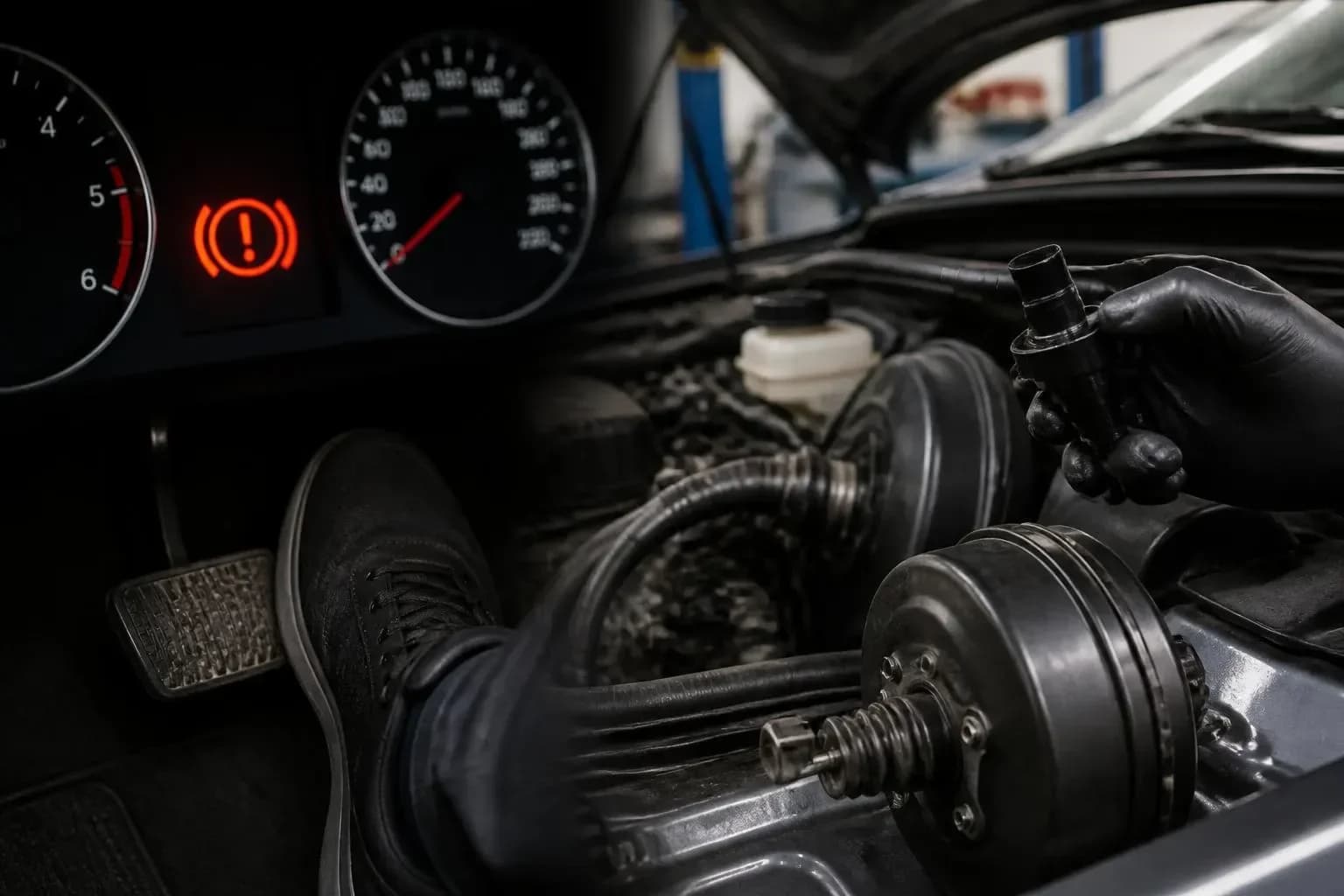
the ABS or brake-system warning light comes on.
In such a situation continuing to drive may be dangerous.
Most often we find:
✅ worn brake pads
✅ overheated discs
✅ unevenly worn discs
✅ seized caliper slide pins
✅ damaged anti-vibration shims
✅ contamination between disc and pad
✅ low-quality aftermarket parts
We never limit ourselves to stating:
“The pads need replacing.”
First we check:
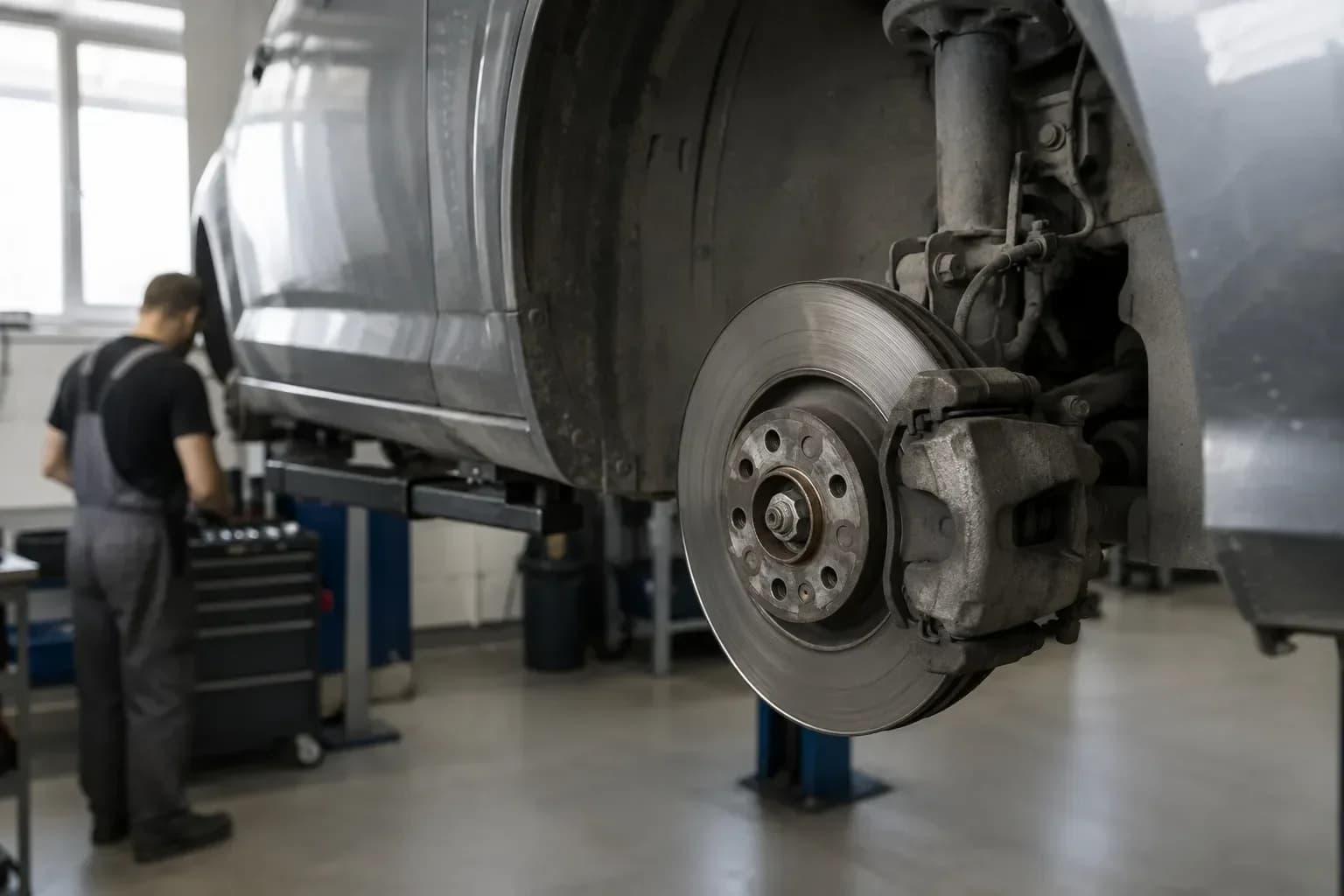
disc thickness,
pad thickness,
evenness of wear,
slide-pin operation,
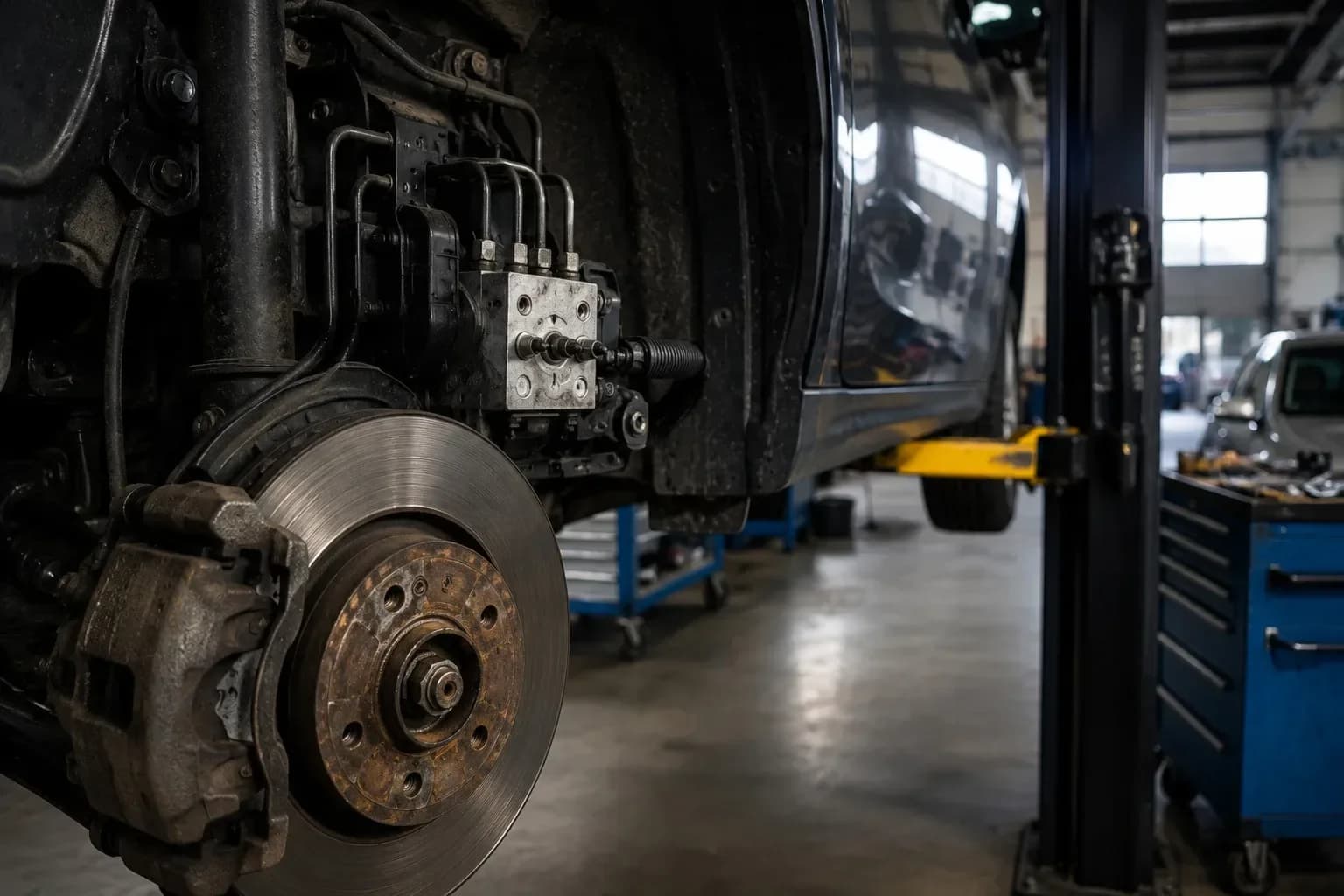
condition of the calipers,
system operating temperature,
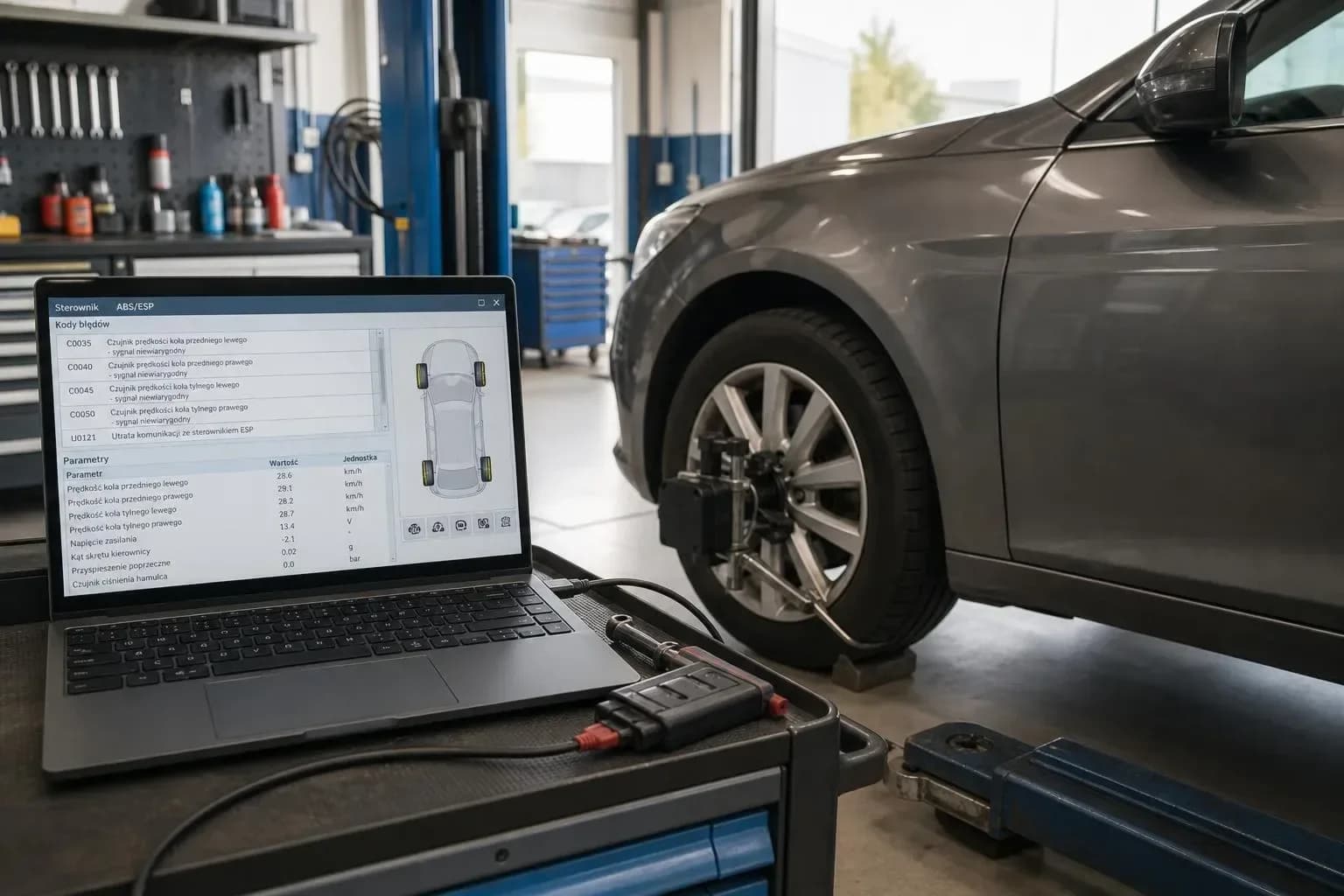
ABS operation,
quality of previous installation.
Thanks to this the customer receives full information about the condition of the braking system and the repair addresses the real cause of the problem.
While driving, the car produced a loud squeal, especially during light braking.
After a thorough inspection it turned out that the pads and discs were in very good condition. The problem was a seized slide pin on one of the calipers. After cleaning, lubricating and checking the entire system the noise disappeared and the customer avoided an unnecessary expense.
During emergency braking from 100 km/h the temperature of brake discs can exceed 500°C. In sports cars these values can be even higher. Therefore the quality of the friction materials has a huge impact on braking performance and safety.
Do squealing brakes always mean worn pads?
No. The cause can also be new pads, moisture, contamination or a problem with the caliper.
Is it safe to drive with squealing brakes?
If the squeal appears occasionally and is not accompanied by other symptoms, there is usually no need to panic. However, if the sound is loud, continuous or braking performance worsens, visit a workshop as soon as possible.
How often should brakes be checked?
At least once a year or every about 15–20 thousand kilometres. With intensive use it's worth checking them more often.
- What does the ABS warning light mean?
- Why is the ESP light on?
- How does the ABS system work?
- How does computer diagnostics work?
- Car won't start? Check this before calling for help.
- When to replace brake pads? (upcoming article)
- How to recognise worn brake discs? (upcoming article)