During an oil change drivers often find a magnetic deposit on the drain plug or in the filter. What does it mean and when do you need to act immediately?
The article describes typical symptoms, possible sources of the flakes and the step-by-step course of diagnostics in a workshop. There are also practical tips on what to do before your visit.
What you see and why it matters
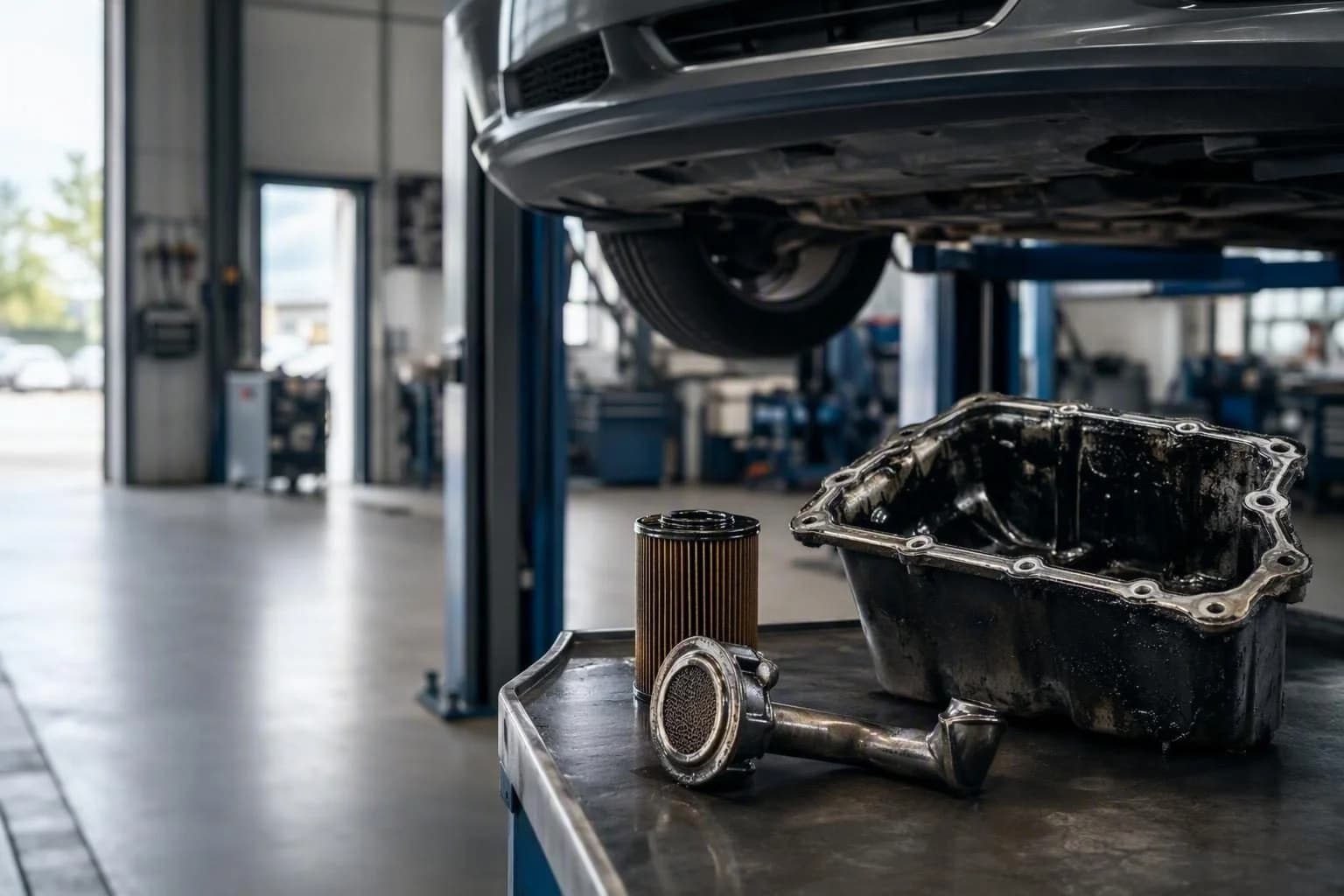
Metal flakes are pieces of metal present in the engine oil. The most common forms are a fine magnetic deposit on the drain plug, metallic dust in the drained oil or larger, jagged pieces on the filter.
A magnetic plug collects ferromagnetic particles of iron and steel. The presence of such a deposit can be the result of normal wear, especially in new or recently run-in engines. However larger fragments, sharp-shaped flakes or an increasing trend in metal between oil changes indicate abnormal wear.
That is why assessing the flakes has diagnostic value. The appearance of the deposit does not replace measurements and laboratory analysis, but it helps determine the level of risk and the order of actions.
- Small, soft and uniform iron fibres - often normal wear.
- Large jagged pieces or metal sheets - sign of serious wear.
- Non-magnetic residue - may come from aluminium, copper or bearing materials; it requires analysis.
Possible groups of causes
Flakes come from different parts of the engine and the lubrication system. Grouping the causes helps set diagnostic priorities.
Bear in mind that final distinction requires laboratory tests and measurements in the workshop.
- Normal wear - fine iron fibres caught by the magnetic plug or filter. Common during running-in or after intensive use.
- Excessive wear of bearings or bearing shells - larger, jagged flakes. This may be accompanied by a drop in oil pressure and noises from the underside of the engine.
- Wear of piston rings or cylinder bores - aluminium or mixed flakes; may be accompanied by smoking and loss of compression.
- Damage to the oil pump or drive components - fragments of the pump shaft or gears. The result can be a drop in oil pressure.
When to limit or stop driving
Not every found flake means an immediate stop. However there are situations in which continuing to drive increases the risk of engine seizure and driving should be stopped.
If alarm symptoms occur you should stop safely and contact a workshop.
- Stop immediately if loud knocks or tapping occur in the engine.
- Stop driving if the oil pressure warning light comes on or you notice a significant drop in oil pressure.
- Stop when the engine loses power, starts smoking or the oil visibly loses its properties.
- You may drive to the nearest workshop only when the amount of flakes is minimal, there are no noises or warning lights, and you can reach the workshop safely.
Course of diagnostics in the workshop
The workshop starts by collecting information and a visual inspection. This stage helps decide on further tests.
Full diagnostics usually include a set of tests in sequence - from simple to more invasive.
- Interview and inspection - the mechanic will check the drain plug, oil filter and ask for the history of symptoms and oil changes.
- Filter assessment - cutting open the filter element and documenting the deposit. This helps assess the size and type of particles.
- Oil analysis - sending a sample to a laboratory for elemental testing (e.g. ICP spectrometry according to standards). The result will indicate the elemental composition and wear levels.
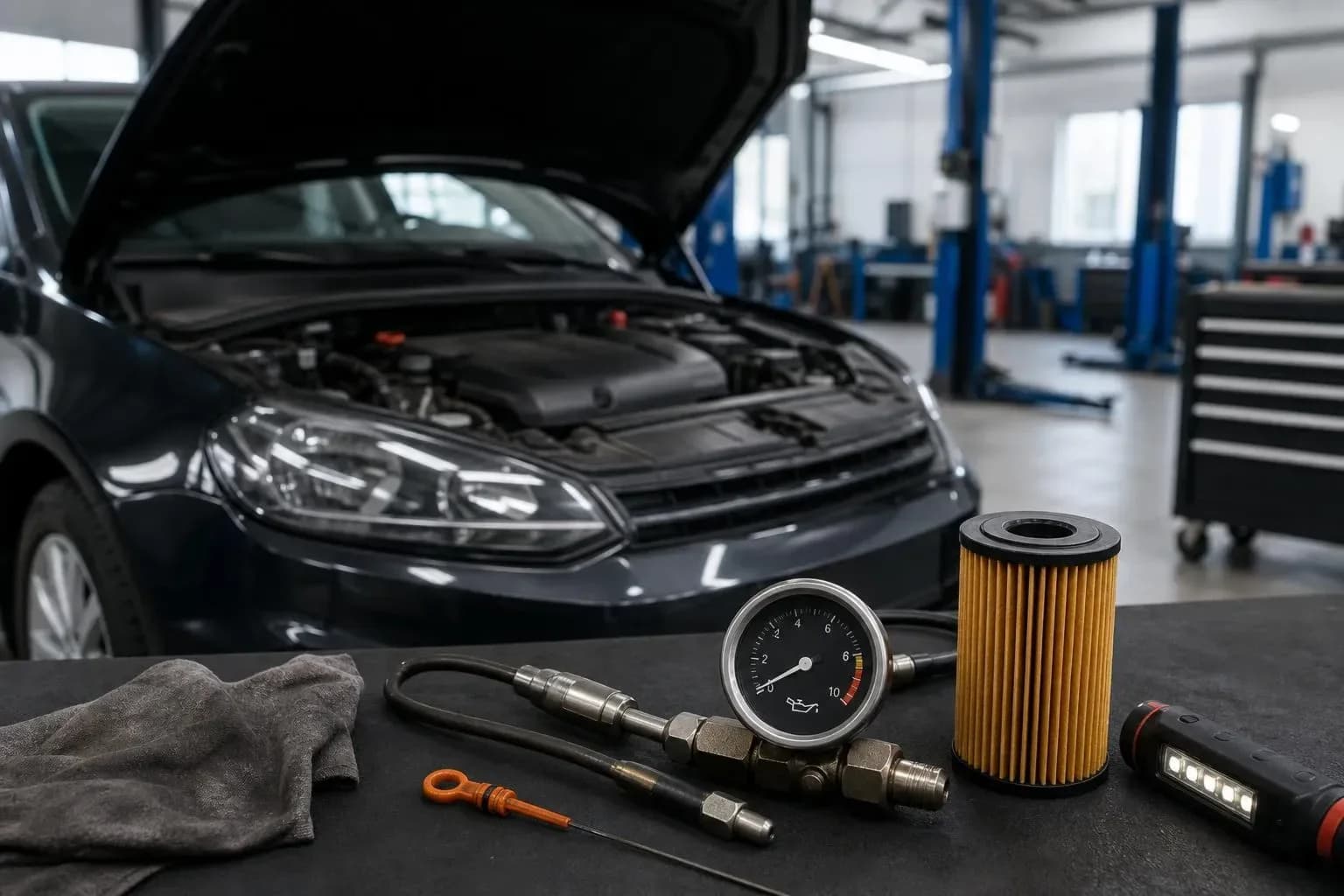
- Oil pressure measurement - tests at different engine speeds. Allows detection of problems with the pump or oil passages.
- Endoscopic inspection - viewing the engine interior with a borescope camera to locate visible damage.
- Further mechanical tests - measuring bearing clearances, compression tests or pressure tests in systems, the repair decision depends on the results.
What you can do before the visit and what to expect after service
Your preparation will ease diagnostics and speed up making a diagnosis. Collecting simple information is useful for the mechanic.
The service may propose options from monitoring to repairs depending on the degree of wear.
- Note when you first saw the flakes and what symptoms accompanied them - noises, loss of power, warning lights.
- Assess and photograph the drain plug, oil filter and the appearance of the drained oil. If possible keep the used filter or a cut-out of the element to give to the workshop.
- Add information about mileage and the history of oil changes. This helps interpret analysis results.
- After diagnostics the workshop may recommend monitoring at the next changes, further laboratory tests or repair of worn components. The decision on the repair scope is made by the mechanic based on measurements.