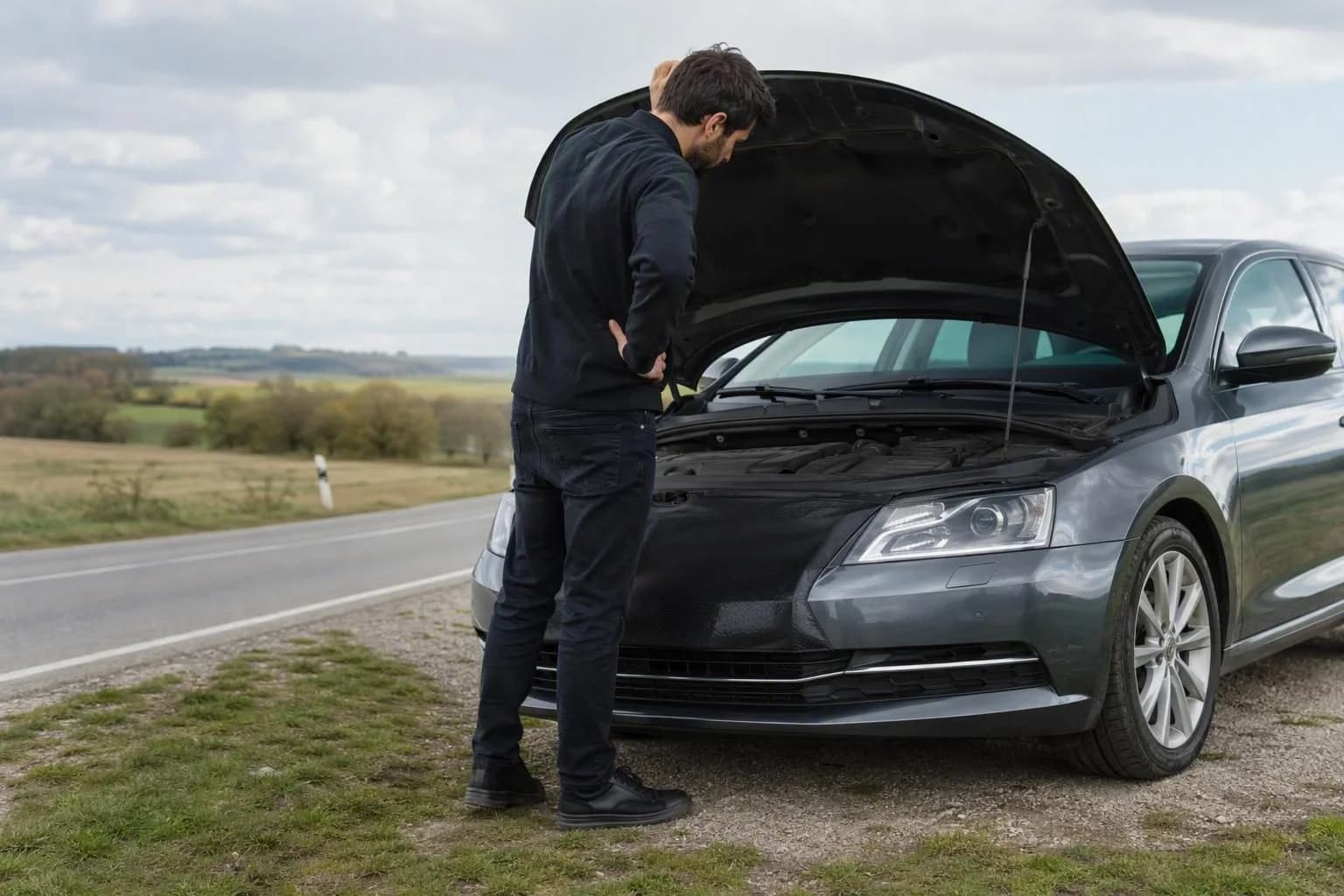
Loss of engine oil is a common source of concern for drivers. It does not always mean a serious breakdown, but ignored it can lead to costly damage.
This text walks from typical symptoms through possible groups of causes to a safe course of professional diagnostics and indicates when to stop or limit driving.
Why you should react early
Oil lubricates and cools engine components. Too low a level or poor oil quality increases friction and temperature, which can lead to permanent damage to bearings, pistons or the turbocharger.
Consequences of ignoring the issue include loss of power, turbo damage, catalyst overheating and, in extreme cases, engine seizure. Technical documentation and workshop practice show that a quick clarification of the cause limits costs and the risk of further failures.
- Reporting the problem promptly reduces the risk of major damage.
- Many causes can be detected and fixed before the engine degrades.
- Professional diagnostics will show whether it is “normal” consumption or a fault requiring intervention.
How to recognise the problem — symptoms to note
Prepare a short note before visiting the workshop: how quickly the level drops, when smoke appears and whether there are stains under the car. This helps diagnostics.
Typical symptoms reported by drivers and technicians are a drop in oil level between services, the need to top up frequently, bluish smoke from the exhaust, oil stains under the car, greasy deposits on the engine, a smell of burning oil in the cabin, illumination of the oil pressure warning light and loss of power, especially when accelerating.
- Note the course and symptoms: e.g. how much oil you add between refuels/services.
- Pay attention to when smoke appears: at start‑up, at idle, or during acceleration.
- Check for visible marks under the car and greasy deposits on hoses or the intercooler (if present).
Main groups of causes of oil loss
In practice the causes fall into a few groups. Sources for this information include industry and technical publications (AAA, LN Engineering, Garrett). The groups below help to understand what the mechanic will check.
1) External leaks — gaskets, joints, the oil sump, hoses. Visible stains beneath the car and greasy deposits on the engine usually indicate this category.
2) Oil burning inside the engine — worn piston rings, valve stem seals, head gasket. A symptom can be bluish exhaust smoke and oil on spark plugs or in the intake.
3) Problems with the crankcase ventilation system (PCV) — a faulty PCV valve can cause overpressure in the crankcase, pushing oil out through seals, or draw oil mist into the intake and have it burned in the combustion chambers.
4) Turbo (if fitted) — leaking seals or a blocked oil return can lead to oil consumption and smoking. Turbocharger diagnostics require checking oil feed/return lines and seal condition.
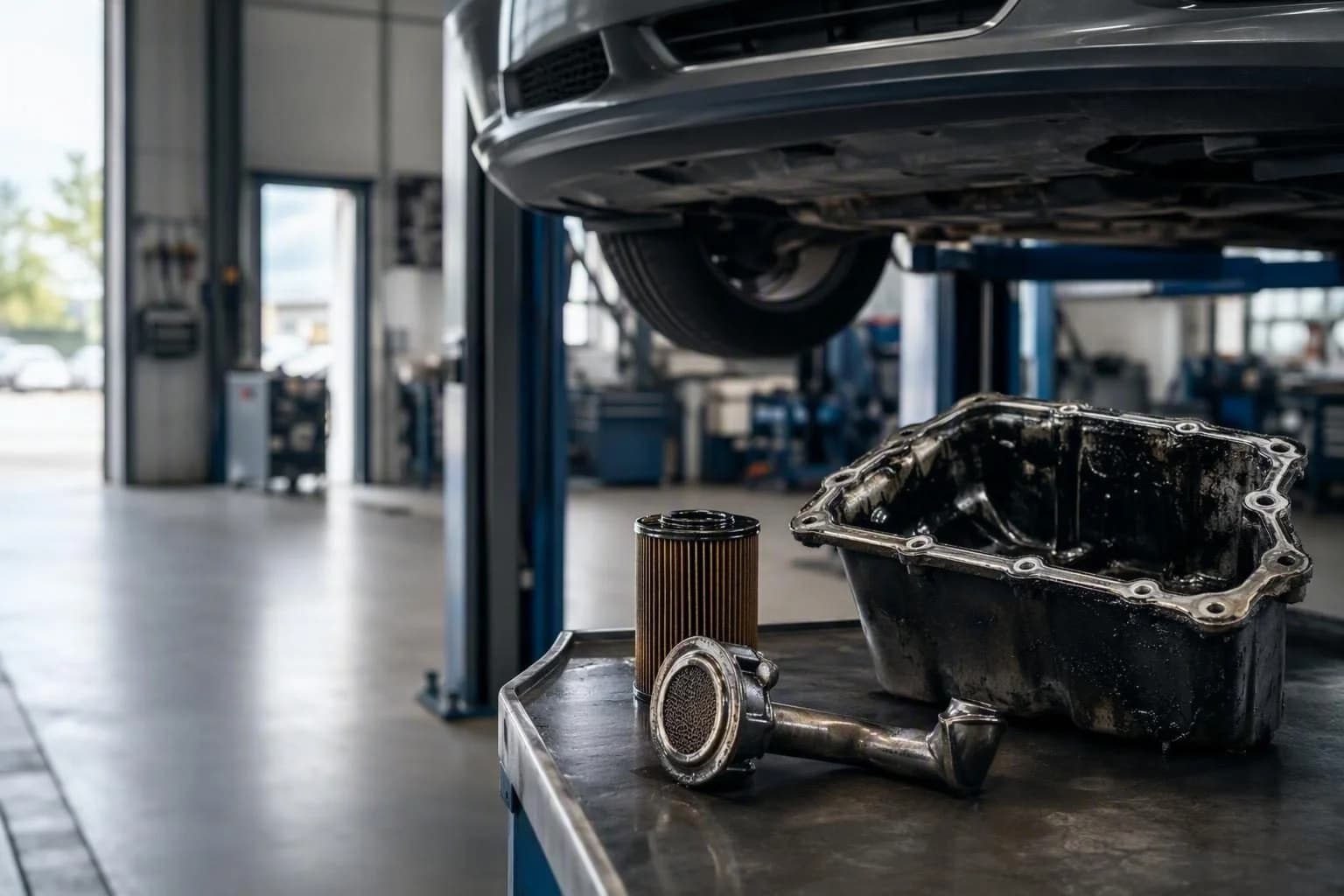
5) Seals, the oil sump and mechanical parts — damaged seals or cracked housings cause external leaks, which are usually visible and can be located by the position of the stain under the vehicle.
- External leaks: often easy to locate visually.
- Internal burning: symptoms are smoke and deposits in the intake system.
- PCV: can cause both leaks and burning of oil mist.
- Turbo: specific to forced‑induction vehicles and needs separate assessment.
When to limit or stop driving — warning situations
Some signals mean direct risk and require immediate action. Practical sources and service manuals unanimously recommend limiting driving or stopping the vehicle in the cases below.
Red oil pressure warning light on — stop immediately, switch off the engine and check the oil level. Continuing to drive with genuinely low oil pressure risks serious engine damage.
Thick bluish smoke from the exhaust occurring continuously or getting worse — this may indicate massive oil burning; do not continue driving longer than necessary.
A very rapid drop in oil level or large puddles under the car — if you notice an intense leak, do not remain on the road exposing yourself and others; secure the vehicle and arrange transport to a workshop.
Smell of burning oil in the cabin or oil dripping onto hot exhaust parts — stop in a safe place and check the condition; oil contacting hot components raises the risk of fire.
- Red oil pressure light = STOP.
- Thick blue smoke = limit driving, protect the catalytic converter.
- Intense leak from under the car = do not leave the vehicle in a dangerous place.
How diagnostics are carried out in the workshop
Professional diagnostics combine inspection, measurements and leak tests. The mechanic usually starts with the simplest actions that help narrow down the cause.
1) Visual check: locating stains, inspecting gaskets, oil lines, the oil sump and turbocharger components, and looking for greasy deposits in the intake system and intercooler.
2) Checking the PCV system: testing the operation of the ventilation valve and the openness of hoses; a faulty PCV often needs replacement, but assessment requires detailed examination.
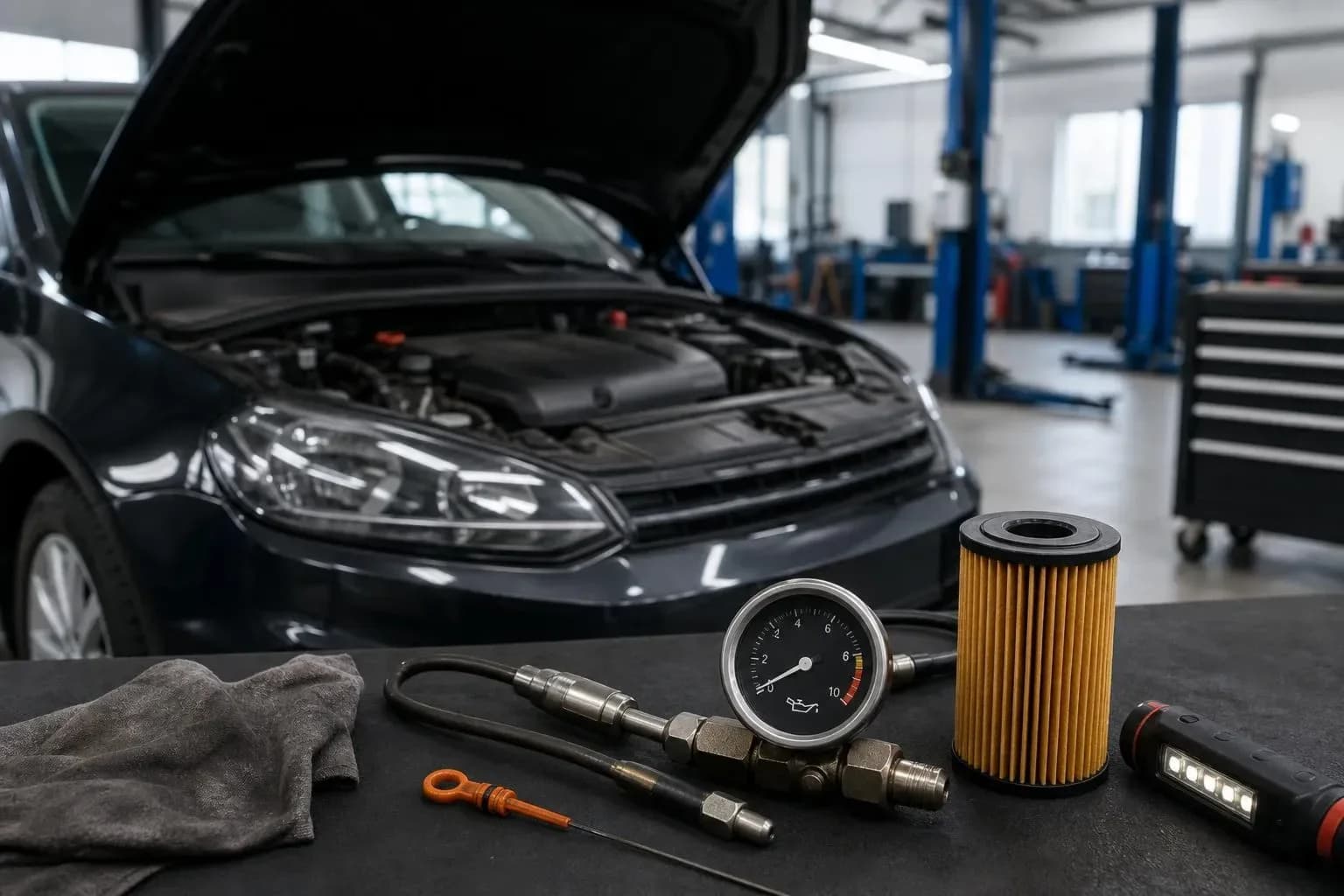
3) Measuring oil pressure: mechanical or electronic verification of the actual operating pressure. This helps distinguish a sensor/electronics fault from genuinely low pressure.
4) Leak and compression tests: a compression or leak‑down test assesses the condition of piston rings and the sealing of the combustion chamber — typical checks when internal oil burning is suspected.
5) Assessment of the turbocharger and oil lines: checking for play, seals and the oil return flow (if the car has a turbo).
6) Oil analysis and documentation of the rate of loss: assessing oil quality, presence of contaminants and comparing with the customer's notes on how fast the level drops.
- Diagnosis starts with simple inspections and pressure measurements.
- Compression/leak‑down tests indicate whether oil is reaching the combustion chamber.
- Checking PCV and the turbo is key when there is smoking and rapid loss.
What next — what you can expect from the workshop
After diagnostics the mechanic will present possible causes and repair options. The choice of actions depends on the engine condition, vehicle age and repair cost relative to the car's value.
If the problem is an external leak, common proposals are gasket replacement, sump repair or hose replacement. For internal oil burning diagnostics may indicate the need for more advanced engine repair — such decisions should be discussed with the workshop in terms of cost and priorities.
If systemic issues are suspected (e.g. complex electronics, oil pressure‑related faults, complicated turbo symptoms) consider computer diagnostics as well — it can reveal fault codes stored in modules and operating parameters of the engine.
- After diagnosis you will receive a set of possible causes and proposed next steps.
- For simple leaks repair is often quick; internal problems require more thorough assessment.
- If the mechanic seems uncertain of the cause, ask for compression tests and checks of the PCV and turbocharger (if applicable).