A sudden increase in fuel consumption or a shorter driving range is a common cause for concern. Causes can be mundane (tyre pressure, roof box, frequent short trips) but also technical: a faulty mass air flow sensor, oxygen sensor, leaks in the fuel system or ignition problems.
This article describes typical groups of causes, what specific symptoms indicate and what tests a workshop will perform during computer diagnostics. We also suggest what to check before the visit and when to limit or stop driving for safety reasons.
What to check yourself first (simple, no disassembly)
Before booking a workshop appointment you can carry out a few safe, quick checks. This helps rule out obvious causes and provides useful information to the workshop.
Do not attempt any repairs yourself on critical systems (brakes, airbags, high-voltage system).
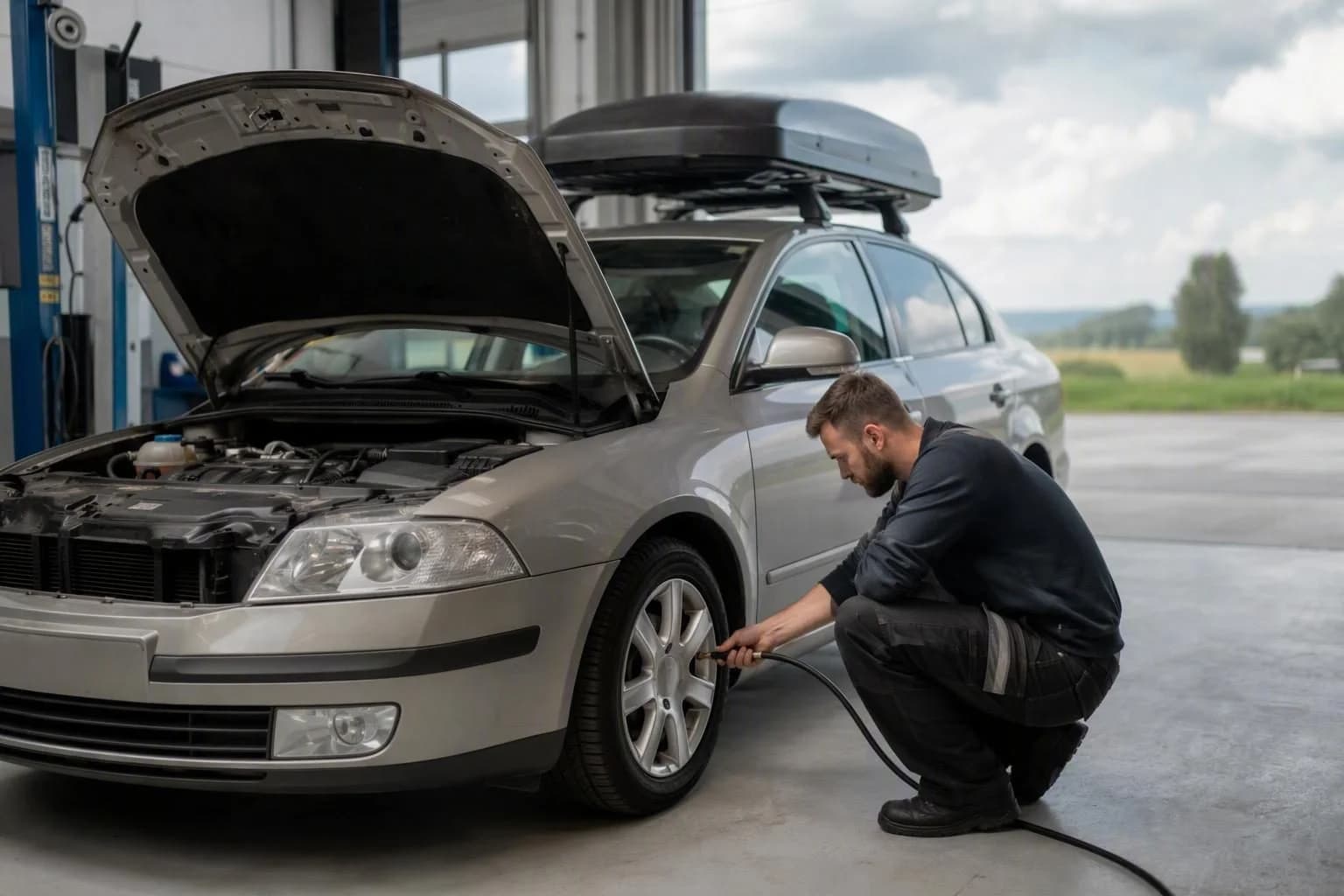
- Tyre pressure — check and inflate to the manufacturer’s recommended values; underinflated tyres increase rolling resistance.
- Remove unnecessary loads — check whether you are regularly carrying heavy luggage or a roof box.
- Air filter — a quick look through the filter housing can reveal heavy contamination; a very clogged filter affects fuel consumption.
- Note the symptoms: when the consumption increases (cold engine, urban driving, motorway), whether the engine warning light is on and whether there is a smell of fuel or visible smoke.
How to interpret common symptoms
Symptoms help narrow down groups of causes but do not replace measurements and fault code reading. Below are examples of possible links:
Remember that many symptoms can have several causes at once.
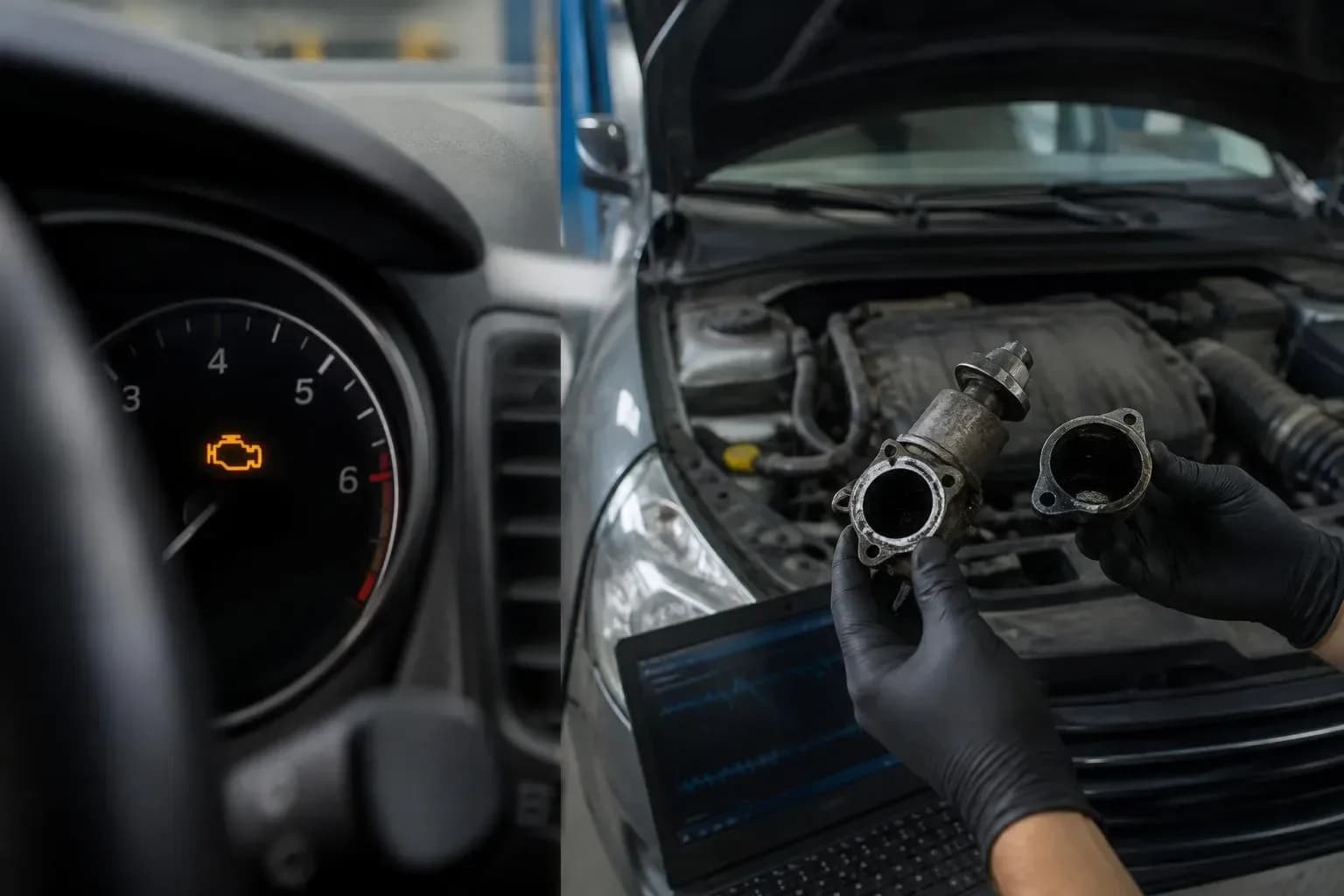
- Check engine (engine warning light) — often the first prompt to scan OBD-II; faults may relate to the MAF sensor, oxygen sensor or misfire.
- Black smoke from the exhaust or a strong smell of fuel — typically a rich mixture, a leaking injector or an issue with fuel evaporation; unburnt fuel can also cause a smell in the cabin.
- Rough engine running, fluctuating revs, loss of power — possible problems with the ignition system (spark plugs, coils), MAF, oxygen sensor or mechanical restrictions (e.g. a clogged DPF on diesel).
- Extended starting on cold or the engine running 'cold' for longer — may indicate a stuck-open thermostat, causing the ECU to keep the mixture enriched longer.
- A slight, steady increase in fuel consumption without other symptoms — often results from operating factors: driving style, short journeys, air conditioning, tyre pressure.
When to limit or stop driving
There are situations where continuing to drive is unsafe or may cause serious damage. In those cases it is better to stop the car and arrange transport to a workshop.
Safety is the priority — do not try to continue driving if there is a risk of fire or engine damage.
- Heavy smoking (black or blue smoke) from the exhaust is a sign of serious worsening fuel consumption or oil burning — stop driving.
- Strong smell of fuel in the cabin or visible fuel leak — this is a fire risk; do not continue driving.
- A sudden and significant loss of power, engine stalling, difficulty maintaining revs — stop driving, you may damage the catalytic converter or the gearbox.
- If the engine warning light comes on together with clear smoke, fuel smell or power loss — treat as a priority and arrange towing.
Workshop diagnostics process — what the service usually does
combine fault code reading with measurements and inspections. The outline below shows typical steps; specific actions depend on engine type and scanner results.
All measurements are performed by qualified personnel using specialised tools.
- Read OBD-II fault codes and clear/observe again — the first step that points to the area for further investigation.
- Live data analysis — signal values from the mass air flow sensor (MAF), oxygen sensor readings (lambda), fuel trim corrections and ignition parameters.
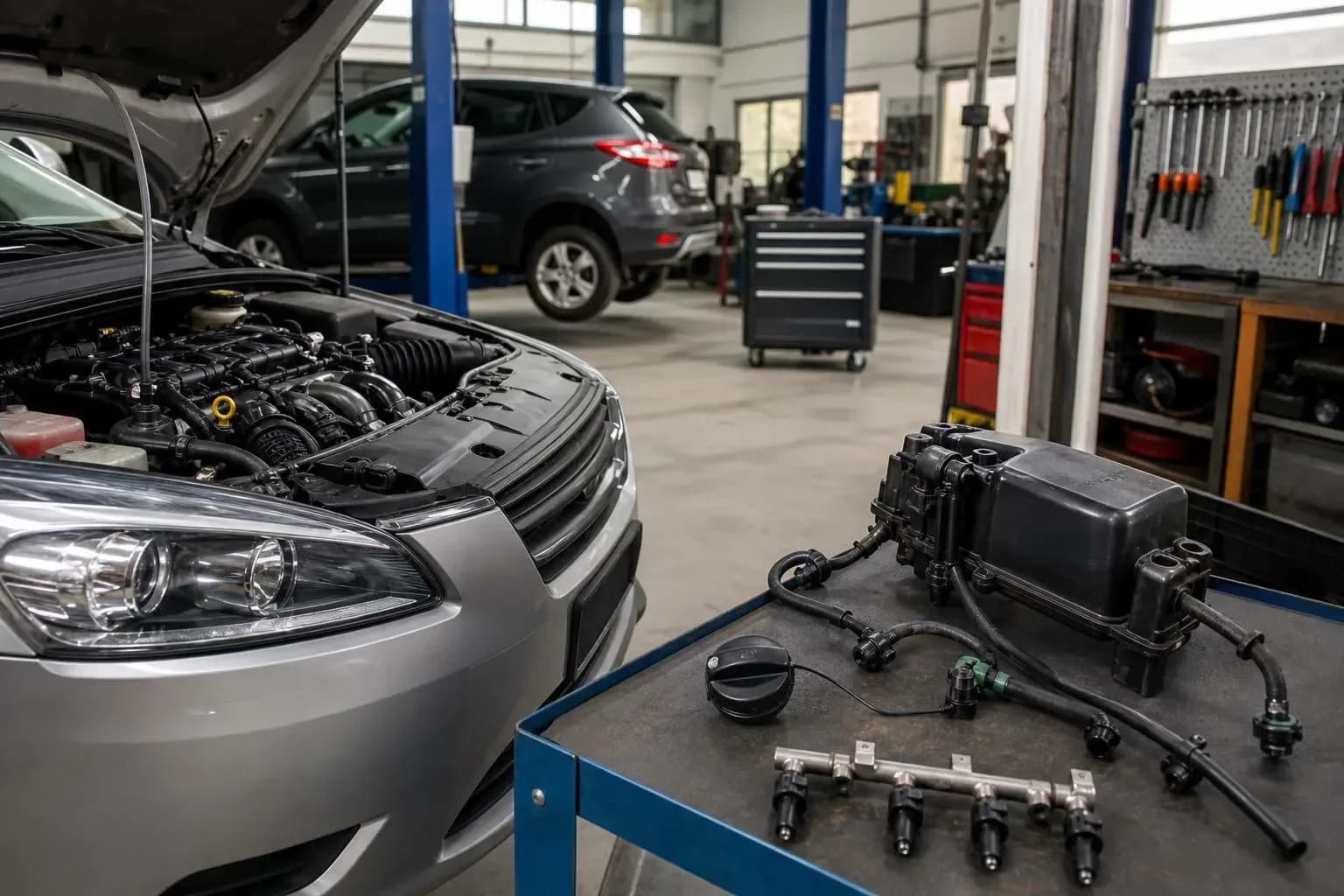
- Fuel pressure test and fuel system leak check — when a leak or problems with the pump/injectors are suspected.
- Intake system check — intake leak test, inspection of hoses and clamps, air filter and possible faults in the exhaust gas recirculation (EGR) system.
- Ignition system check — measurements of coil signals, assessment of spark plug condition (descriptive result, no on-site replacement without customer consent).
- Assessment of rolling resistance — inspection of brake calipers, disc temperatures after a test drive, checking tyre pressure and tread condition.
- Road tests with simultaneous parameter logging — allow confirmation of problems that occur only during driving.
What to tell the workshop and what data to bring
A good symptom description shortens diagnostic time. Prepare information and any recordings — they are valuable help for the mechanic.
Do not present guesses as facts; describe your observations precisely.
- When the problem started and how often it occurs (after warming up, only on short trips, all the time, etc.).
- Whether the engine warning light is on and whether there are additional messages on the dashboard.
- Exact description of smoke (colour), fuel smell, moments of power loss, extended starting times.
- Recent service work and the type of fuel you use, plus intervals between fill-ups (approximate change in consumption).
- Engine sound recordings or short videos of the symptoms greatly aid diagnostics.
What happens after diagnostics
After reading fault codes and tests the workshop will present the scope of necessary repairs or service actions. The most commonly recommended first service is computer diagnostics, after which further steps are possible, e.g. oil and routine service or engine and ancillaries repair.
If the cause turns out to be operating factors, the workshop can advise simple changes in daily use to improve fuel economy.
- If a is detected (MAF, oxygen) or injector problems are found, repair/replacement after confirmation by measurements.
- If the cause is dragging brakes or low tyre pressure — mechanical work or tyre service and wheel alignment when urgent.
- If in doubt, ask for a printout or saved file of the diagnostic parameters and the proposed repair plan.