An engine that warms up slowly is a common problem, shown by a slow rise of the temperature gauge and delayed cabin heating after start. Causes range from mechanical faults to electronic issues.
This article goes from recognising the symptoms, through possible cause groups, to the safe course of diagnostics at the workshop. At the end we explain when to limit or stop driving and what information to prepare before the visit.
How to recognise the problem - typical symptoms
Drivers report that the engine reaches operating temperature slowly - the gauge stays below the normal value for a long time. This is usually accompanied by the cabin remaining cool for longer after start-up.
Other symptoms related to this problem include sudden changes in temperature, a flashing temperature warning light, the Check Engine light appearing, or reduced performance and increased fuel consumption after warm-up.
- The temperature gauge stays below the normal value for a long time.
- Cabin heating is weak after start.
- Temperature rises jumpily or oscillates.
- Temperature warning light is on or flashing, Check Engine appears.
- Fuel consumption increases or engine power drops after warm-up.
Main cause groups - what is most often checked
For slow warm-up there are several fault categories to consider. Not always a single part is to blame - sometimes the issue results from a combination of mechanical and electronic causes.
The groups described below help to understand what the technician will check first.
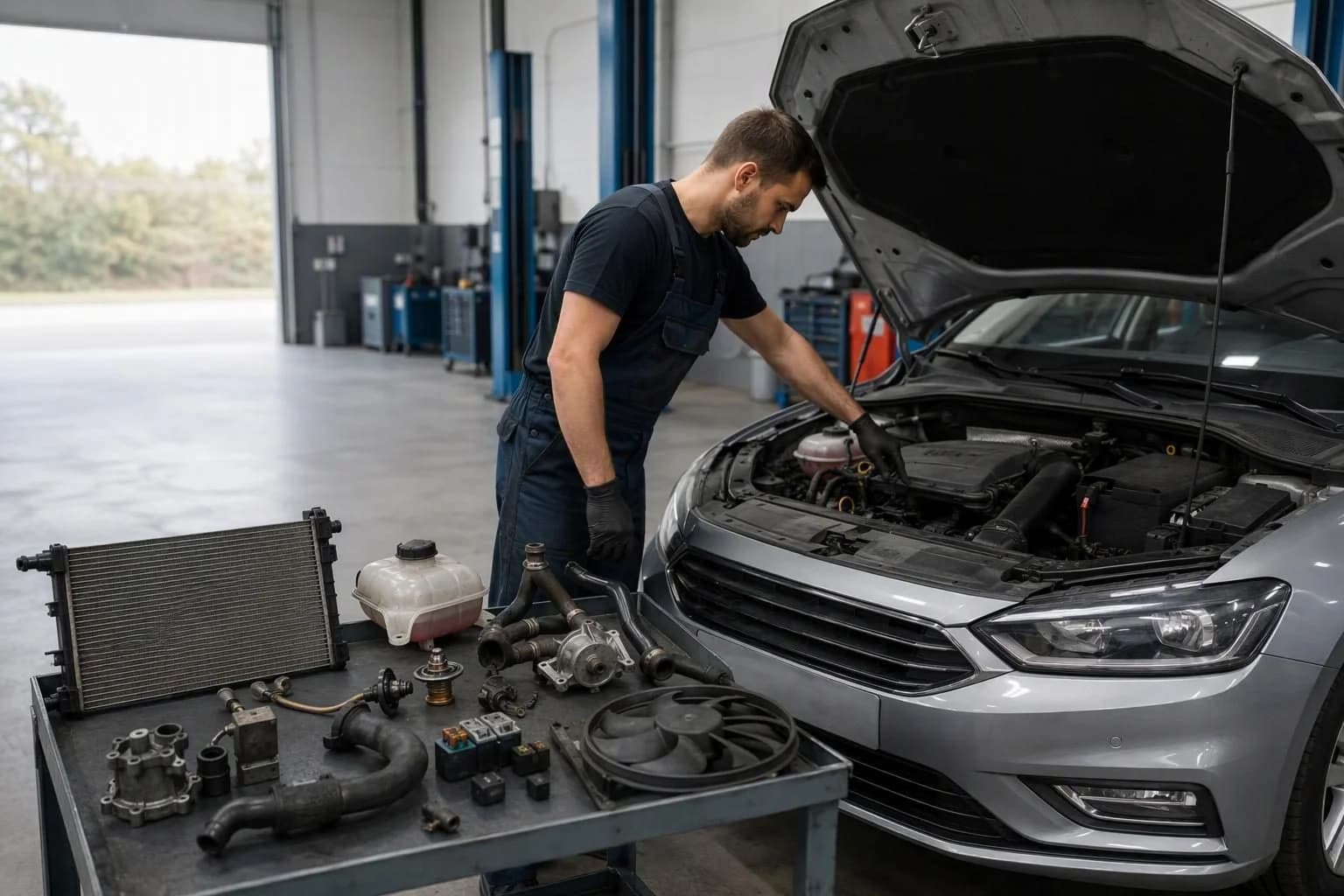
- Thermostat - this valve controls coolant flow. If it is stuck open or opens too early, the radiator continuously removes heat and the engine does not reach operating temperature.
- Engine coolant temperature sensor (ECT) - incorrect readings from this sensor can mislead the instrument cluster and the engine control unit (ECU), which affects the air-fuel mixture and fan operation.
- Insufficient coolant flow - a faulty water pump, internal radiator contamination, blocked hoses or leaks and air pockets in the system can reduce flow.
- Heater core - a blocked or restricted heater core reduces heat transfer to the cabin.
- Fan system and relays - incorrect fan control can cause excessive cooling or temperature fluctuations.
- Engine control and electrical system - electronic faults, damaged relays or connectors can give false readings or incorrect control of cooling components.
When to limit or stop driving
Not all symptoms require an immediate stop, but there are situations when continuing to drive may be dangerous or cause more serious damage.
Stop driving and call the workshop if you notice a rapid rise in temperature, heavy smoke or steam from under the bonnet, coolant leakage, a significant loss of power or a strong sweet smell (sign of coolant).
- Temperature rises quickly into the red zone or the temperature warning light stays on continuously.
- Coolant is leaking under the vehicle or there is steam from the engine bay.
- The engine loses significant power, unusual noises appear or previously mild symptoms worsen.
- Never open the radiator cap or the expansion tank when the engine is hot - there is a risk of burns.
How professional diagnostics proceed at the workshop
Diagnostics should combine electronic readings with mechanical checks. The workshop usually runs a sequence of tests from simple to more complex to avoid unnecessary part replacement.
Below are typical diagnostic steps performed by the workshop. This is a description of the diagnostic procedure - it is not an instruction for DIY repair.
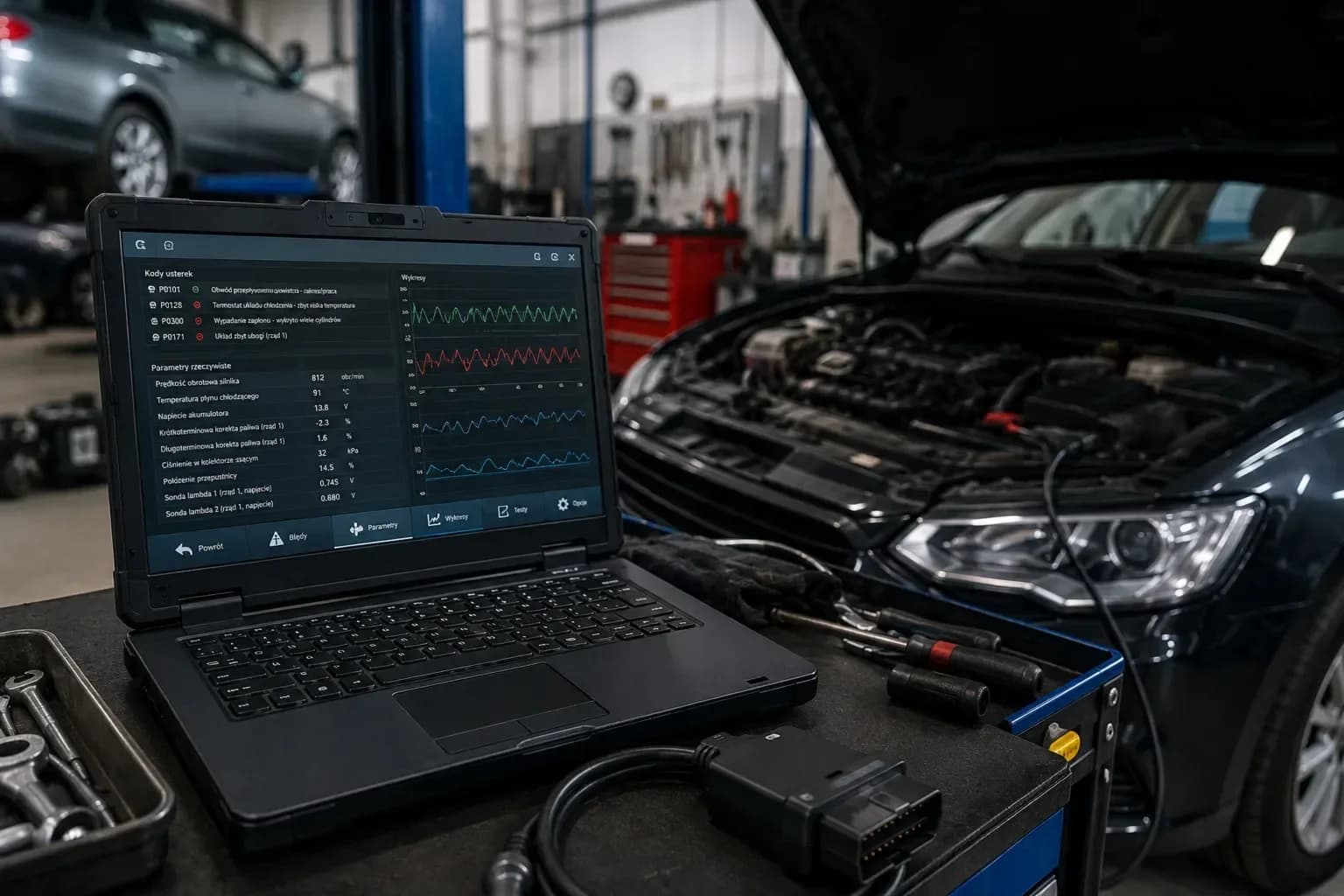
- and live data via OBD2 - the technician will check for codes related to the temperature sensor, fan operation or other elements and compare the ECT reading with expected values.
- Compare the dashboard gauge with measurements - use live data tools or an IR thermometer in allowed areas on a cool or cold engine to verify whether the instrument reading matches actual temperature.
- Check coolant level and condition and system tightness - includes a to detect leaks and assessment of air pockets.
- Test the thermostat - a functional test in controlled conditions or on a bench to confirm correct opening and closing; the technician will compare behaviour with manufacturer data if needed.
- Assess the radiator and flow - check for contamination, blockages and airflow through the radiator. If required, perform coolant flow tests and inspect the heater core.
- Inspect the water pump - assess seals, bearing play and pump performance. Sometimes flow tests or observing the pump under load are needed.
- Check fan control system - test relays, fuses and controls to confirm fans switch on at the correct times.
- If software or ECU faults are suspected - analyse live data and compare with reference patterns; the workshop may recommend further tests or a software update if necessary.
What to prepare before the visit and what to expect after diagnostics
Before the workshop visit prepare a description of when the problem occurs - cold start, after a long drive, only at idle, or at a certain speed. Note whether the Check Engine light is on and how the radiator fan behaves.
After diagnostics the workshop will propose a scope of repairs based on measurement results - this may include thermostat replacement, temperature sensor replacement, fixing leaks, cleaning the radiator, replacing the water pump or electronic work. The repair choice depends on confirmed causes.
- Prepare information: when the symptom occurs, whether the Check Engine light is on, how long warming takes and whether there are leaks.
- The workshop will perform measurements and present the required repairs and recommendations for further maintenance.
- If symptoms confirm the need for further work, the appropriate step is a professional repair service for engine and ancillaries.