Switching on the air conditioning always adds load to the engine, but when there is a noticeable loss of power, stalling or loud noises — it's worth analysing.
This article runs through typical symptoms, groups of causes, safe checks a driver can make and a detailed diagnostic sequence used in a workshop.
Why switching on the air conditioning affects engine power
The air conditioning compressor draws mechanical power from the engine. This is a so‑called parasitic load — a certain drop in performance when A/C is engaged is therefore normal. In most cars the engine control unit (ECU) receives a request signal and compensates the increased load by raising idle speed or adjusting fuel delivery.
The problem appears when the compressor load is significantly higher than intended, or when the compensating systems fail. Then instead of a mild power drop you may experience a sudden weakening, stalling or loud noises from the front of the engine.
Typical symptoms and related groups of causes
Symptoms can overlap, so it is important to distinguish several groups of systems that the workshop will check first.
- Air conditioning compressor and clutch: a worn bearing, partial seizure or internal friction causes squeal, knocking and a sudden large resistance when engaged.
- Accessory drive (multi‑rib/serpentine belt, pulleys): a slipping or cracked belt, or a worn tensioner gives a squeal under sudden load; with heavy slipping alternator charging and power steering assistance can also drop.
- Electrical system and charging (alternator, battery): a faulty alternator or weak battery causes voltage drops while the A/C runs — the charging or engine warning lamp may illuminate and the engine can stall at idle.
- Intake system and turbocharger: a dirty air filter, a faulty MAF sensor (mass air flow) or an intake/turbo leak restricts air supply and prevents load compensation.
- Fuel system: a weak fuel pump or a clogged filter gives insufficient pressure under increased demand, which shows as loss of power.
- Cooling system and condenser: a blocked condenser or faulty fans cause higher pressures in the A/C system and engine overheating when the air conditioning is on.
Quick and safe checks you can do before visiting the workshop
Before you go to the workshop you can make a few simple observations. Do not disassemble the A/C system or work on pressurised components — leave that to specialists.
- When you switch on the A/C: do you hear a characteristic 'click' — the compressor clutch engaging? No click can indicate an electrical problem with the clutch.
- Is there a squeal when the A/C engages? A squeal often points to the belt or tensioner, not necessarily the compressor itself.
- Does the charging lamp or engine warning lamp illuminate under A/C load?
- Do the radiator fans run after the A/C is switched on? No fan movement during hot running can lead to overheating.
- Check whether the A/C airflow is very warm or very cold — temperature readings do not diagnose the power loss itself, but indicate the basic operation of the A/C system.
When to restrict or stop driving
There are conditions where continuing to drive may worsen damage or create a safety risk. Stop driving immediately if any of the following symptoms occur.
- Severe engine overheating or a rapid rise in the temperature gauge — do not continue driving.
- Smoke, or a noticeable smell of burning from under the bonnet — stop and switch off the engine.
- Loud metallic knocking from the front of the engine after switching on the A/C — this may indicate serious damage to the compressor bearing or drive components.
- Severe voltage drops, difficulty starting after several attempts, or stalling with no ability to restart — these require immediate assistance.
- If you notice any of the above symptoms, pull over to a safe place and contact roadside assistance or a workshop.
Course of professional diagnostics in the workshop
A full diagnostic covers mechanical, electrical and A/C systems in parallel. Below is the sequence of actions you can expect after bringing the car to the workshop.
- Read ECU fault codes (OBD scan) and analyse illuminated warning lamps — this is often the first source of information about the problem.
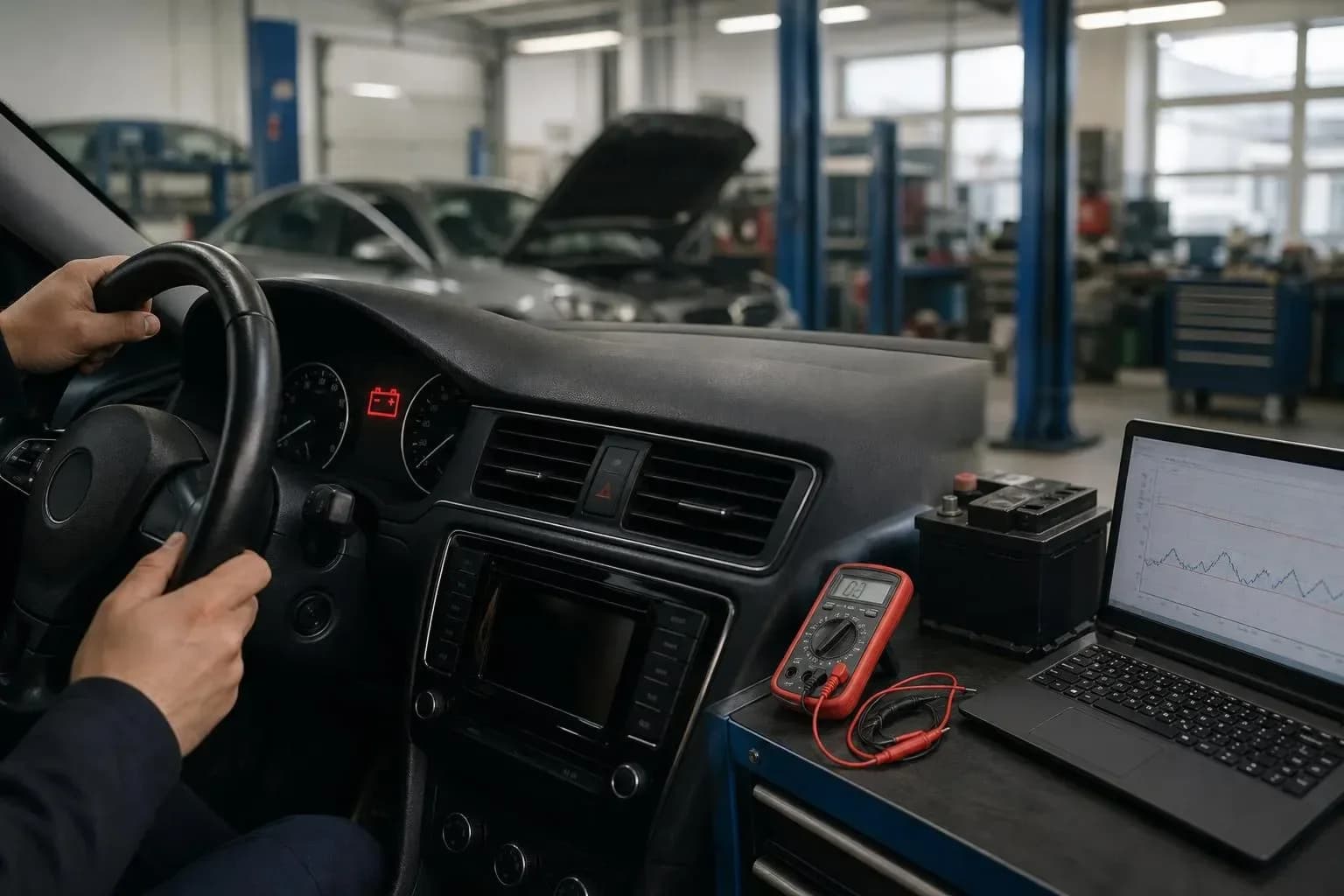
- Electrical measurements: check charging voltage, test the alternator and assess battery condition under load.
- Inspect the multi‑rib belt, pulleys and tensioner — look for cracks, oil contamination and play.
- Compressor clutch test: measure current draw/engagement force and observe operation at idle and under load.
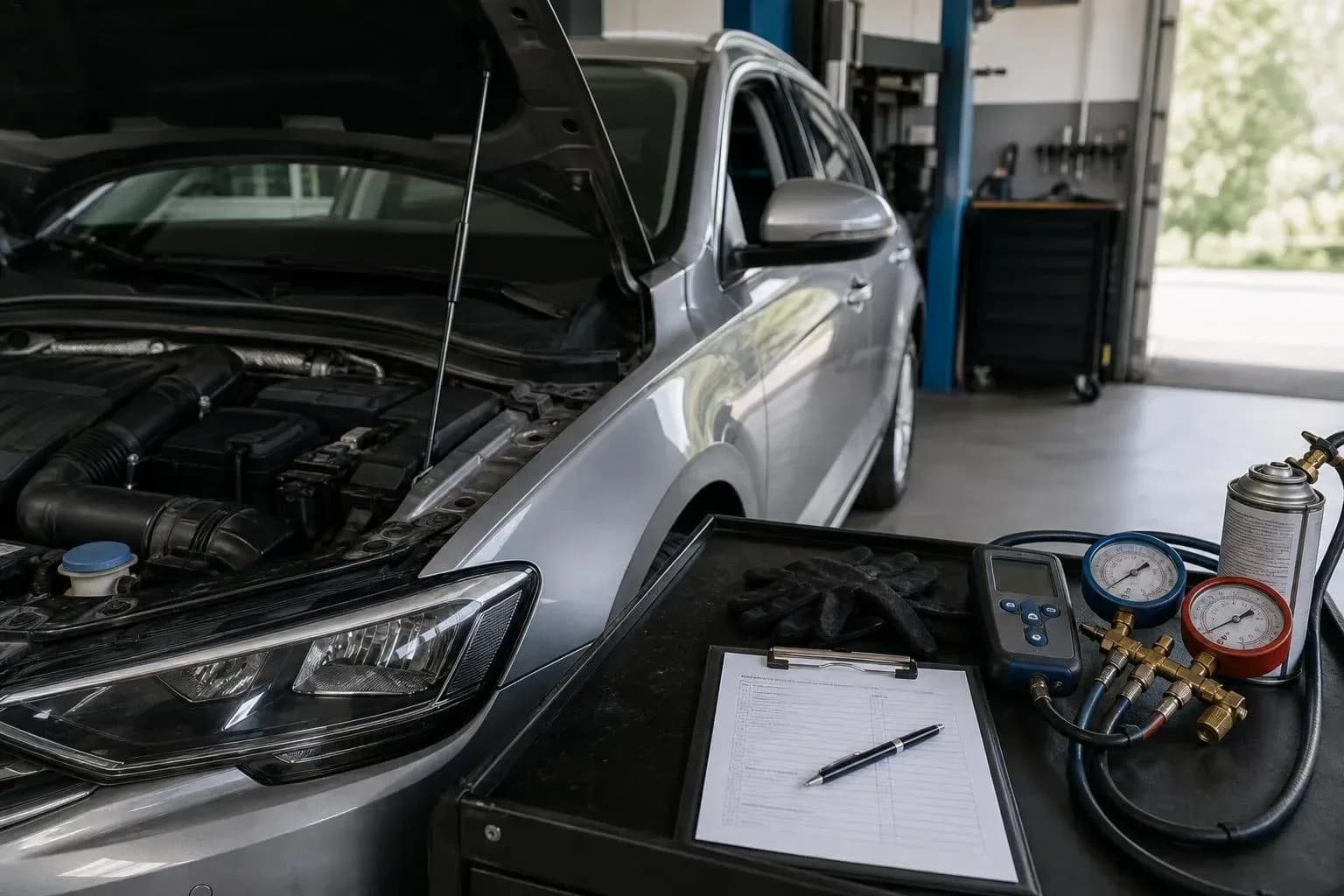
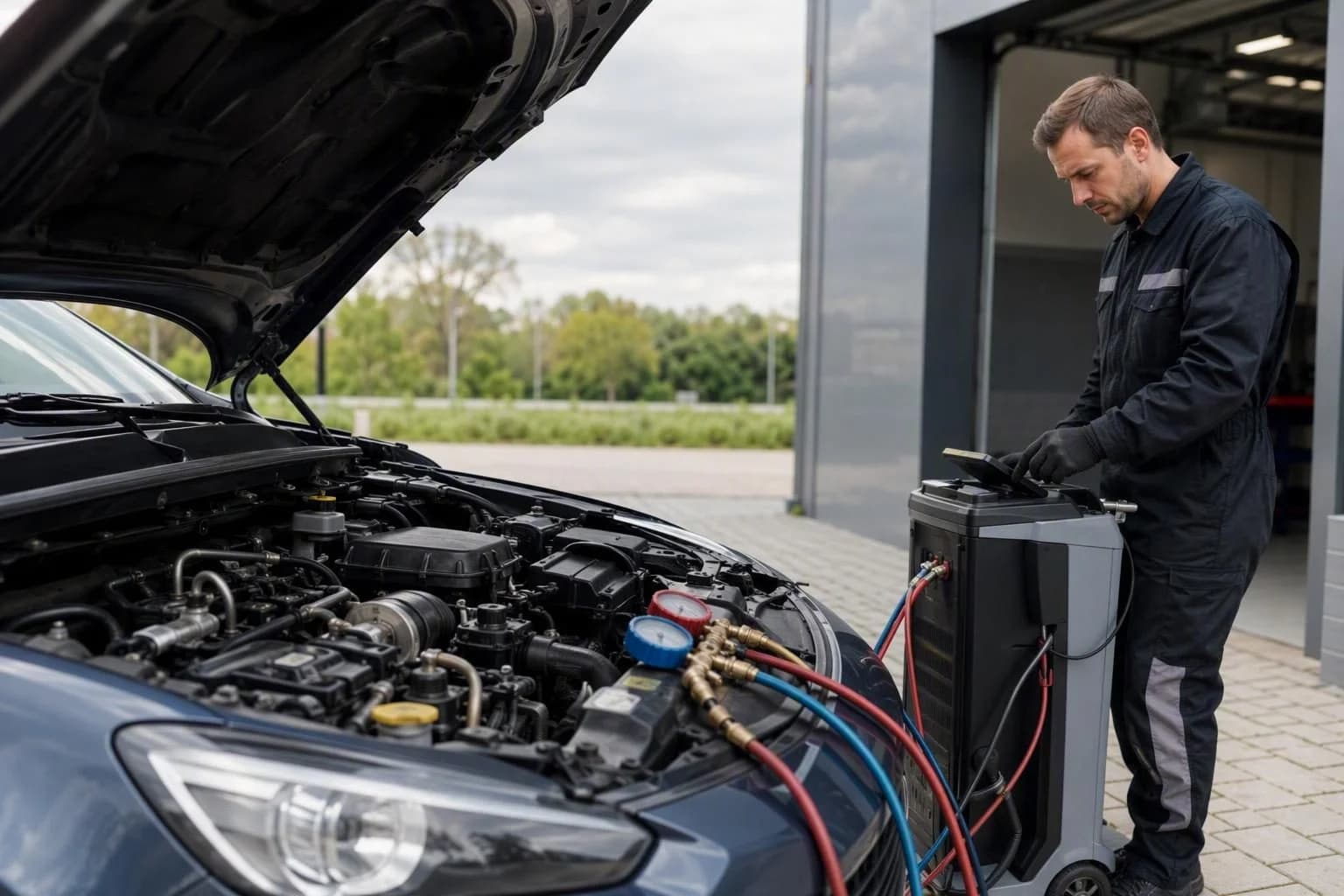
- Measure A/C pressures (manifold gauges) and inspect the condenser — detect high pressures or blockages.
- Fuel pressure test and evaluate pump performance under load if symptoms suggest fuel limitations.
- Check the intake and sensors (e.g. MAF), test intake system tightness and, if needed, examine the turbocharger.
- Check radiator fan operation and measure engine operating temperature to rule out overheating.
- Based on results the mechanic will present the scope of repairs or further tests. Cleaning the MAF, replacing the belt or reconditioning/servicing the compressor are typical solutions — the specialist decides after measurements.
Common mistakes and practical tips before repair
Drivers often confuse the normal, small power drop (expected with A/C on) with a fault symptom. Loud squealing usually comes from the belt or tensioner, not always from the compressor itself.
If you plan a repair, ask the workshop for a record of measurements (voltages, A/C pressures, OBD readout). This helps compare before‑and‑after states and minimises unnecessary part replacements.
Remember: work on the air conditioning system and components under pressure or high voltage must be done only by a qualified service.