The VW Transporter T5, T6 or T6.1 most often loses power under load when the engine is not getting the right amount of air, boost, or cannot expel exhaust gases freely. The cause may be the turbocharger, EGR, DPF, a sensor or an intake leak, so simply clearing fault P0299 usually does not fix the problem.
Why does the Transporter lose power under load?
A loss of power under load means the engine control unit (ECU) sees a mismatch between what it expects from the engine and what the sensors actually measure. In light city driving the vehicle may behave almost normally, but during overtaking, hill climbs, carrying a load or on the motorway the torque starts to be lacking.
Code P0299 usually points to low boost, but it does not yet say whether the turbocharger is faulty. The cause can be a cracked intercooler pipe, a loose clamp, sticking variable geometry control, a vacuum issue, an incorrect pressure sensor reading or restricted exhaust flow through the DPF.
That is why workshop diagnostics in such a case begin with measurements, not guessing.
How to tell turbo and intake from DPF or EGR?
Turbo and intake faults more often give symptoms of a sudden loss of boost, while DPF or EGR issues more often cause a gradual reduction in performance and more frequent warnings. If under heavy acceleration you hear hissing, whistling, escaping air or the vehicle smokes heavily, suspect an intake leak or a boost control problem.
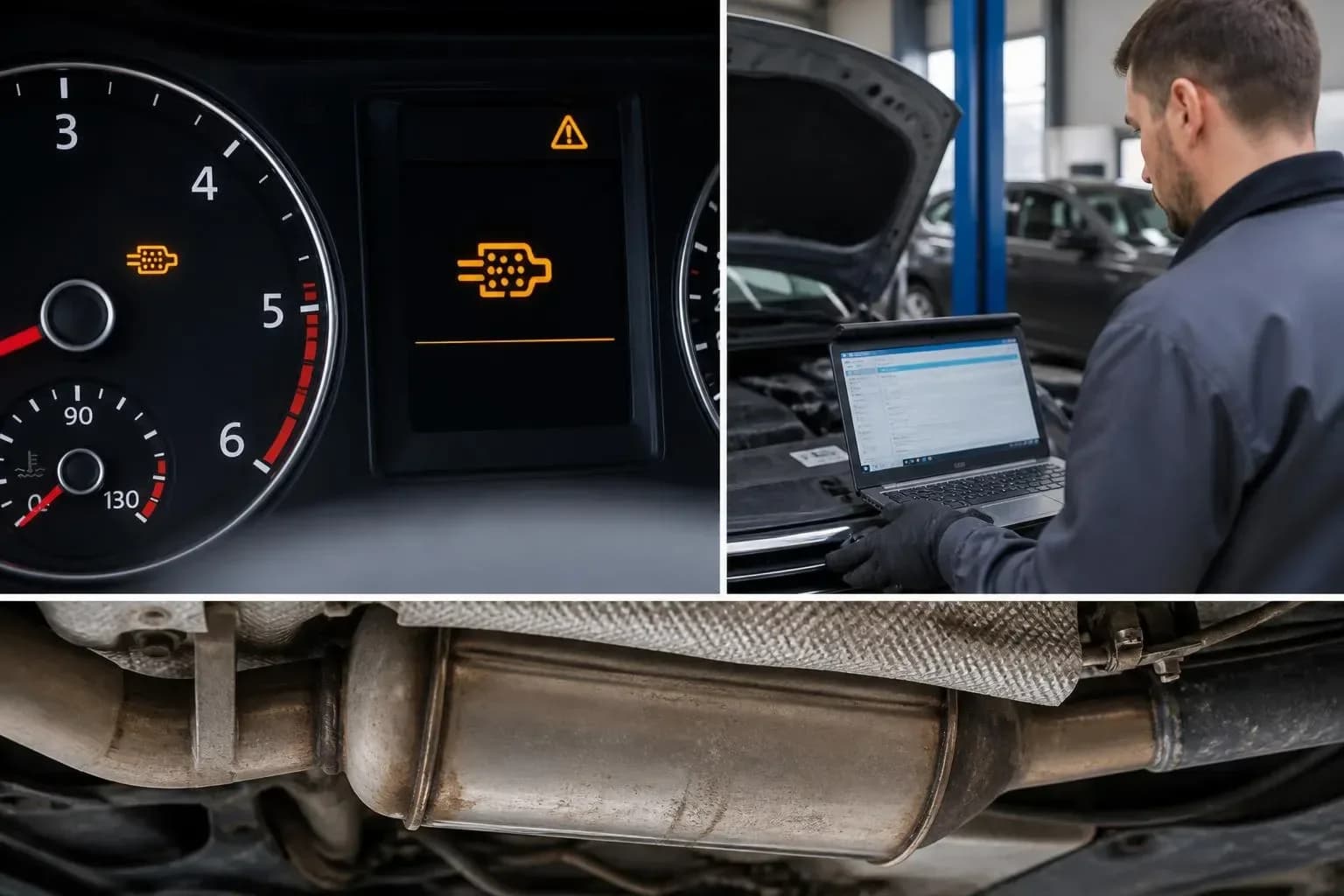
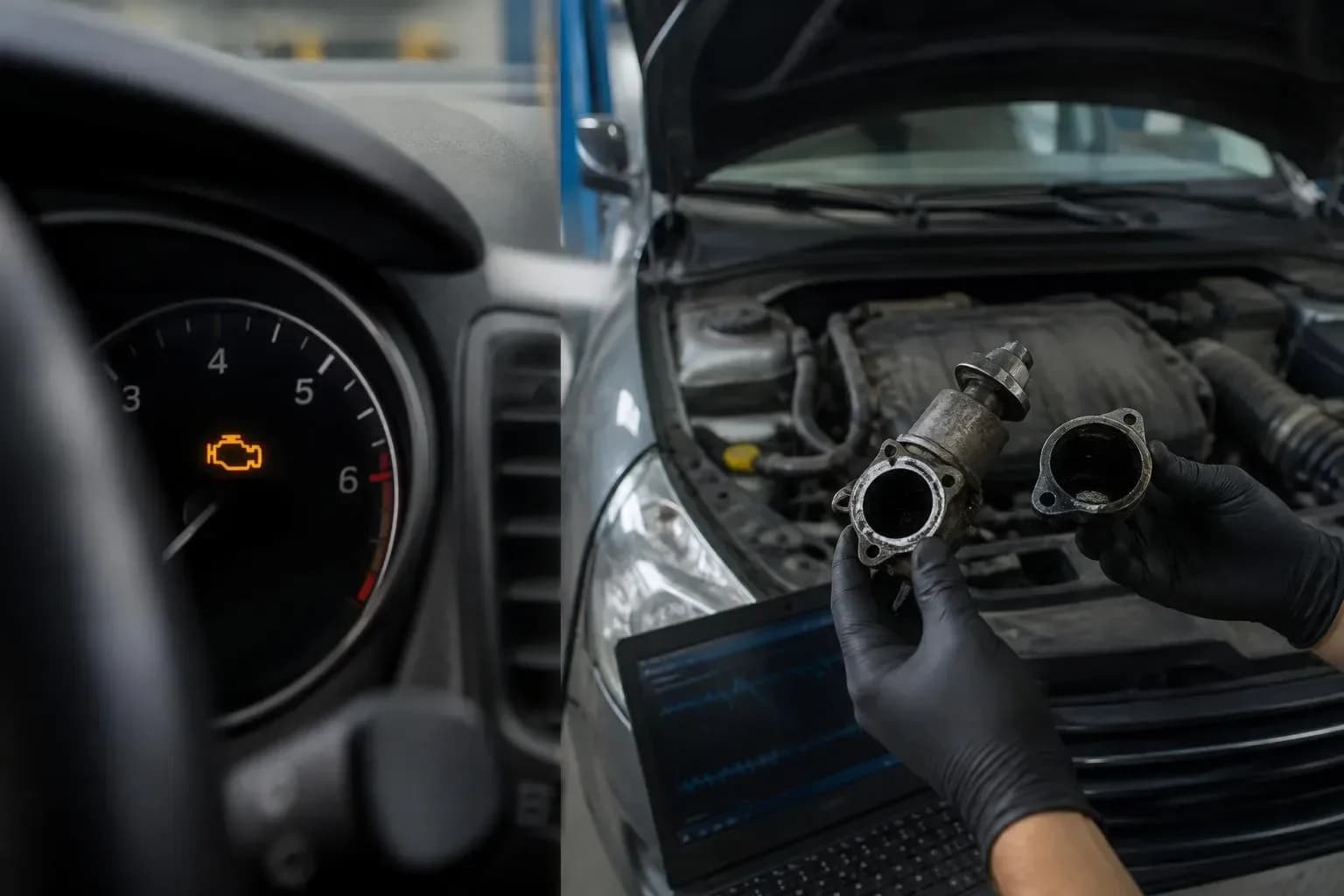
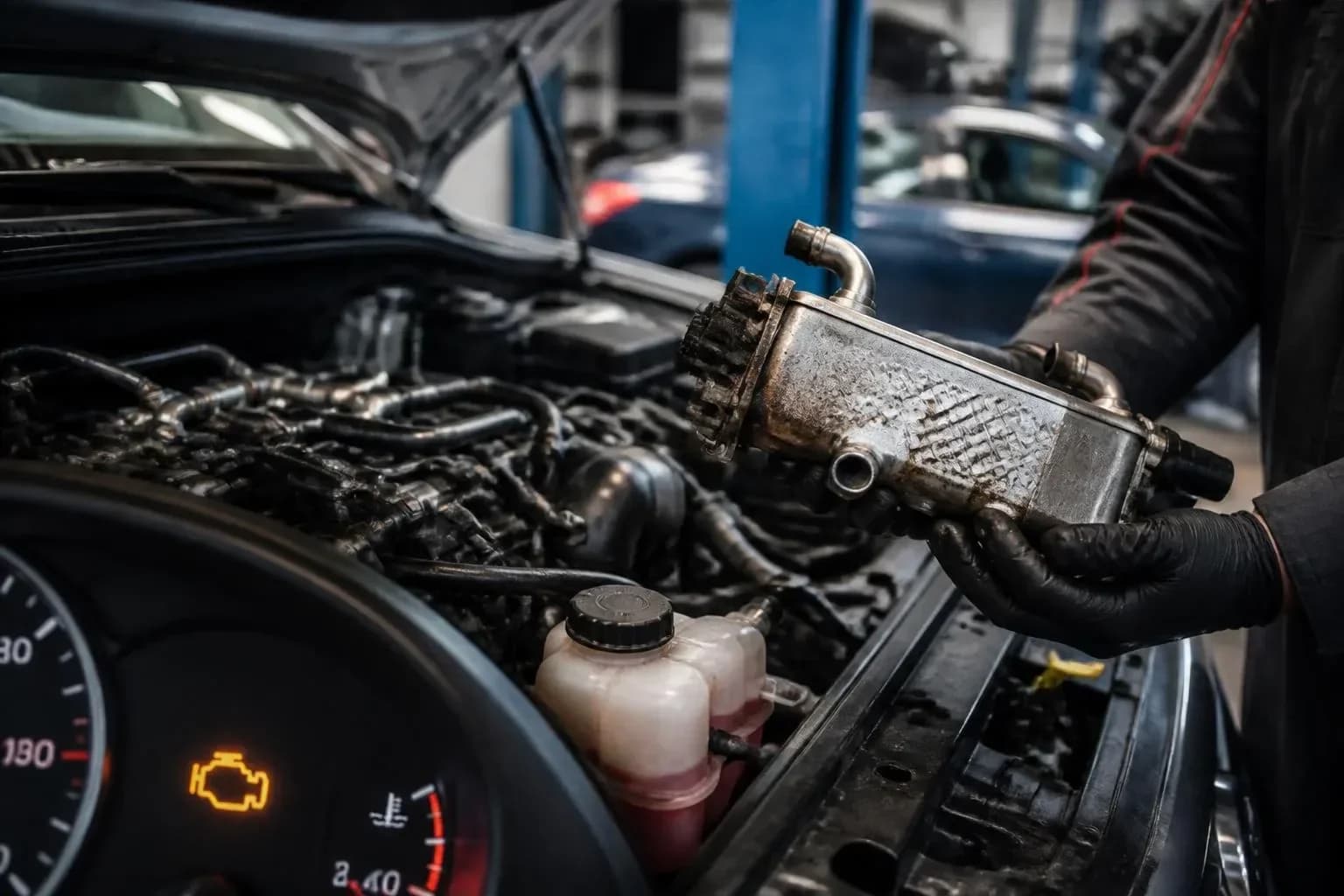
EGR can cause rough running, a sluggish throttle response, smoke and air–exhaust mixture faults. DPF more often causes frequent regeneration attempts, rising fuel consumption, fans running after shutdown and dashboard messages.
If the DPF light appears, a longer drive does not always help, especially when limp mode or differential pressure sensor faults are present at the same time.
In practice these systems affect each other. An intake leak can increase smoking and load the particulate filter sooner. A sticking EGR can upset the air measurement. A clogged or poorly regenerating DPF can change the turbo’s operating conditions.
That is why diesel engine diagnostics on a Transporter should cover the whole path: air, boost, exhaust and control.
Which symptoms to note before visiting a workshop?
A detailed description of the situation where the Transporter loses power helps most, because the under-load symptom often does not show up at a short stop. Before you book a garage visit, note when the problem occurs and what you see on the dashboard.
Such a description shortens the route to the cause. In the workshop it is then easier to choose a suitable road test, check parameters under load and distinguish a real loss of boost from a sensor fault or an exhaust-side restriction.
- Whether the power drop happens during overtaking, on climbs, with a load or at constant speed
- Whether the glow-plug indicator flashes, the check engine light is on or a DPF message appears
- Whether after switching off and restarting the engine the power returns only briefly
- Whether you hear hissing, whistling, a metallic sound or an unusual noise from the intake area
- Whether the vehicle smokes black, grey or is having more frequent DPF regenerations
- Whether the problem occurs on a cold, warmed-up engine, after rain or only on the road
Can you keep driving with limp mode or P0299?
With a mild loss of power you can usually drive cautiously to a garage, but limp mode under load must be taken seriously. If the vehicle does not accelerate predictably, power disappears during overtaking or heavy smoke appears, further driving can be dangerous for the driver and the engine.
It is not worth repeatedly clearing faults to see “if they come back”. The ECU limits power to protect the boost system, DPF, turbocharger or the engine from operating outside safe limits.
If the Transporter is very weak, jerks, makes loud noises or cannot be merged into traffic safely, calling roadside assistance may be wiser than risking more kilometres.
What does reasonable diagnostics look like?
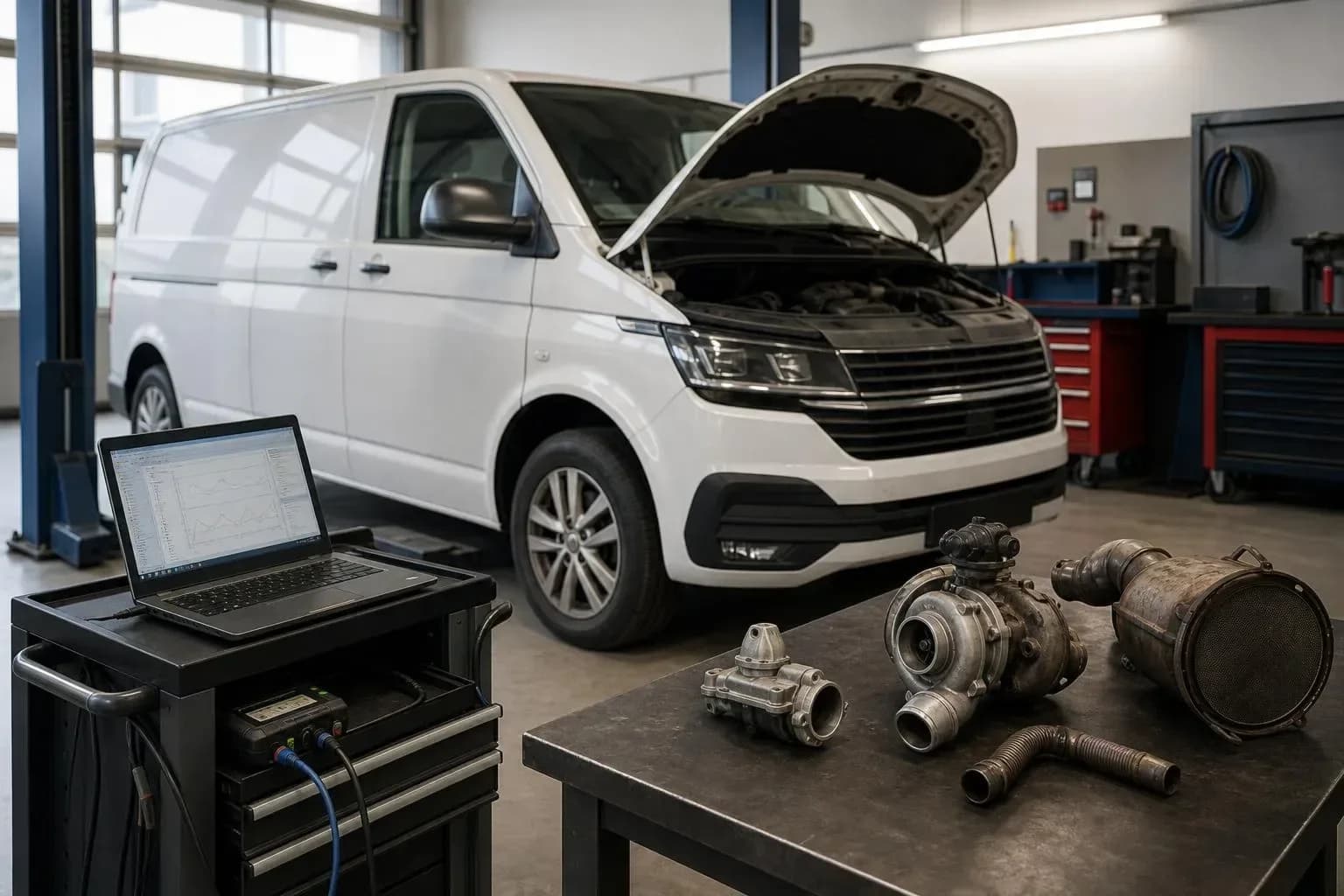
Reasonable diagnostics start with reading fault codes but do not end with a list of codes. For the Transporter T5/T6/T6.1 live data are important: commanded and actual boost pressure, air flow, EGR position, DPF differential pressure, exhaust temperatures and regeneration conditions.
That is why computer diagnostics should be combined with parameter interpretation and often a road test with logging.
The next step is mechanical inspection. The garage checks intake pipe sealing, the intercooler, clamps, vacuum lines, turbo control, the condition of electrical wiring and sensors. In the exhaust system the DPF values and whether regenerations run correctly are significant.
Only combining this information allows a decision whether the vehicle needs repair, part cleaning, intake sealing or further measurements.
The sooner the true cause is found the lower the risk that a small intake leak will lead to more expensive DPF or turbocharger problems.
What not to do before finding the cause?
Before diagnosis it is not worth replacing the turbo, EGR or DPF just because a common fault code appeared. The same symptom can have several causes, and parts in the boost and exhaust systems are linked. A good, honest workshop should first show what was checked and why a given repair is justified.
Also avoid driving continuously in limp mode, pouring random additives and forcing DPF regeneration without confirmation that the filter is actually the problem. If the cause is an intake leak or an incorrect sensor reading, forcing a burn-off will not remove the cause and may only delay the proper repair.
The safest plan is simple: note the symptoms, do not clear fault codes before the visit, avoid heavy engine load and book diagnostics. With a power drop in a VW Transporter the full picture of the diesel engine, boost, intake, EGR, DPF and exhaust system matters more than a single code.