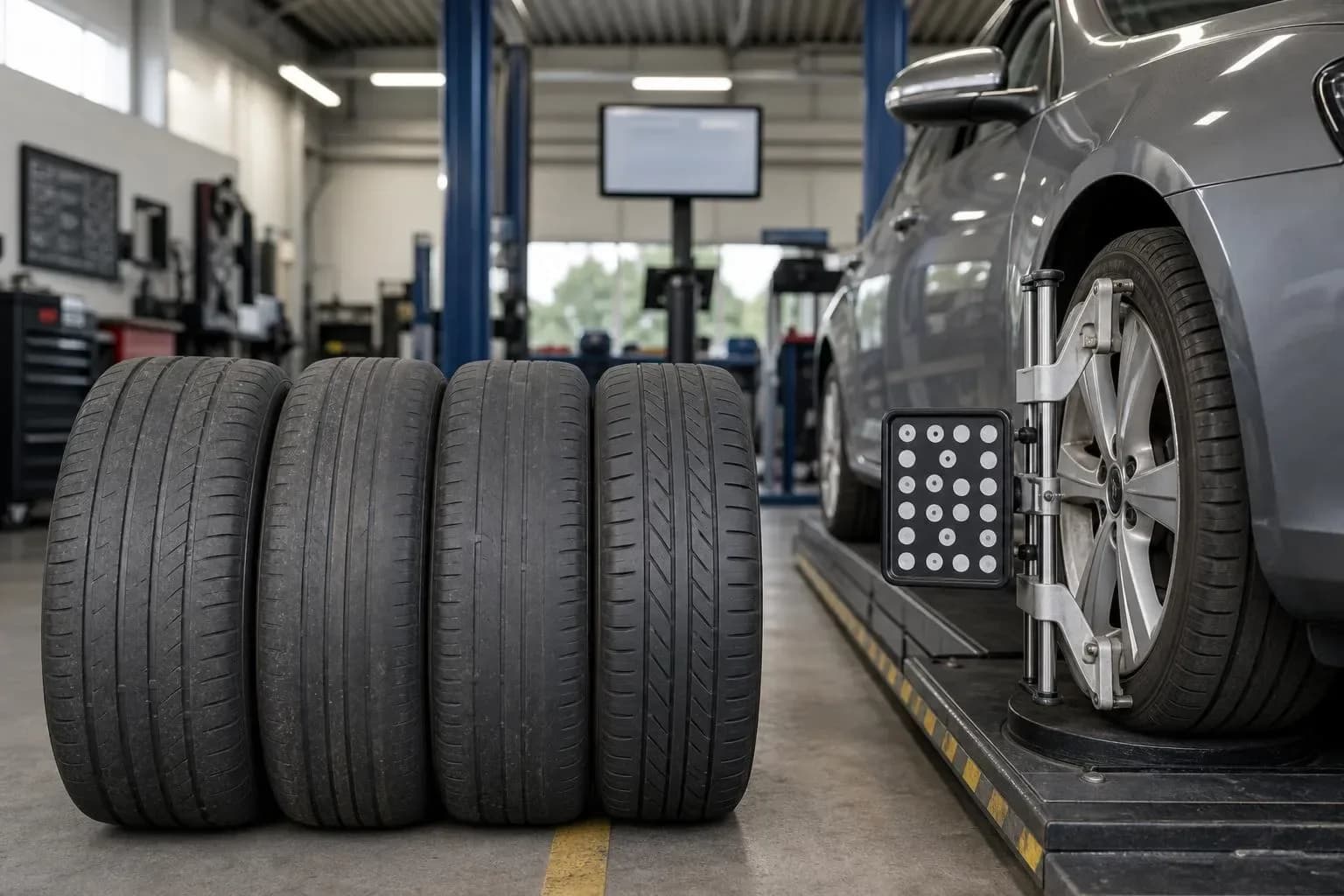
Before fitting last year's winter tyres, inspect each tyre and check the tread depth in several places. If you see a bulge, crack or sidewall damage, do not assume the tyre is safe just because it still has grooves. If in doubt, ask a tyre specialist to inspect it.
Tread: check depth and evenness
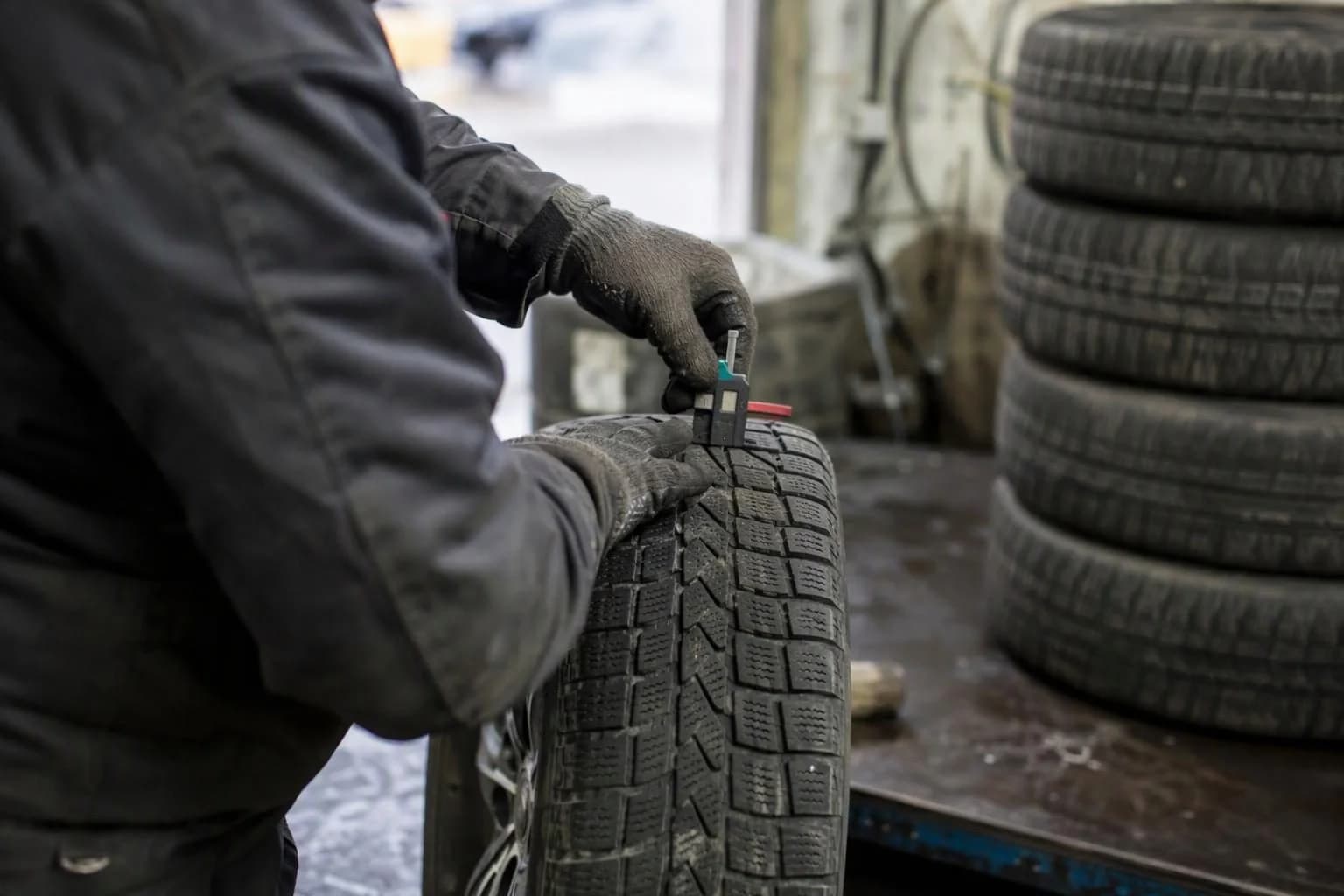
The number of seasons a tyre has been used does not, by itself, determine whether it is suitable for reuse. Its current condition matters. Check the tread wear indicators, marked TWI, and measure the tread depth with a gauge. Inspect the tyre in several places, including the inner and outer edges, and compare wear across its full width.
In Poland, the legal minimum tread depth for a passenger car is 1.6 mm. This is a legal limit, not a recommended safety margin for winter driving. ADAC and Continental recommend a minimum of 4 mm for winter tyres in winter conditions. Do not confuse this recommendation with the Polish legal requirement.
If the tread is unevenly worn, its depth alone will not explain the cause. This type of wear can be related to factors such as tyre pressure or wheel alignment. Mention it during an inspection rather than assessing only the most worn or best-looking part of the tyre.
- Check each tyre individually, not just one tyre from the set.
- Measure the tread in several places and compare both edges with the centre.
- If you notice uneven wear, ask for an assessment of its cause. Find out when a tyre and wheel alignment check is urgent in the article about tyre servicing and wheel alignment.
Tyre damage and age also matter
Inspect the tread and both sidewalls. Cracks, cuts and bulges need to be assessed by a professional. Sidewall damage requires particular attention because it can lead to a sudden loss of pressure. An external inspection cannot confirm the condition of the tyre's internal structure, so a good appearance does not guarantee that there is no hidden problem.
You can check the tyre's age using the DOT marking on the sidewall. There is no single age limit that automatically determines whether every tyre is suitable for use. Manufacturers give different recommendations: Michelin advises an annual inspection by a professional after 5 years of use and recommends replacing tyres as a precaution after 10 years from manufacture, while Continental recommends replacing tyres more than 10 years old. Check the guidance for the specific tyre and take its condition into account.
Storage conditions also matter. The fact that tyres were stored from spring to autumn is not enough to determine whether they are still suitable for use. Tyres being returned to service after storage should be professionally inspected before being refitted. A detailed service assessment is especially important if there is visible damage, uneven wear or if vibrations occurred previously.
Checks before fitting and after installation
Before your appointment, you can prepare the set for an initial assessment: remove loose dirt from the tread so it is easier to see its condition, read the DOT marking and note any areas that look different from the rest. Do not try to decide for yourself whether damage is superficial or has affected the tyre. This needs to be assessed by a professional.
A professional inspection may include checking the tread and sidewalls, assessing tread depth and evenness of wear, and checking the pressure and wheel. If the external appearance does not explain vibrations or another noticeable problem, a more detailed service assessment is needed. After fitting, check the pressure when the tyres are cold and set it according to the vehicle manufacturer's recommendations in the handbook or on the vehicle placard.
Do not assume that the TPMS warning light replaces a pressure check with a gauge. The tyre pressure monitoring system does not remove the need to check pressure according to the car manufacturer's recommendations. If the tyres wore unevenly last season, mention this during your visit so that the pressure and wheel alignment can also be checked.
- Tell the service centre about any damage, vibrations or uneven wear you have noticed.
- Do not guess the correct pressure. Use the car handbook or vehicle placard.
- You can book an inspection and fitting of the set as part of a .
When to limit or stop driving
A bulge, a noticeable loss of pressure or severe vibrations are signs that you should stop in a safe place and not continue driving on the suspect tyre. Do not wait for the symptom to go away or assume that simply inflating a damaged tyre will solve the problem. Contact a service centre and agree on a safe way to proceed.
A crack, cut or sidewall damage also needs to be checked by a professional before the tyre is used again. If there is no sudden symptom but you notice this type of damage before fitting, do not fit the tyre for road use without a service assessment.
Example: before fitting a tyre, a driver reads the DOT marking and finds that it was manufactured more than 10 years ago. They check the guidance for that specific tyre rather than treating its age alone as a universal verdict on whether it is suitable for use.
How to decide whether to refit the tyres
Last year's set should only be refitted after checking the tread, damage and age of the tyres. Tyres being returned to service after storage should be professionally inspected. If there is visible damage, uneven wear, a history of vibrations or any other concern, ask the service centre for a more detailed assessment.