Exhaust smoke does not always mean disaster, but its colour and the circumstances of its appearance are important clues. This text explains what blue, white and black smoke usually indicate, which fault groups most often cause them, and what procedures a workshop will carry out during diagnostics.
You will also read what to note down before visiting the workshop and when to stop driving to avoid worsening the damage.
What the smoke colour tells you — a quick guide
Smoke colour helps the driver recognise whether the issue concerns oil, coolant or fuel. These are clues, not a final diagnosis — workshop measurements are needed to confirm.
Below are the typical causes for each colour.
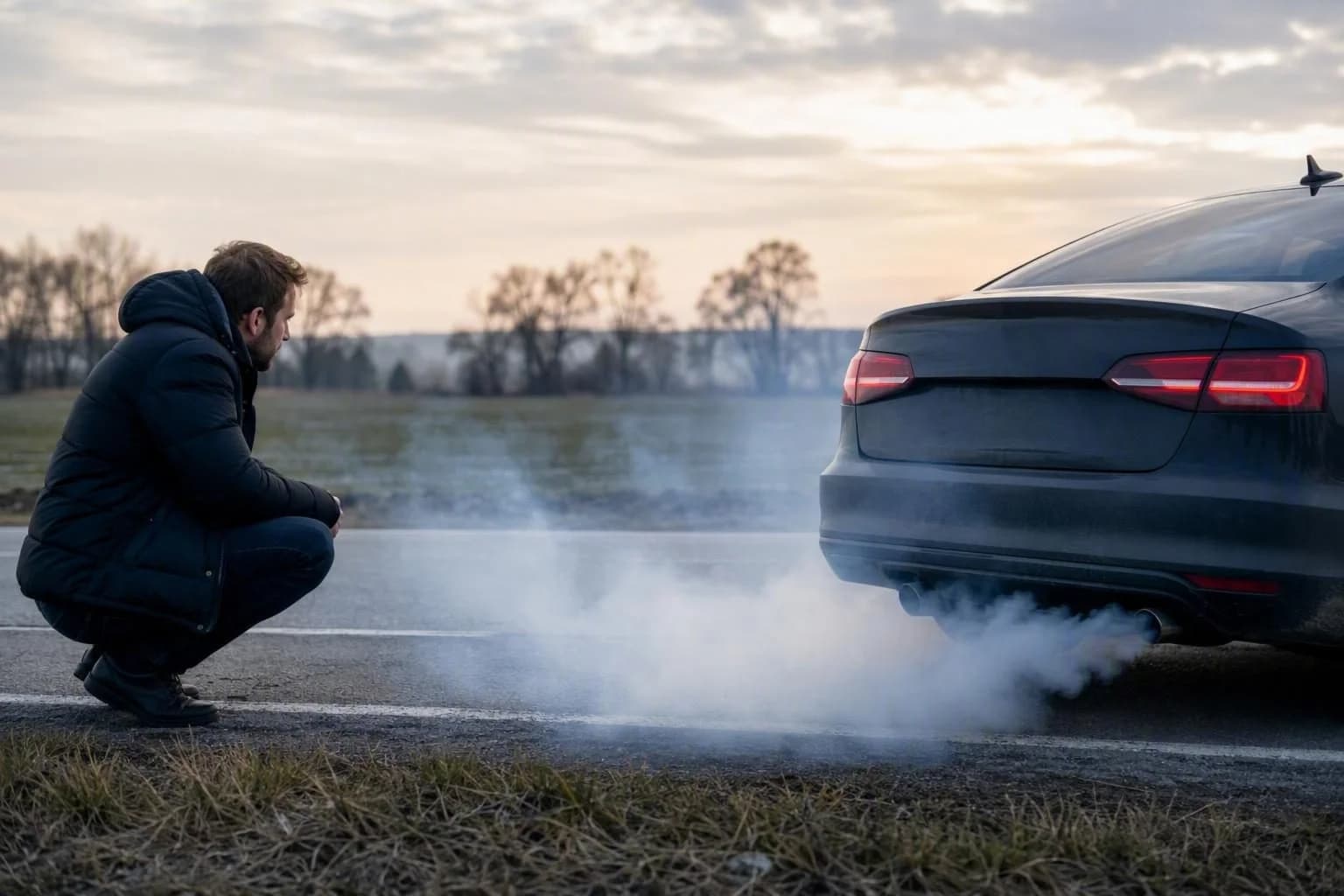
- Blue smoke: usually indicates burning oil — oil reaches the combustion chamber and burns with the fuel. Typical sources are worn piston rings, worn valve stem seals, leaks in the PCV (positive crankcase ventilation)/breather system, a leaking turbo or oil overfill. If smoke appears only at start-up, it more often points to valve stem seals or oil draining into the cylinders; under load the problem may indicate piston rings or the turbo.
- White smoke: a thin mist on cold start is usually water vapour and is normal. Thick, constant white smoke with a sweetish smell usually indicates coolant burning in the cylinder — possible faults are a blown head gasket, a cracked cylinder head or a cracked engine block.
- Black smoke: this is a sign of unburnt fuel — the engine is running too rich. Causes include faulty injectors, excessive fuel pressure, a failed MAF (mass air flow) sensor, oxygen (lambda) sensors, a clogged air filter or problems with the DPF/EGR system in diesels.
What to observe before coming to the workshop
Before you hand the car over to a mechanic, note down the specific symptoms. The more details, the faster the workshop can narrow down the tests.
A few simple observations can significantly ease diagnostics.
- When the smoke appears: only at cold start, while idling, during acceleration, or continuously?
- Colour and intensity of the smoke: thin white, thick white, blue at start-up, blue under throttle, black billowing smoke under acceleration.
- Associated symptoms: loss of power, engine stalling, overheating, rapid loss of oil or coolant level.
- Oil condition: dipstick level, smell (e.g. sweet — glycol), appearance (a milky emulsion indicates coolant in the oil).
- Environment and conditions: outside temperature, trip length (short trips favour condensation).
How diagnostics proceed in the workshop — step by step
The workshop will perform tests according to priorities. Some tests require specialised tools and experience, so have them done by professionals.
Below is the typical diagnostic path mechanics use when there is exhaust smoke.
- Interview with the driver: when and how it smokes, what symptoms accompany it.
- Check the level and condition of oil and coolant — look for a milky emulsion or glycol smell.
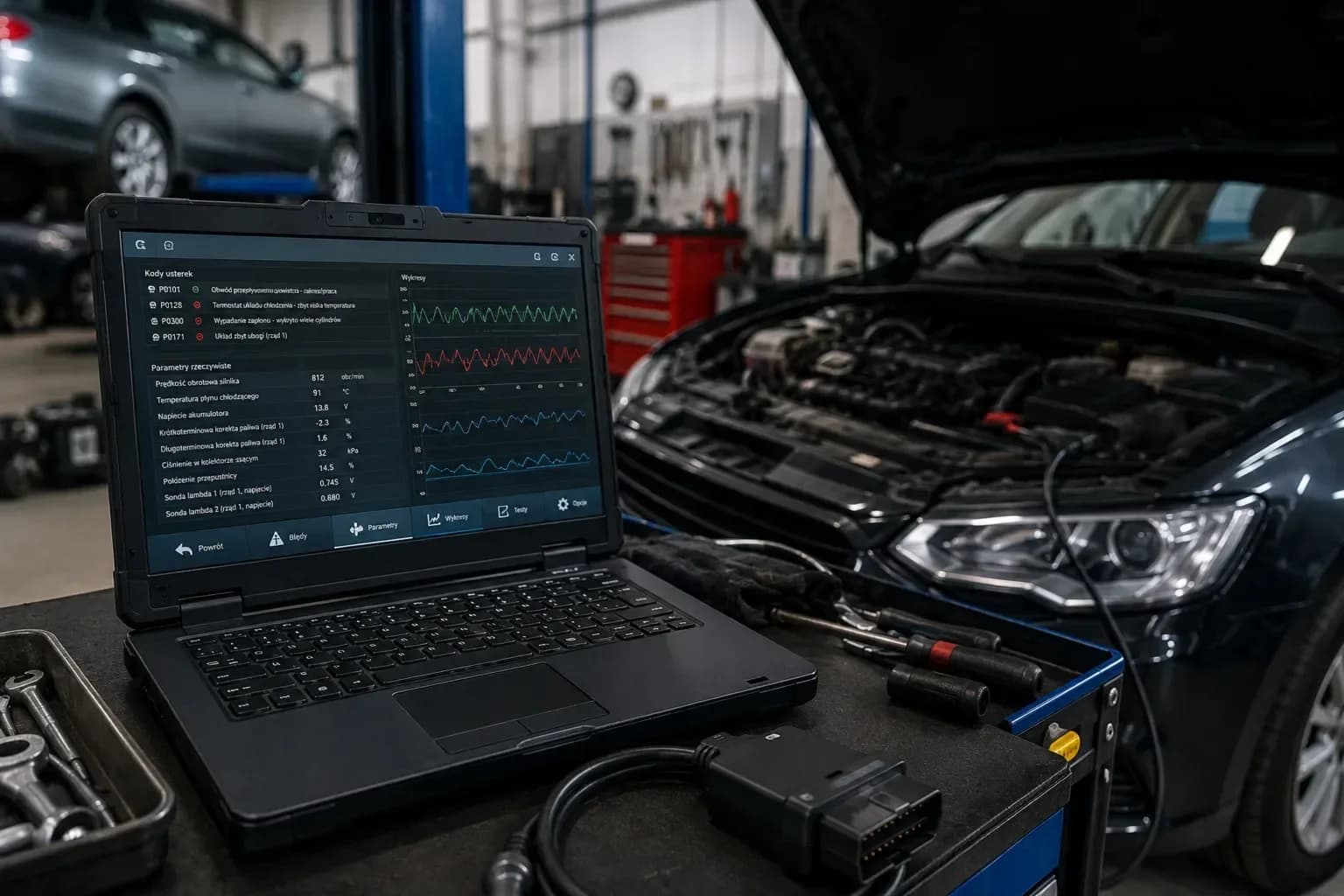
- OBD scan: read fault codes related to oxygen sensors, injectors, the MAF sensor, turbo control, etc.
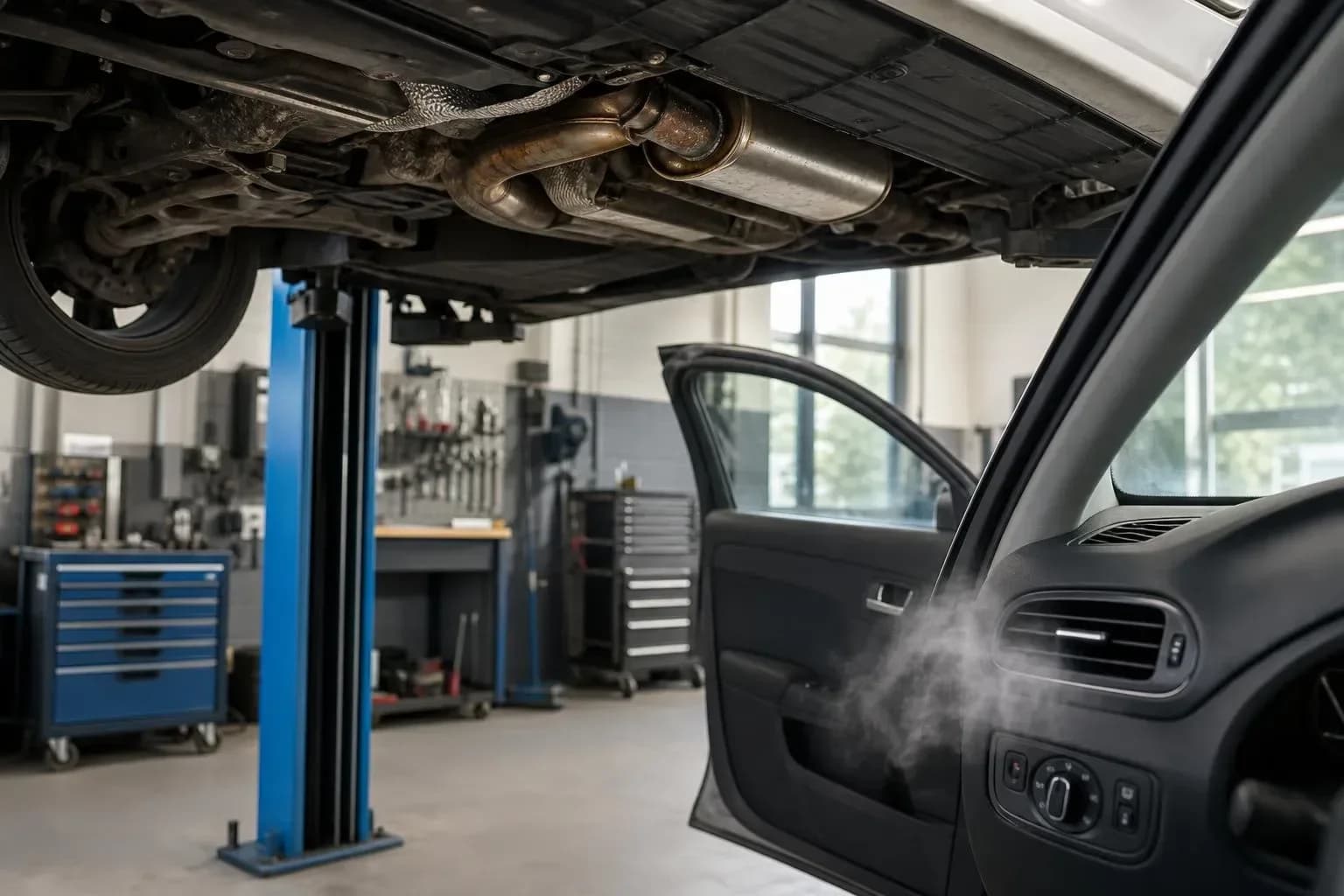
- Check the PCV/breather system: inspect hoses and ventilation valves.
- Inspect the turbocharger and intake pipes (if present): oil leak into the manifold or damaged seals.
- Cooling system tests: radiator pressure test and a block/combustion-leak tester — detects exhaust gases entering the coolant.
- Compression measurement and leak‑down (cylinder sealing) test — reveal worn rings or head gasket leaks.
- Inspect the fuel system and filters and in case of black smoke.
When to limit or stop driving
You do not always need to tow the car immediately. However, there are situations where continued driving risks serious engine damage and should be stopped.
If you observe the following symptoms, stop the vehicle and arrange transport to a workshop:
- Thick white smoke plus a simultaneous, rapid drop in coolant level or overheating — risk of a blown head gasket or a cracked head.
- Intense blue smoking with rapid oil loss — risk of bearing damage and severe internal destruction; switch off the engine.
- Significant loss of power accompanying the smoke — driving may be unsafe.
- Milky emulsion on the dipstick or under the oil filler cap — sign that coolant has entered the oil; further use can destroy bearings.
- Strong chemical smells (sweet glycol smell) or smoke that quickly intensifies.
What the workshop can do and typical repairs
After performing tests the workshop will propose a scope of repairs. The groups below are examples, not an exhaustive list — final work depends on diagnostic results.
Important: we do not recommend performing critical repairs yourself, especially those involving a head gasket, turbocharger overhaul or engine disassembly.
- Replace/seal the turbocharger or intake pipes if oil leak from the turbo is found.
- Refurbish or replace valve stem seals and/or piston rings when oil is being burned.
- or head gasket if coolant is entering the cylinders.
- Clean/repair the fuel system and injectors and check sensors (MAF, oxygen) for black smoke.
- Eliminate causes related to the PCV/breather system and check crankcase ventilation flow.
- For DPF: diagnose the regeneration system and possibly clean or repair the system.