The most common symptoms are stalling at idle, stalling when slowing for a junction, uneven idle and difficulty restarting. This is often accompanied by the Check Engine light coming on or flashing.
Causes can be grouped into air intake, fuel system, ignition and engine control. Pinpointing the source requires reading data from the engine control unit (ECU) and workshop tests.
When to stop driving
Safety is the priority. If the engine stalls while driving on a public road - try to move to a safe place, switch on the hazard lights and call for roadside assistance or towing.
Stop driving immediately if any of the following occurs:
Repeated stalling in traffic, especially if you lose steering or braking assist.
A single stall while stationary can be checked later, but if the engine will not restart or restarts very unevenly, go to a workshop or call for help.
If you lose power steering or brake assist after a stall - the situation is dangerous and you should not continue driving.
- Stalling in traffic - stop safely and call for help.
- Repeated stalls - do not continue driving.
- Loss of steering or brake assist - towing is necessary.
Possible groups of causes and mechanisms
Causes of stalling can be grouped. Below are brief explanations of how each group works to help recognise likely faults.
- Intake system and MAF (mass airflow sensor) - an intake leak or a dirty/faulty MAF causes incorrect air metering. The ECU receives wrong information and the mixture may be too lean or too rich, leading to stalling at low revs.
- Fuel system and fuel pressure - low or unstable pressure, clogged filters or partial pump failure cause interruptions in fuel supply, especially at idle.
- Ignition system and injectors - intermittent spark, a faulty ignition coil, spark plugs or a failing injector can cause rough running and stalling. This is often accompanied by the engine warning light.
- Engine control sensors (TPS, MAP, IAT, crankshaft/camshaft position sensor) - faulty sensors or ECU errors lead to incorrect fuel trim adjustments and intermittent running.
- EGR valve and exhaust system - an EGR valve stuck open introduces exhaust gases at low revs, diluting the mixture and potentially choking the engine.
- Vacuum system and control valves - leaking vacuum hoses affect throttle control, EGR operation and pressure regulation, disturbing idle speed.
- EVAP system (fuel tank vapour recovery) - a purge valve causing excess fuel vapour in the intake can temporarily enrich the mixture and cause unstable idle after refuelling.
What the driver can check without tools
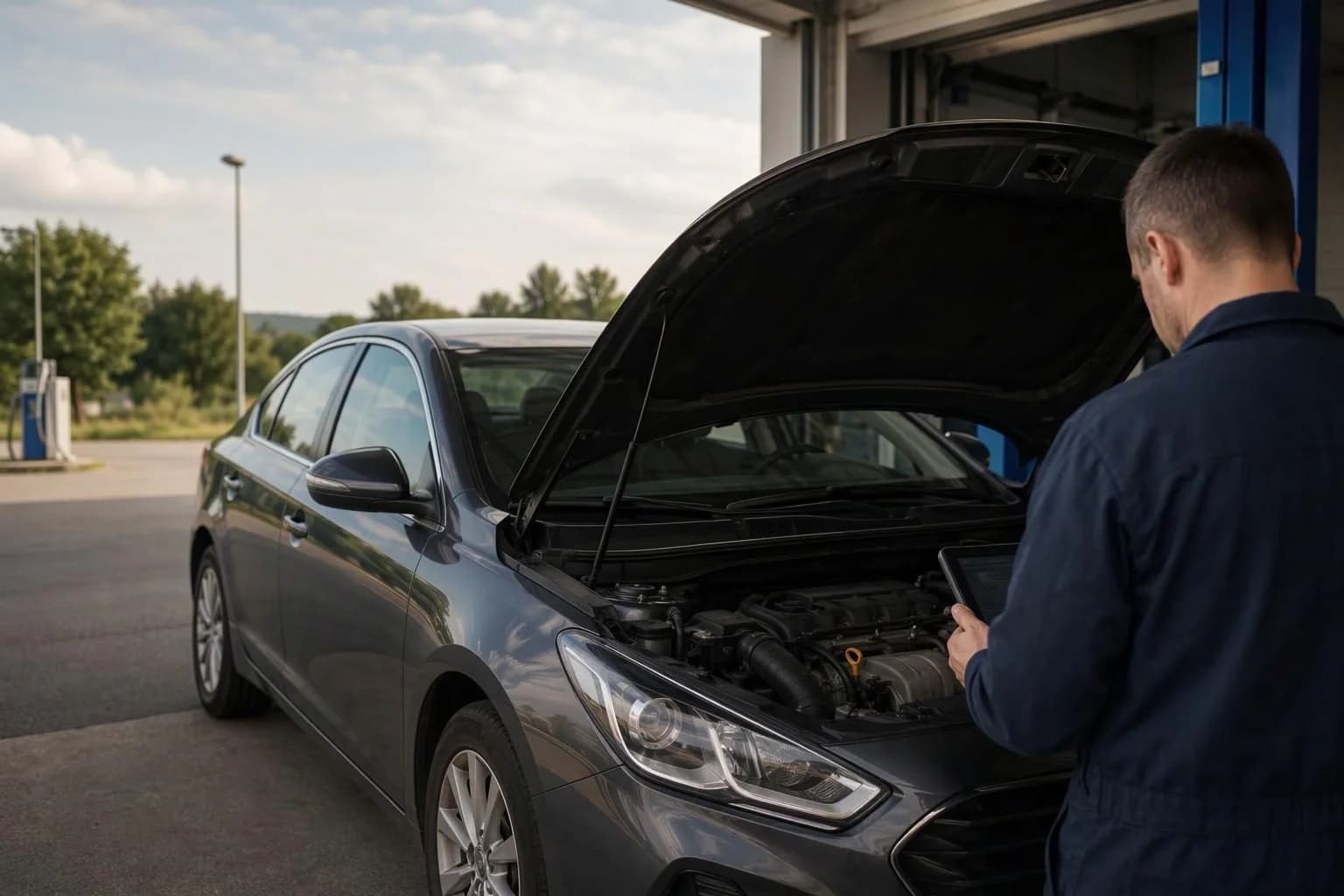
There are simple, safe checks you can do before visiting a workshop. We do not recommend repairs that require disassembly, working under the car or specialist tools.
- Check for loose or disconnected wires and electrical connectors under the bonnet. Pay attention to connectors at the MAF, throttle body and ignition coil plugs.
- Inspect vacuum hoses - look for cracks, disconnections or hoses routed incorrectly. Visual inspection is enough; do not attempt replacement if you lack experience.
- Notice any strong petrol smell near the filler or inside the cabin - a strong fuel vapour smell may indicate an EVAP issue or a fuel leak.
- Check oil and coolant levels and colour by sight only - large losses can accompany other problems but alone do not diagnose stalling.
- Note the behaviour of the Check Engine light - whether it is steady, flashing, or appeared after a specific event such as refuelling. Record this before the service visit.
How diagnostics are done in a workshop
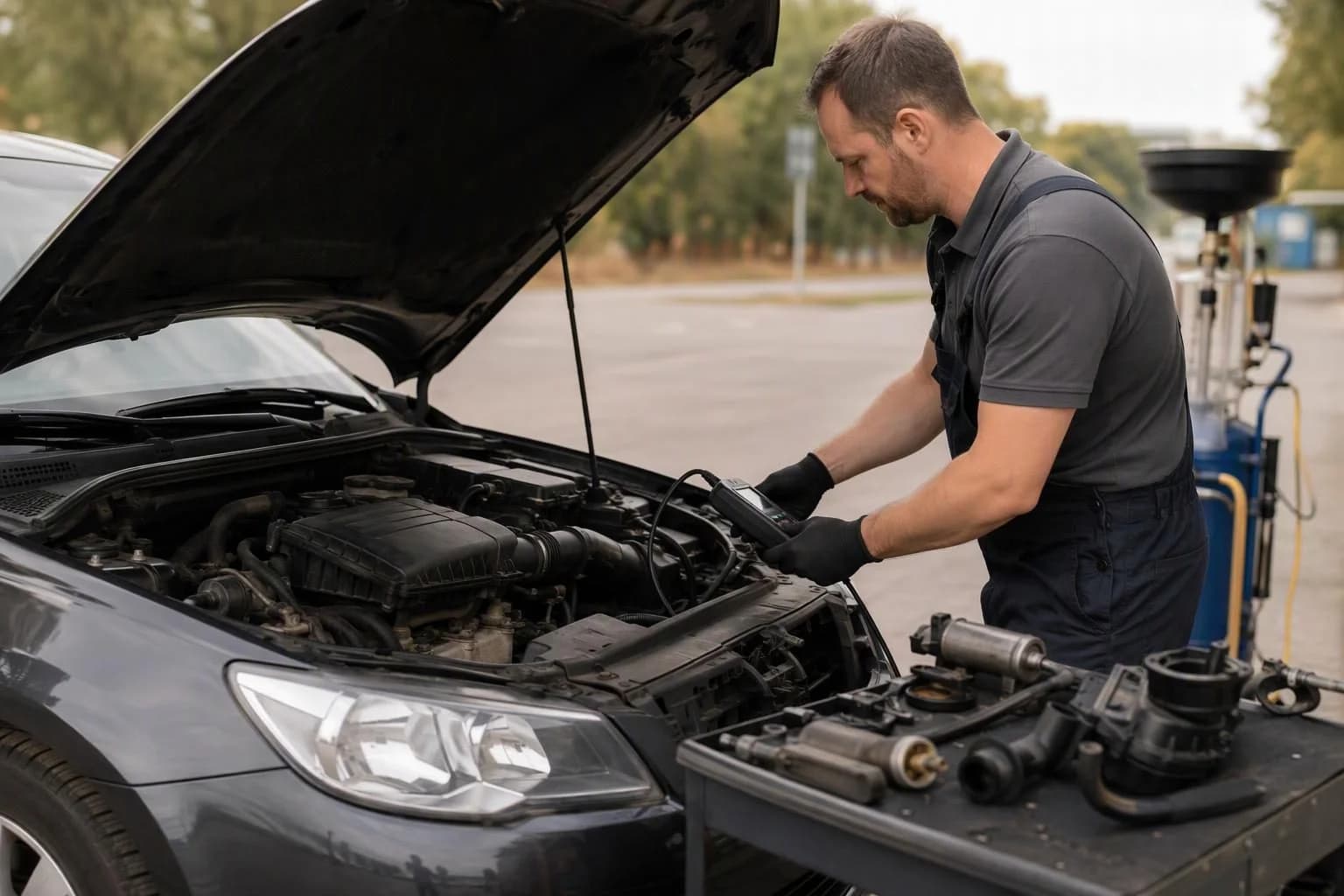
Professional diagnostics proceed from excluding groups of causes to specific measurements. Below are typical test stages used in workshops.
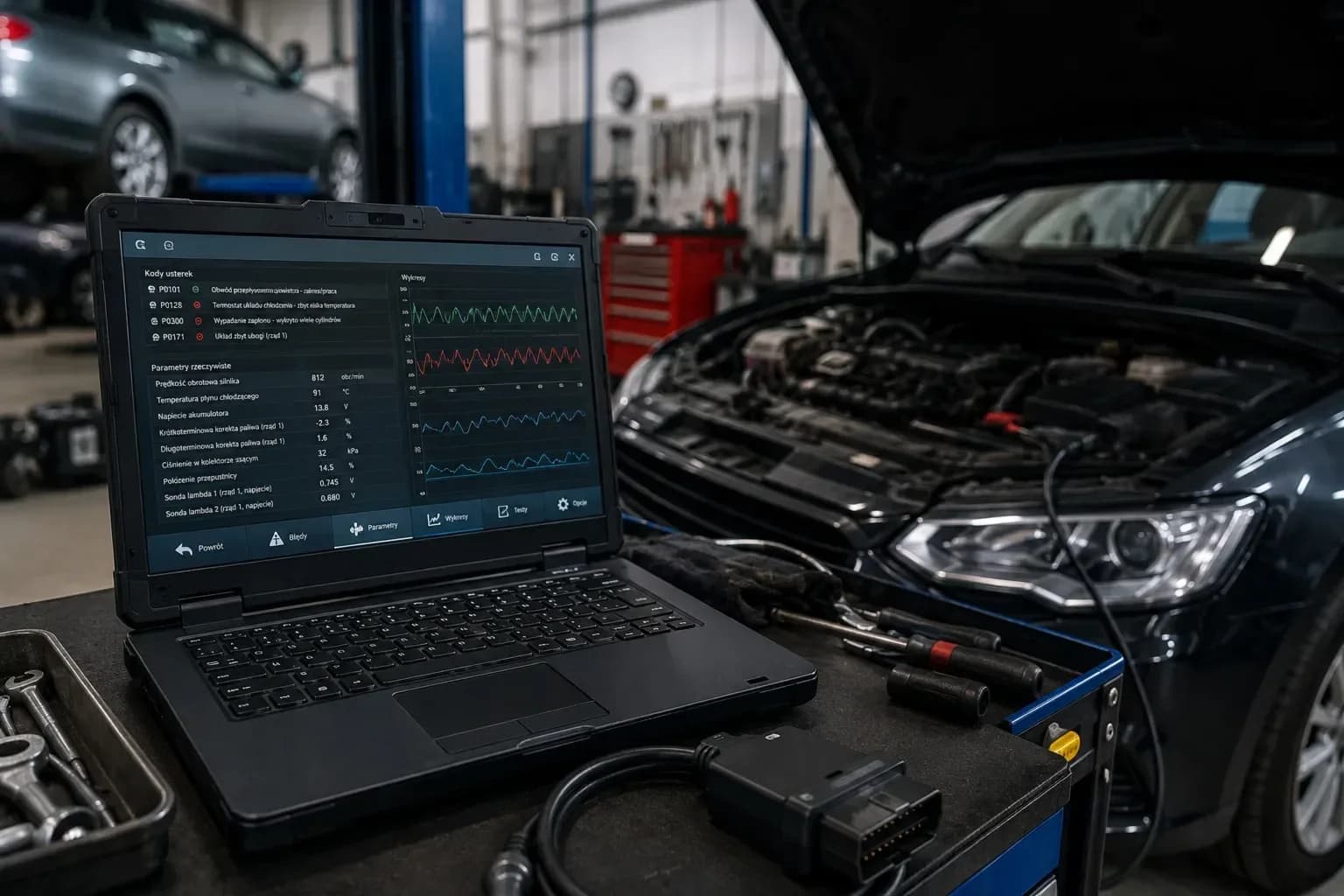
- Read OBD-II codes and analyse live data - check fuel trims, MAF, TPS, MAP, temperature sensor signals and the status of injectors and coils.
- Measure fuel pressure - the test shows whether the pump and regulator maintain the pressure required by the system at idle and under load.
- Smoke test - used to detect leaks in the intake system and vacuum hoses.
- Inspect the throttle body and MAF - inspection, diagnostic cleaning and checking signals during engine operation. For the MAF it is important to analyse readings at different revs.
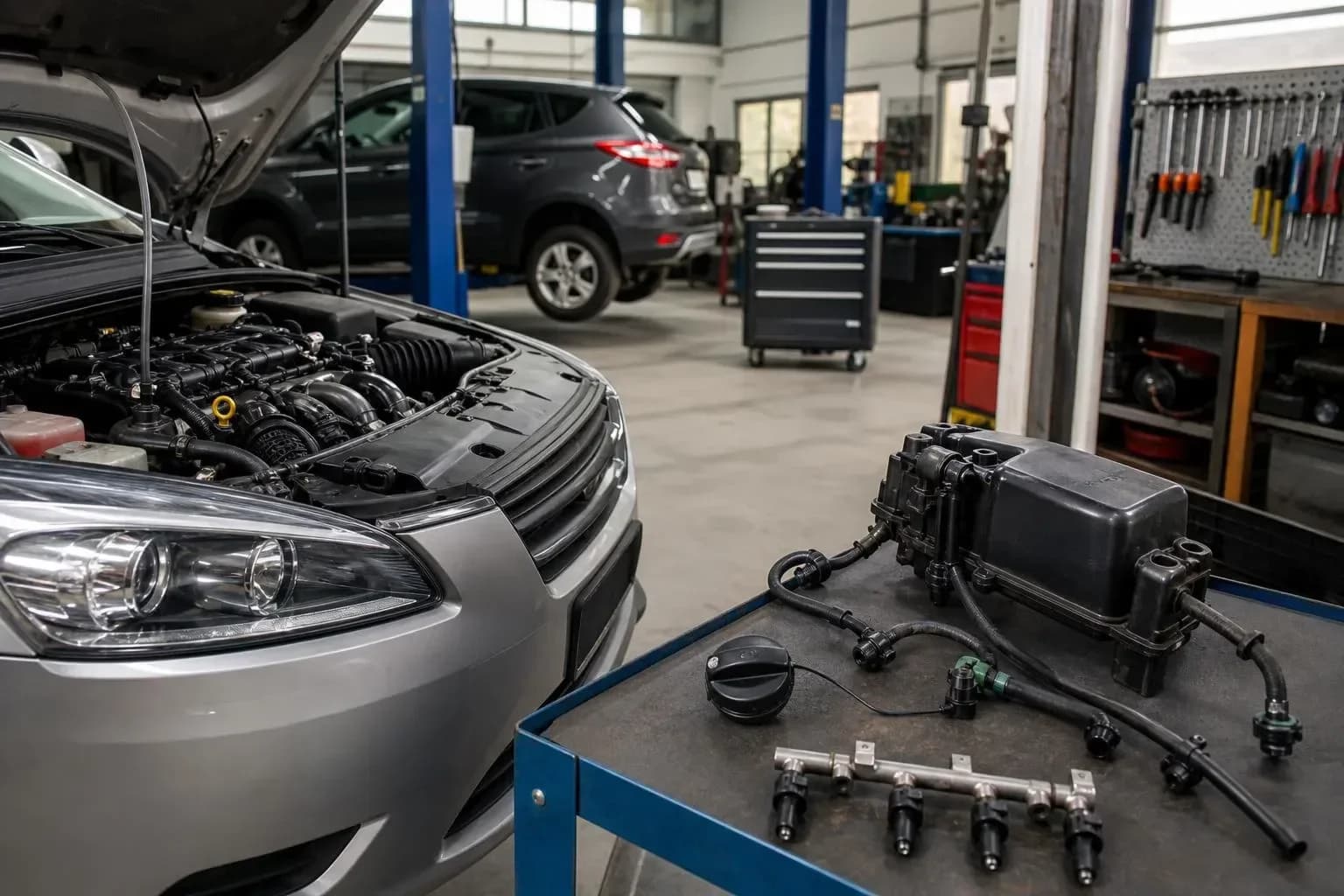
- Test the EGR and EVAP systems - check whether valves are sticking and whether they introduce excess exhaust gases or fuel vapour into the intake.
- Check ignition system and injectors - signal measurements, spark testing and functional tests of injectors if needed.
- Mechanical measurements - if required, perform a compression test or mechanical inspection to rule out internal engine faults.
- These steps allow technicians to eliminate groups of causes without replacing parts 'on a guess'.
Next steps - booking diagnostics and repair
If symptoms recur, the best step is a workshop visit for full computer diagnostics. Data readout and workshop tests will determine targeted repairs.
If fuel supply, ignition or the intake system are suspected, book services: computer diagnostics and engine and ancillaries repair.