You are driving to work when a warning light comes on, but the car still seems to be behaving normally. A diagnostic scan can help identify an area that needs checking, but it does not establish the cause on its own. If there is a serious symptom or a warning about an important system, decide whether to continue driving based on the handbook for your specific car and how it behaves.
This guide explains how to describe a symptom, assess how urgent it is and prepare for a garage visit. You will also learn what an OBD scan can tell you, when further measurements are needed and what questions to ask before agreeing to a repair. For a step-by-step explanation of the process, see the guide to how vehicle diagnostics work.
Note what has changed in the way the car behaves
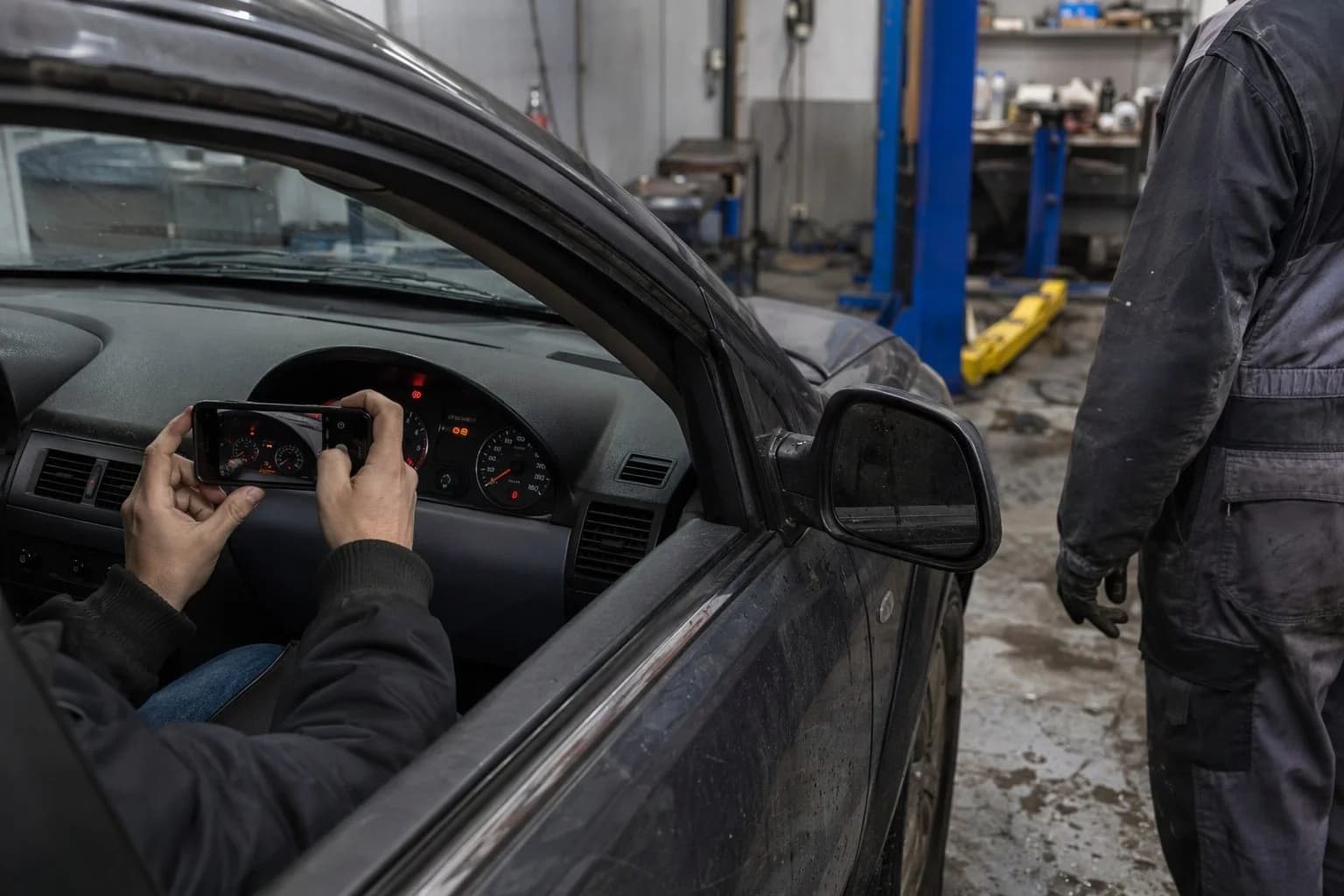
Do not start by looking for a part based on a warning light. Note which warning appeared and what the car was doing at the time. If you do not know what the symbol means, take a photo and check its description in the handbook. The meaning of a warning depends on the system and the specific vehicle.
Describe whether the symptom is constant or occurs only in certain conditions. Look out for uneven engine running, stalling, difficulty starting, loss of power or unusual behaviour from the electronics. Note what you were doing when the symptom appeared, for example accelerating or coming to a stop.
The engine warning light may be linked to an issue in a monitored area, including one related to emissions or combustion. The cause may be different in some models, so check the warning light description in the handbook and tell the garage about any accompanying symptoms. Do not assume that the light identifies a specific part.
Keep observations separate from assumptions in your notes. “The engine stalled when I stopped” describes what happened, while “the sensor has failed” is a hypothesis. The garage will find information about what happened and when more useful than an unconfirmed diagnosis.
- Write down the warning message or take a photo of the warning light.
- Describe when the symptom occurred, how long it lasted and whether it later went away.
- Note exactly how the car behaved: stalling, loss of power, difficulty starting or a change in how the electronics worked.
Stop driving if the handbook or symptoms tell you to
If a warning remains on after starting the car, check what it means in the handbook for your model. The colour of the warning light or a description found for a different car is no substitute for the manufacturer's guidance. There is no single rule that makes it safe to continue driving whenever the engine warning light is on.
A flashing engine warning light, loss of power, stalling, difficulty starting or unusual behaviour from an important system calls for urgent assessment. Do not assume it is safe to drive just because the car is still moving or a scanner has displayed a fault code. Check the handbook and follow the guidance for your car. If you are concerned, do not continue driving.
Warnings relating to coolant temperature, oil pressure and the brakes require particular attention. The manufacturer's instructions for specific models may advise stopping the vehicle or switching off the engine. Do not apply this guidance to other cars. If the handbook tells you to stop, find a safe place and follow its instructions.
For example, the engine warning light starts flashing and the car loses power. The fact that the engine is still running does not establish whether it is safe to continue driving. Stop in a safe place, check the handbook and arrange an urgent assessment by a garage. Do not wait for a fault code scan if the handbook advises you to stop driving.
Do not clear a warning just to see whether the problem comes back, and do not treat a scan as an assessment of safety. A vehicle diagnostic scan can help identify the area where a fault may lie, but whether to continue driving must be decided in light of the symptoms and the handbook for your specific car. If the warning light is flashing, the guide to the diagnostic process explains what to expect from a garage, but it does not replace the manufacturer's advice.
An OBD scan points to an area, not a definitive diagnosis
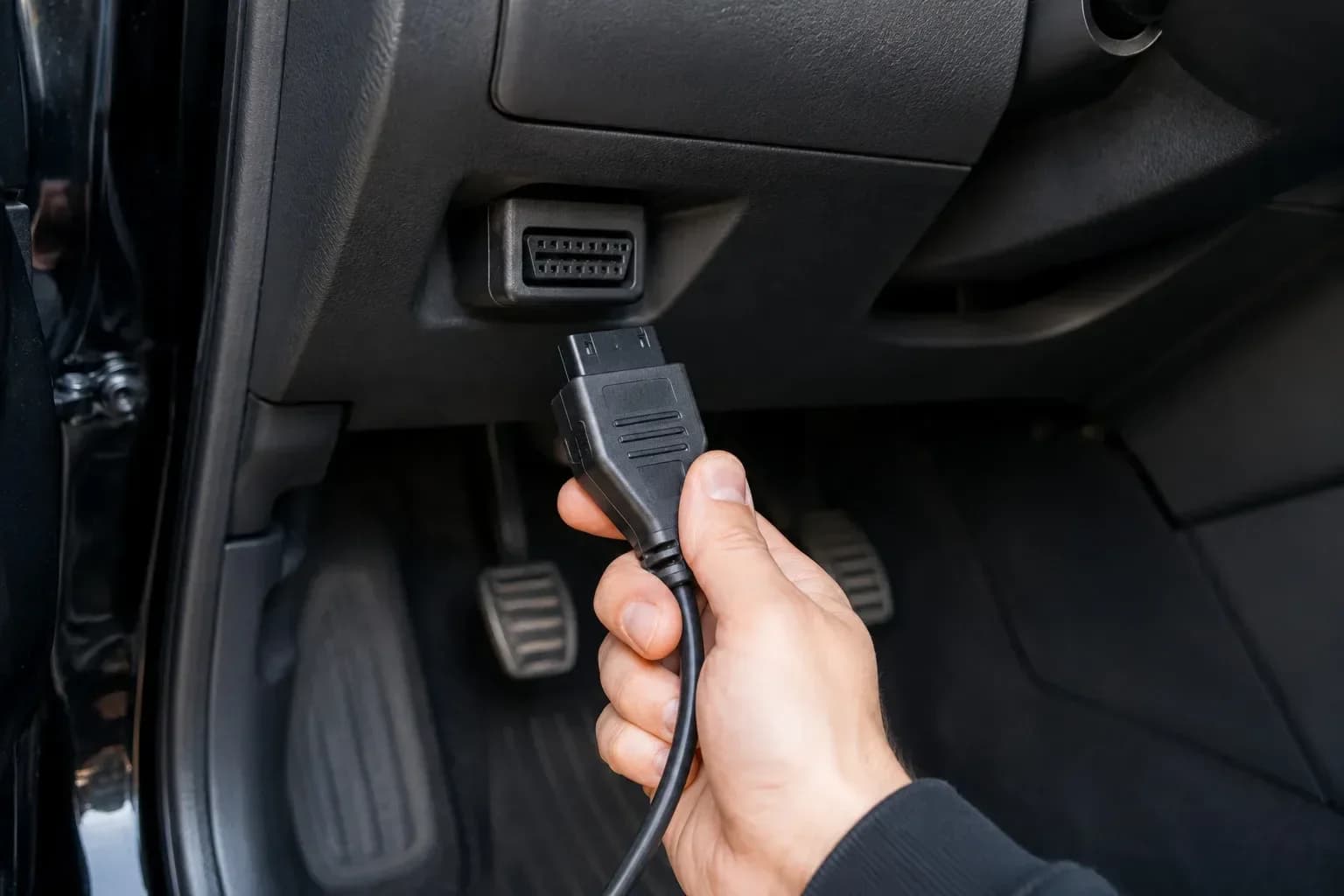
OBD is the vehicle's onboard diagnostic system. Within the scope provided for a particular car, it monitors selected systems and may store information about a detected fault. For more about what OBD means and the role of the connector, see the guide to the OBD system.
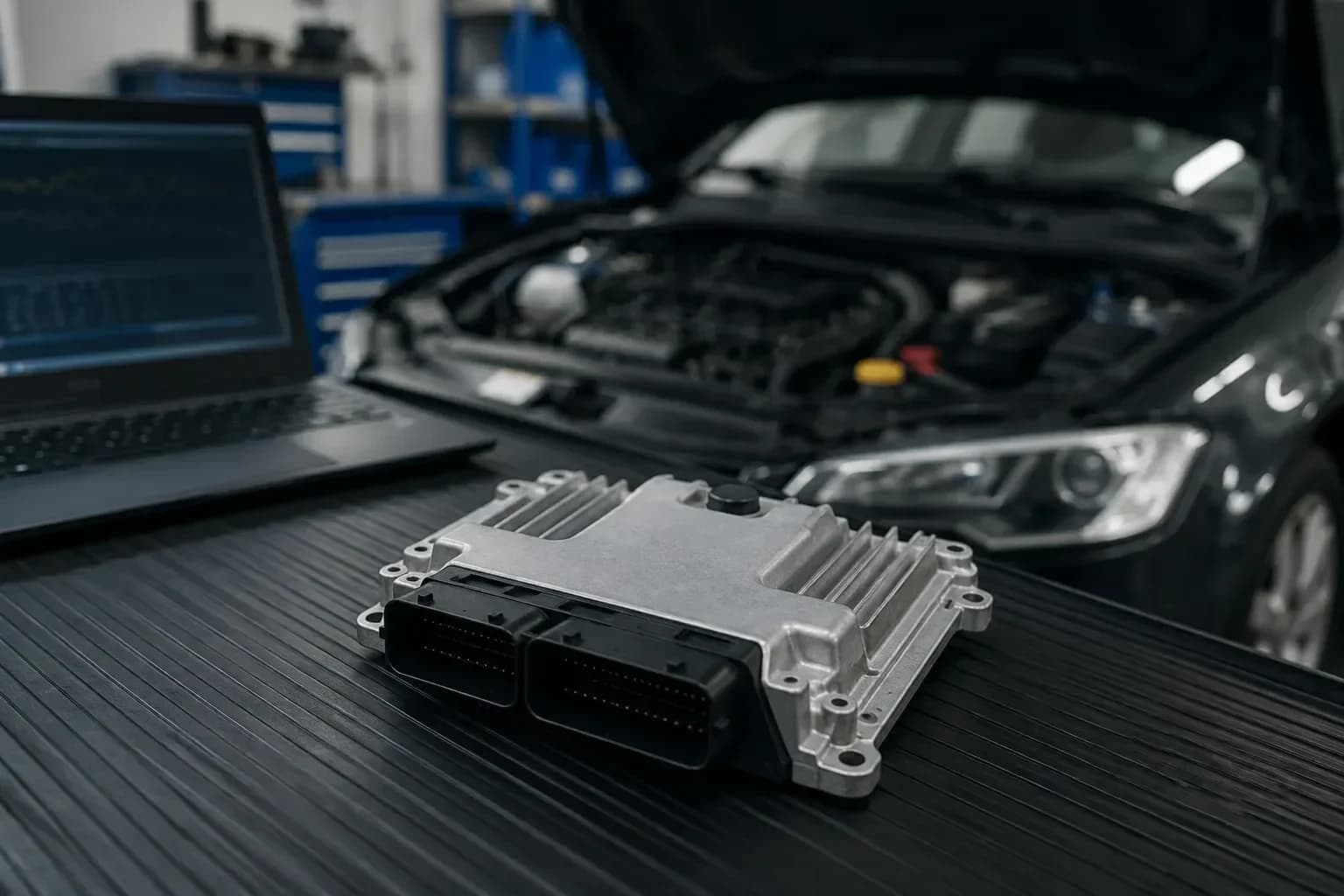
A scanner reads information available through the connector and supported by the device. The ability to check other control units depends on the car, the scanner's capabilities and software, and access to manufacturer data. The ECU, or engine control unit, is one of the vehicle's computers. Connecting a scanner does not in itself mean that the scan will cover every system. Read more about the role of the ECU in the guide to the ECU.
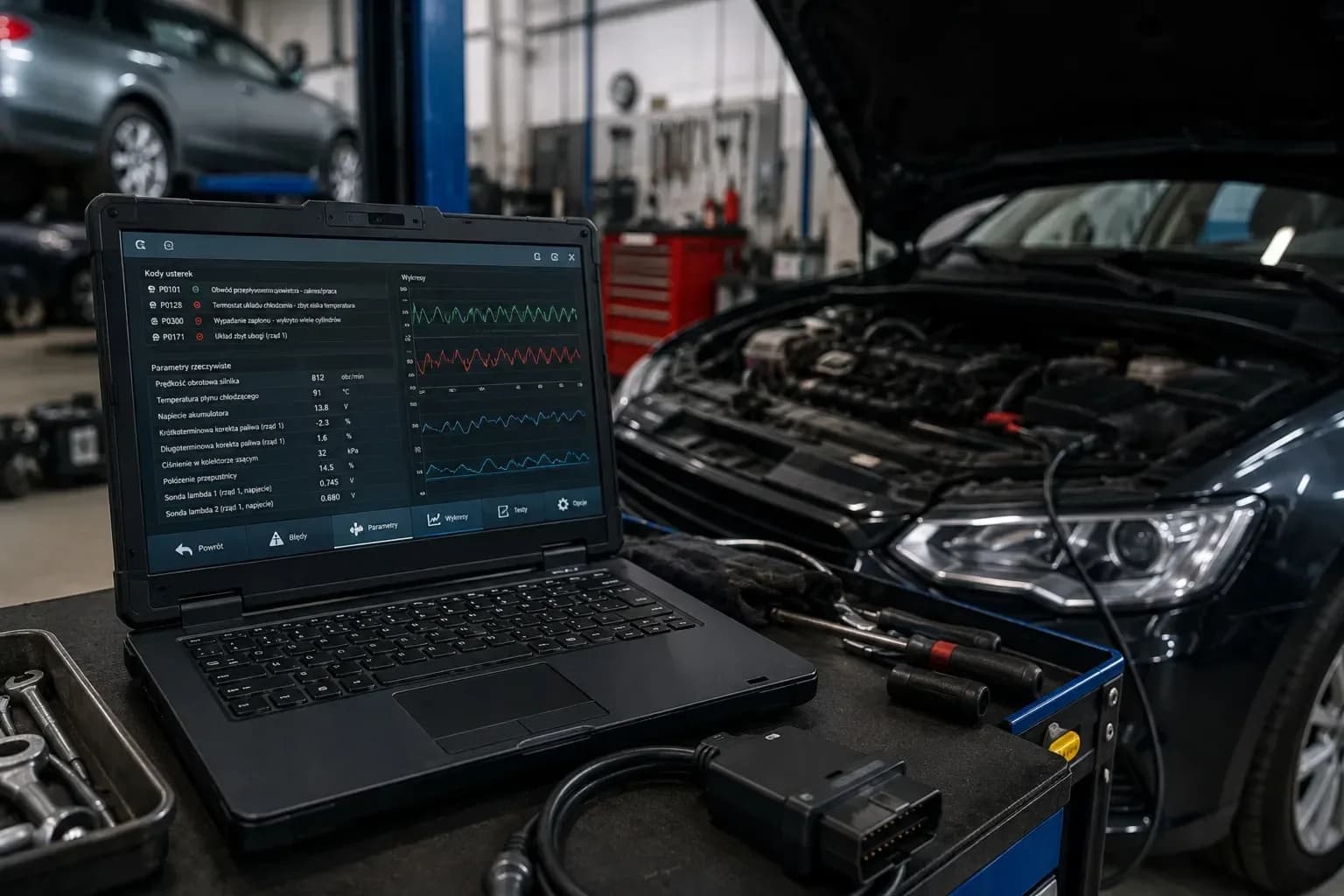
A fault code describes an area or condition in which the system detected a fault. On its own, it does not confirm that the part named in the code has failed or needs replacing. If the scan does not explain the symptom, further measurements or a visual inspection may be needed. The guide to vehicle diagnostics explains this checking process in more detail.
The absence of a stored fault code does not confirm that the whole car is working properly either. OBD monitors selected systems, and the scope of the scan depends on the vehicle and the device. If the symptom recurs, tell the garage even if the scanner has not shown a fault code that explains it.
If you use your own reader, treat the result as information for the garage, not as a basis for buying parts. The description of a fault code in an app does not establish the cause. The guide at how to use an OBD reader before visiting a garage explains how to collect and share the result.
If the problem is intermittent, note the conditions in which it occurs
A fault that occurs only occasionally may not show up during a garage visit. The system may store information about a detected fault, but an intermittent symptom will not always leave a fault code. This is why notes from the driver are useful even if the warning light has gone out and the car is temporarily behaving normally.
Note whether the problem appeared after starting, once the car had warmed up, while accelerating, when stationary or after a longer drive. Describe exactly what happened and whether the symptom went away on its own. Do not deliberately try to reproduce it in conditions that would require risky driving.
If you used a reader, show the result to the garage and say which device or app you used. Mention it if you cleared a stored fault code as well. You do not need to interpret the scan or identify a part for replacement.
For example, a warning light appears while driving, goes out after restarting the car, and loss of power happens only occasionally. Note the order of events and the conditions in which you noticed them. Do not assume the symptom can be reproduced at the garage or that the control unit will store information about every occurrence.
Before your visit, prepare a short description rather than relying on your memory. It is enough to answer these questions: what happened first, how did the car respond and did the problem go away? For further advice on preparing a car for inspection, see the guide to preparing your car.
When buying a car, treat a scan as one source of information
A scan may reveal selected information stored by the vehicle's systems, but it does not confirm the car's overall mechanical condition. When buying a car, consider the scan result separately from other observations. Do not treat the absence of visible warnings or fault codes as proof that every component is working properly.
The scope of a scan depends on the car and the device used. If the scanner displays a stored fault code, ask what can be established from the available information and what needs further investigation. The code alone does not confirm that the part it names has failed.
Checking a vehicle by its VIN is not the same as vehicle diagnostics and does not, by itself, confirm its mechanical condition. If you are checking a car before buying it, a separate guide explains the limitations of VIN checks: checking a car by its VIN. Treat a scan as one part of the assessment, not as independent confirmation of the condition of the entire car.
Before winter, focus on symptoms rather than the season itself
There is no confirmed requirement or fixed interval for vehicle diagnostics before winter. The season alone does not mean a scan is necessary if no warning light is on and there are no symptoms. However, if you notice difficulty starting, unusual engine behaviour or a recurring warning, tell the garage about these specific issues.
A vehicle diagnostic scan is not a universal check of every part of the car. OBD monitors selected systems, and a scanner reads information available for the particular vehicle and device. The absence of a fault code does not rule out a problem that needs a different type of assessment.
Before booking an inspection, decide what you want checked: a specific warning light, a recurring symptom or information read by your own scanner. This will help you explain the purpose of the visit without assuming in advance that a particular part needs replacing. If new symptoms appeared after a control unit software update, their possible context is covered in the guide to symptoms after an ECU software update.
- Do not treat the time of year alone as evidence of a fault or a reason to have a scan.
- Report any warning light or change in the way the car behaves.
- If a symptom affects safety or the handbook tells you to stop, follow that advice first.
Tell the garage about the symptoms and establish what further checks are justified
At the start of your visit, describe what you have noticed and the conditions in which the problem occurs. A scanner is connected to the OBD port to read available information and begin assessing the issue you have reported. If the scan does not explain the symptom or points to an electrical problem, further checks may require measurements with a multimeter or oscilloscope, as well as data and wiring diagrams for the specific car. The guide to vehicle diagnostics explains the process in more detail.
Prepare a short list of information: which warning light appeared, when the symptom occurred, whether it is constant or intermittent, what the car was doing at the time and whether the warning is still displayed. Add the result from your own reader if you used one, and say if you cleared any stored fault information. You do not need to interpret the fault code yourself.
Before agreeing to a repair, ask the garage to distinguish confirmed findings from suspicions. Ask what further measurements or inspections are needed and what they are intended to establish. If a part is to be replaced, ask what result confirms that it has failed. Agree the scope of work before it begins.
There is no single fixed time or cost for diagnostics that applies to every car. The exact estimate depends on the agreed scope of work, the type of parts, labour and the vehicle version. If a repair is needed after the checks, its scope should be based on the established cause, not solely on the description of a fault code.
At eCarService, the cause is established before any repair is carried out. The work is agreed with the customer in advance, and the vehicle's service history is documented. Online booking is available 24 hours a day.
- What has been confirmed, and what remains a suspicion?
- What further measurements or inspections are needed, and what are they intended to establish?
- What result justifies the proposed replacement of a part?
- What work am I being asked to approve before the repair begins?