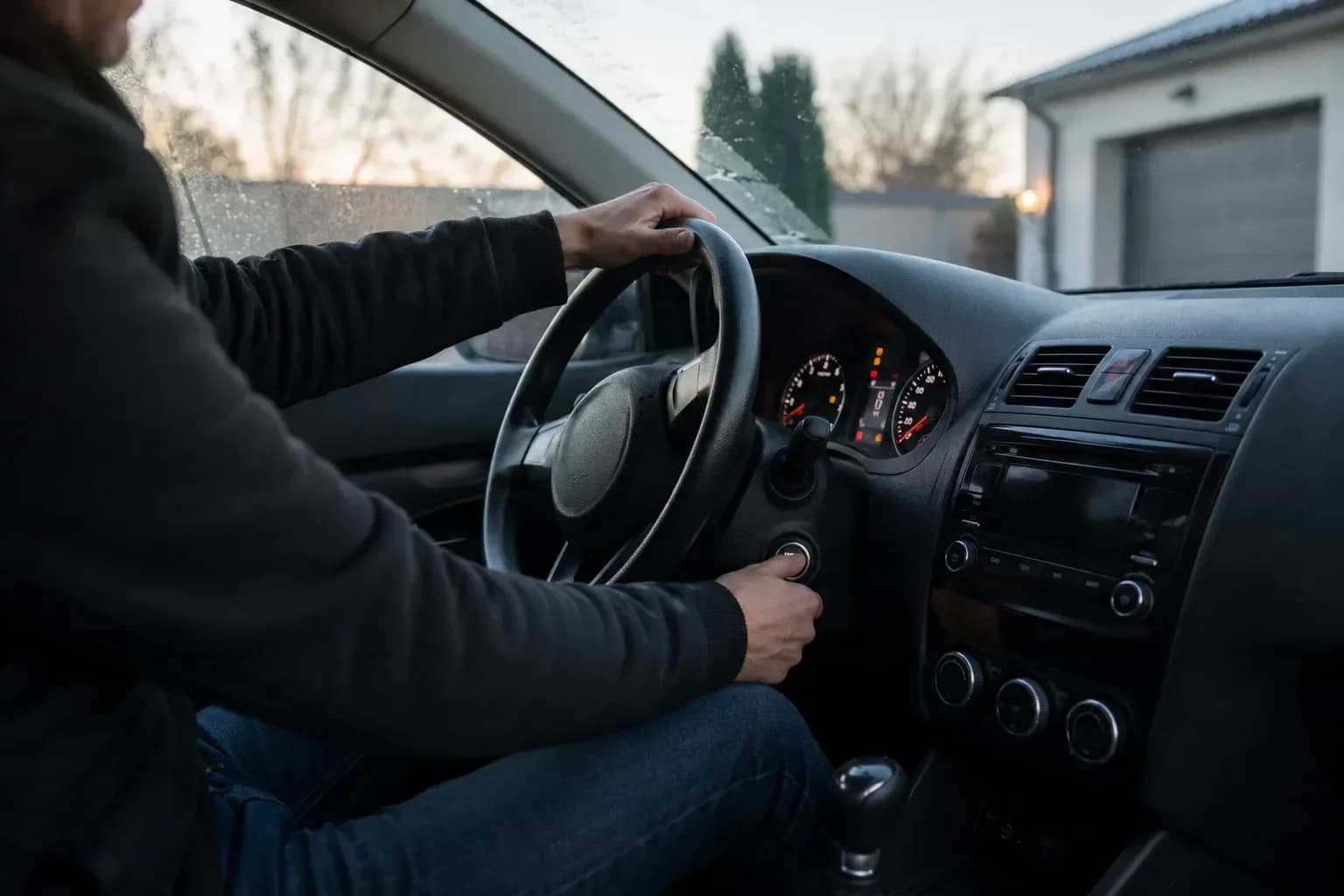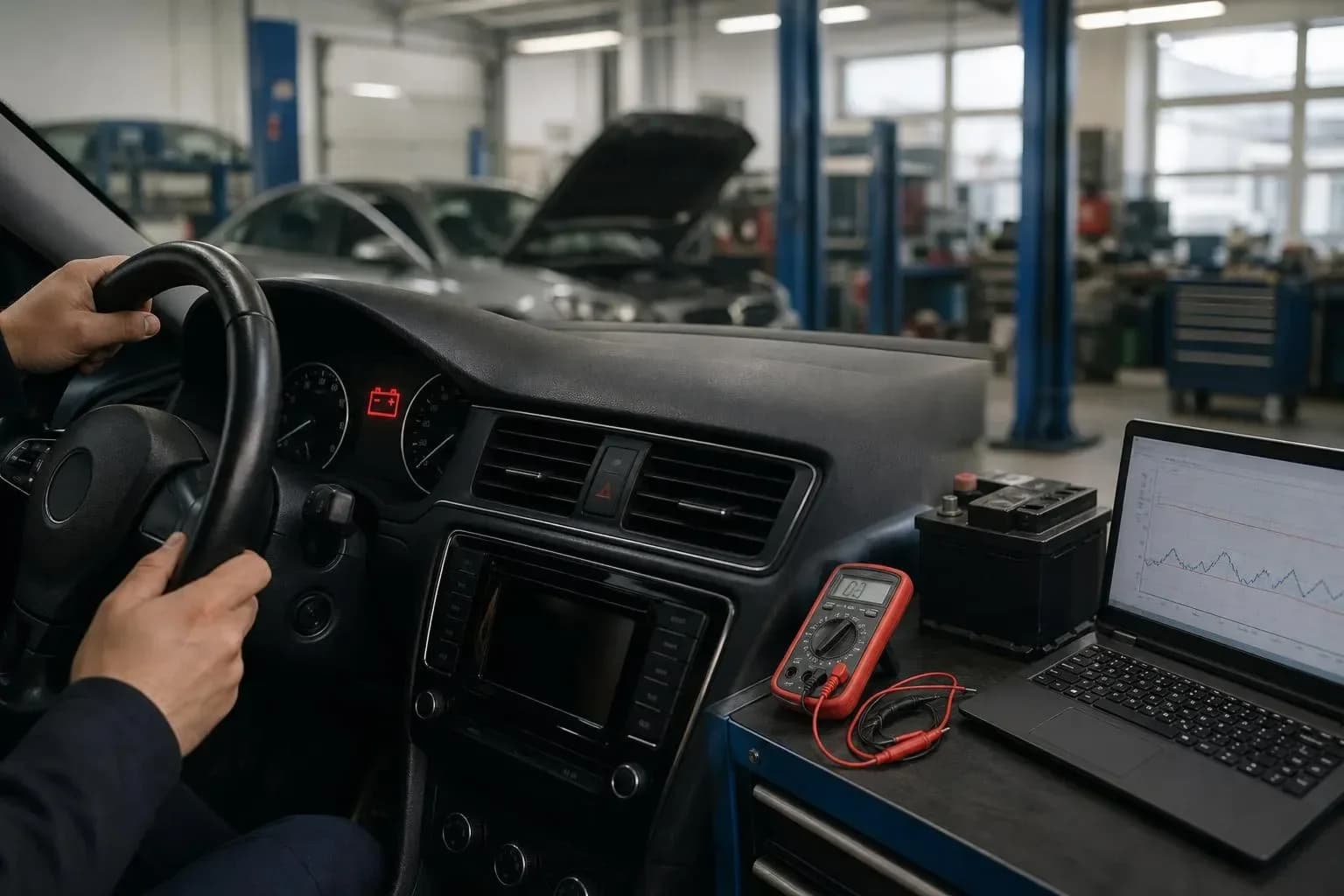
Does the engine turn over more slowly in the morning, do the lights dim, or is there no response when you try to start it? The cause could be the battery, electrical connections, starter motor or charging system, and the symptom alone does not show which component is faulty. If the charging warning light comes on while driving, stop somewhere safe and check the guidance in the handbook for your vehicle.
This guide helps you distinguish between symptoms, assess how urgent the situation is and prepare information for the garage. It also explains what professional diagnostics involve and why a single measurement or a successful start using an external power source does not establish the cause.
What the way your car tries to start can tell you
Notice whether the engine turns over more slowly than usual, does not turn over at all, or turns over normally but does not start. These are different symptoms and may lead to checks of different parts of the system. Also note whether the problem occurs after the car has been parked, in low temperatures, or regardless of the conditions.
With a weak battery, the starter motor may turn the engine more slowly, and the lights may be dimmer than before you tried to start it. Flickering lights or erratic electrical systems can be consistent with either a weak battery or a charging problem. On their own, they do not identify the cause.
If the engine does not turn over at all when you try to start it, there may be more possible causes than a flat battery. The garage may check the connections, main fuse, ignition switch or start button circuit, starter solenoid and whether the engine can turn mechanically.
If the starter motor turns the engine normally but it does not start, the problem goes beyond assessing the battery and charging system alone. In this situation, the guide to a car that will not start may help. Note whether the engine turned over normally, slowly or not at all, and when the symptom occurred.
- Note whether the lights dim or the electrical systems behave erratically.
- Say whether the problem occurred after the car had been parked, when cold, or also once it had warmed up.
When to suspect the battery and when to check the starter motor
The battery is one of the first components to assess when starting becomes slow, particularly after the car has been parked in cold weather. Low temperatures slow the chemical reactions in the battery, while starting the engine requires more effort. That is why a car that worked normally the previous day may struggle to start in the morning.
For example, a car is left overnight in freezing conditions. In the morning, the starter motor turns the engine sluggishly and the lights dim during the attempt. This is a reason to check the battery and connections, but it is not enough to prove that the battery needs replacing. Similar symptoms can result from wiring, the starter motor or increased resistance as the engine turns.
If the battery appears to be adequately charged but the engine still turns slowly or does not turn over at all, the garage will also assess the starter motor and its electrical circuit. Loose or corroded wires can restrict current flow. The cause could also be a faulty starter motor or increased resistance as the engine turns, neither of which can be assessed just by looking at the battery.
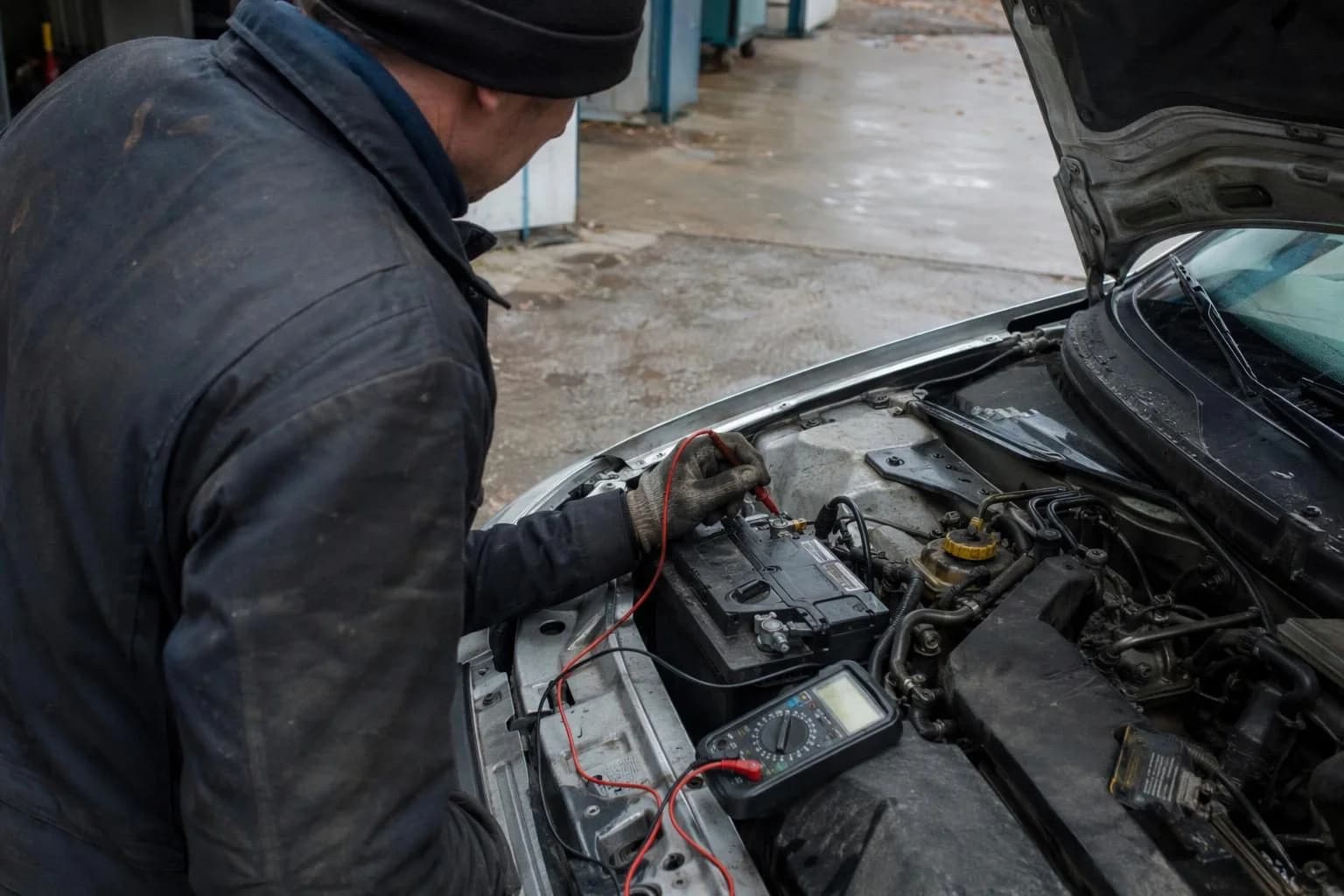
Do not assess the battery's condition solely from a single resting voltage reading. The battery should be tested for its condition and ability to deliver current, and the result compared with the requirements of the vehicle. A correct voltage reading from a single measurement does not confirm that the battery is fully serviceable.
If the battery is cracked, bulging or leaking, do not test it yourself. Have it assessed by a professional. The correct procedure depends on the design of the vehicle and battery.
A charging warning light while driving requires a prompt response
A charging warning light that comes on while the engine is running does not automatically mean that the battery itself needs replacing. It may indicate a problem with the alternator, regulator, wiring or connections, or with the belt that drives the alternator. The whole system needs to be checked to establish the cause.
The way the warning is displayed may depend on the car's design. As a general procedure, the light comes on when the ignition is switched on with the engine off, then should go out shortly after the engine starts. Check the handbook for your vehicle rather than assuming the warning light behaves the same way in every model.
For a more detailed explanation of what the warning light may mean, see the article about the battery warning light while driving.
Discharge while parked and starting from an external power source
If the car will not start after being parked, the cause may be a weak battery or insufficient charging. The symptom alone does not explain why the charge has been lost. If the problem returns after the car has been parked overnight, the garage should check not only the battery but also the charging system and the rest of the electrical system. This is covered in more detail in the article about a battery that goes flat overnight.
Starting the car after connecting an external power source does not prove that the battery alone was at fault. The car may have started because it received the energy needed to do so, but the battery's condition and the charging system still need to be assessed. We do not provide instructions here for connecting jump leads: the correct procedure depends on the vehicle, and you should check the details in its documentation.
A single charging voltage measurement is not a substitute for diagnostics either. The result depends on the conditions in which it is taken and must be compared with the specification for the particular car. Cars may use different charging system designs, so do not assume that one value is correct for every vehicle.
Stop-start and difficult cold starting in a diesel are separate clues
A stop-start system not working does not by itself indicate that the battery is faulty. If this happens along with starting problems or a warning message, checking the battery and charging system may help establish the cause. The article about a stop-start system that is not working explains this situation in more detail.
In a diesel, difficulty starting from cold, uneven running after starting or increased smoke after a cold start may be linked to faulty glow plugs. These symptoms do not, on their own, confirm that the glow plugs have failed. Similar problems can have other causes, so the whole system needs to be checked to identify the fault.
If the problem affects a diesel, describe whether it occurs only after the car has been parked when cold, how the engine runs after starting and whether there is smoke. Find out more about possible causes in the article about a diesel that struggles to start when cold. If the problem occurs only once the engine has warmed up, see the separate guide to a car that will not start when hot.
When to stop trying and not continue driving
Stop making further attempts to start the engine if it does not respond or repeated attempts have no effect. There is no single number of attempts that is right for every car, but repeatedly putting the starter motor under load is not a sensible way to diagnose the problem. Note the symptoms and arrange to have the car checked.
If the charging warning light comes on while driving, stop somewhere safe and check the handbook for your car. There is no set amount of time that applies to every vehicle for driving with this warning light on. Continuing to drive could result in a loss of electrical power, so do not assume the car will safely reach a distant destination. Depending on the situation, roadside assistance or transport to a garage may be more appropriate.
A visible leak, crack or bulge in the battery requires caution. Do not test it yourself. Have it assessed by a professional.
A single difficult start after the car has been parked for a long time, followed by normal running and with no charging warning light, is not enough to determine a specific time for a garage visit. If the symptom returns, arrange for the battery and charging system to be checked before your next longer journey.
How a garage checks the battery, starter motor and charging system
Diagnostics begin with a discussion of the symptoms and the conditions in which they occur. The mechanic needs to know whether the problem appeared after the car had been parked, in low temperatures, only with a cold or warm engine, or after starting from an external power source. The garage may also check whether the manufacturer has issued a technical service bulletin for the vehicle.
Before testing, the battery, wiring, terminals, earth connections and battery mounting are inspected. The checks include looking for cracks, bulges, leaks, corrosion and damaged insulation. The garage also checks whether the battery type, dimensions and terminal positions meet the car's requirements.
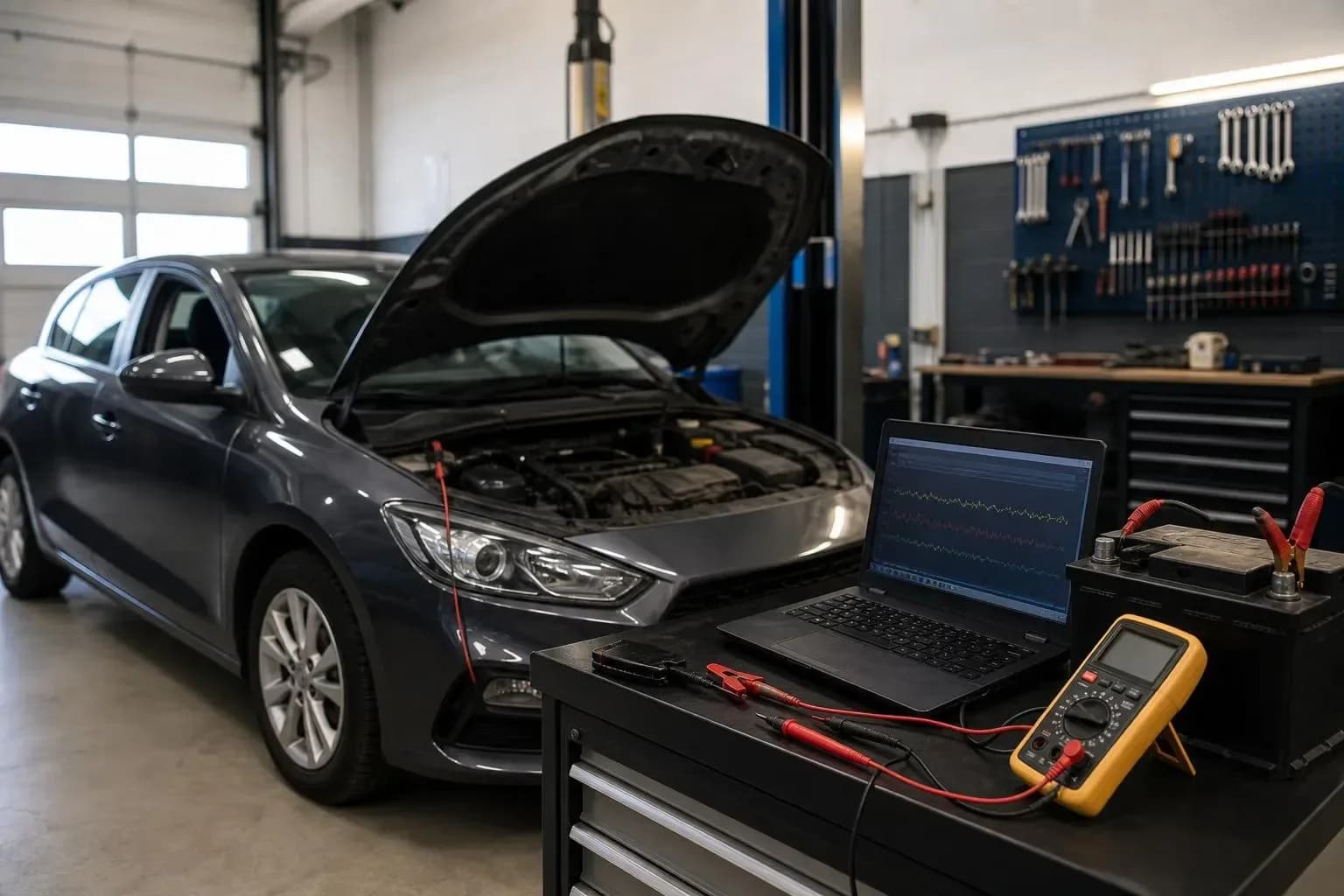
A resting voltage reading alone is not enough to assess the battery. The garage tests its condition and ability to deliver current, and compares the cold cranking amps rating, known as CCA, with the vehicle specification. The exact limit values and test conditions depend on the particular car and battery.
The wiring and connections are then checked. Measuring voltage drop while the circuit is operating helps establish whether resistance in a wire or connection is restricting current flow to the starter motor or from the alternator. The garage also checks the alternator drive, including the condition, alignment and tension of the belt, if that design uses one.
Charging is measured under specified conditions, and the result is assessed against the vehicle documentation. General values given in industry procedures are not a universal range for every car. If an alternator tested off the vehicle works correctly, the garage should look for the cause elsewhere in the circuit rather than replacing it automatically.
A diagnostic scan may form part of the checks if the symptoms warrant reading fault codes, but it does not replace a visual inspection or tests of the battery, wiring, starter motor and charging system. The service can be used for this purpose. Any further repairs will depend on the diagnostic results.
How to prepare information for the garage and what to do next
Before your visit, note the symptoms without trying to identify the faulty component yourself. It will help to say whether the engine turned over slowly, the starter motor did not respond, the lights dimmed, when the charging warning light came on and under what conditions the problem occurred. If the car started after being connected to an external power source, mention this, but do not treat it as a diagnosis.
If the problem occurs only after the car has been parked for a long time, note whether it happened again the following day. If it affects a diesel, add information about uneven running or smoke after a cold start. If the problem appeared after the battery was replaced or the car started behaving differently, describe exactly what changed. Any further steps required depend on the vehicle design and manufacturer documentation. The article about a change in the car's behaviour after battery replacement may be helpful.
Give the garage your notes about the symptoms and the circumstances in which they occurred. Ask them to check the system components indicated by the description and measurements, rather than replacing the battery or alternator solely because of a warning light or a single symptom. If the charging warning light came on while driving, first follow the vehicle handbook and establish a safe way to get to the garage.