Driving safety4 min
Fuel smell in the car: is it safe to drive?
A fuel smell can be temporary after refuelling, but a persistent odour in the cabin, under the bonnet or a wet patch beneath the car requires a prompt check.

eCarService · Driver Academy
Learn what a warning light or worrying symptom may mean, what you can check safely and when you should stop driving.
Knowledge base
89
guides to help you prepare for a conversation with a workshop.
Understand first
Learn the possible cause of a symptom
Then decide
Know what to ask during your visit
Choose a location
Book a workshop at the location you prefer
Latest guides
Learn about the possible causes first. Choose a location once you are ready to book a visit.
A fuel smell can be temporary after refuelling, but a persistent odour in the cabin, under the bonnet or a wet patch beneath the car requires a prompt check.
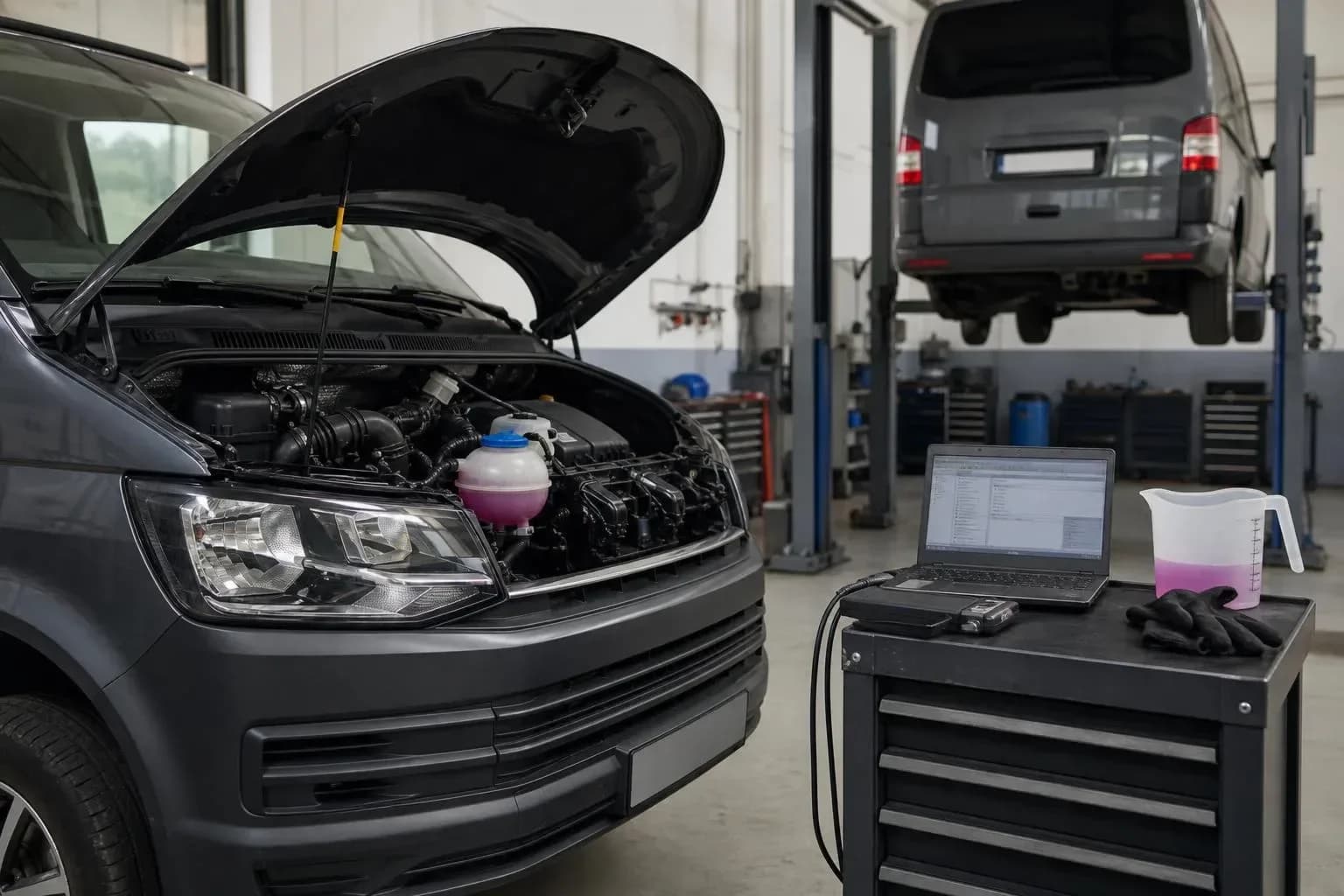
If coolant is disappearing from a VW Transporter T6 without an obvious leak, don't assume the worst, but don't ignore the symptom. Coolant can be lost via hoses, the thermostat housing, the water pump or a leak around the EGR and intake. The most important thing is to check for leaks and operating temperature before the vehicle overheats.
If a car jerks during acceleration, it usually means an interruption in smooth power delivery: an issue with ignition, fuel, air, sensors or the drivetrain. A short, gentle drive may still be possible, but strong jerks, a flashing Check Engine light or loss of power require prompt diagnostics.
A visual check in the car park is a good start, but usually not enough to make a safe decision when buying a used car. You may spot repair marks, worn tyres, leaks or worrying warning lights, but many faults appear only during a test drive, computer diagnostics and inspection from underneath.
Imagine your car could say:
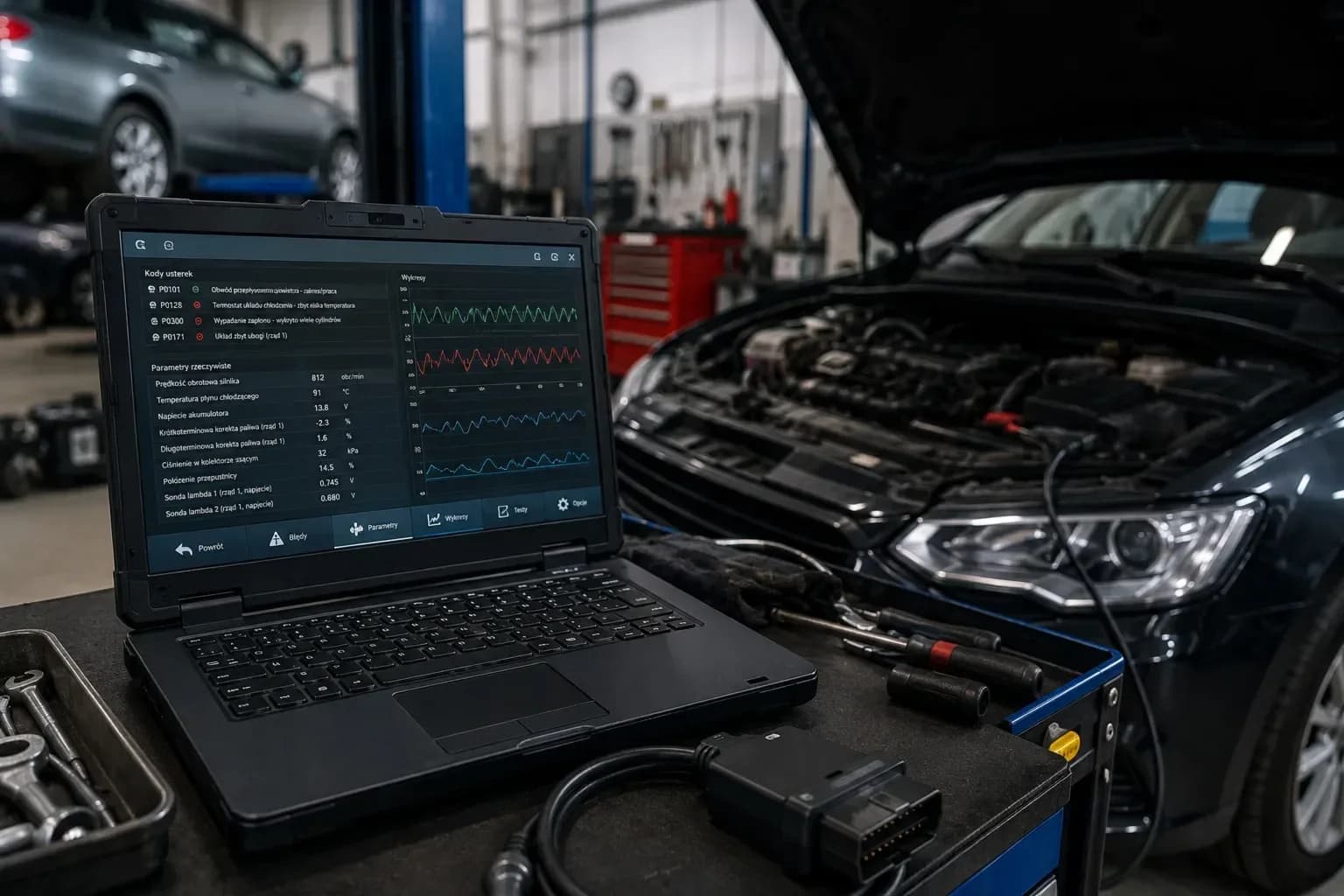
Many drivers think computer diagnostics is connecting a tester, reading a fault code and clearing it. In practice, that's only the beginning.
Need help?
Choose a workshop and describe the symptoms in the booking form.