Vibrations at 80-120 km/h despite good tread
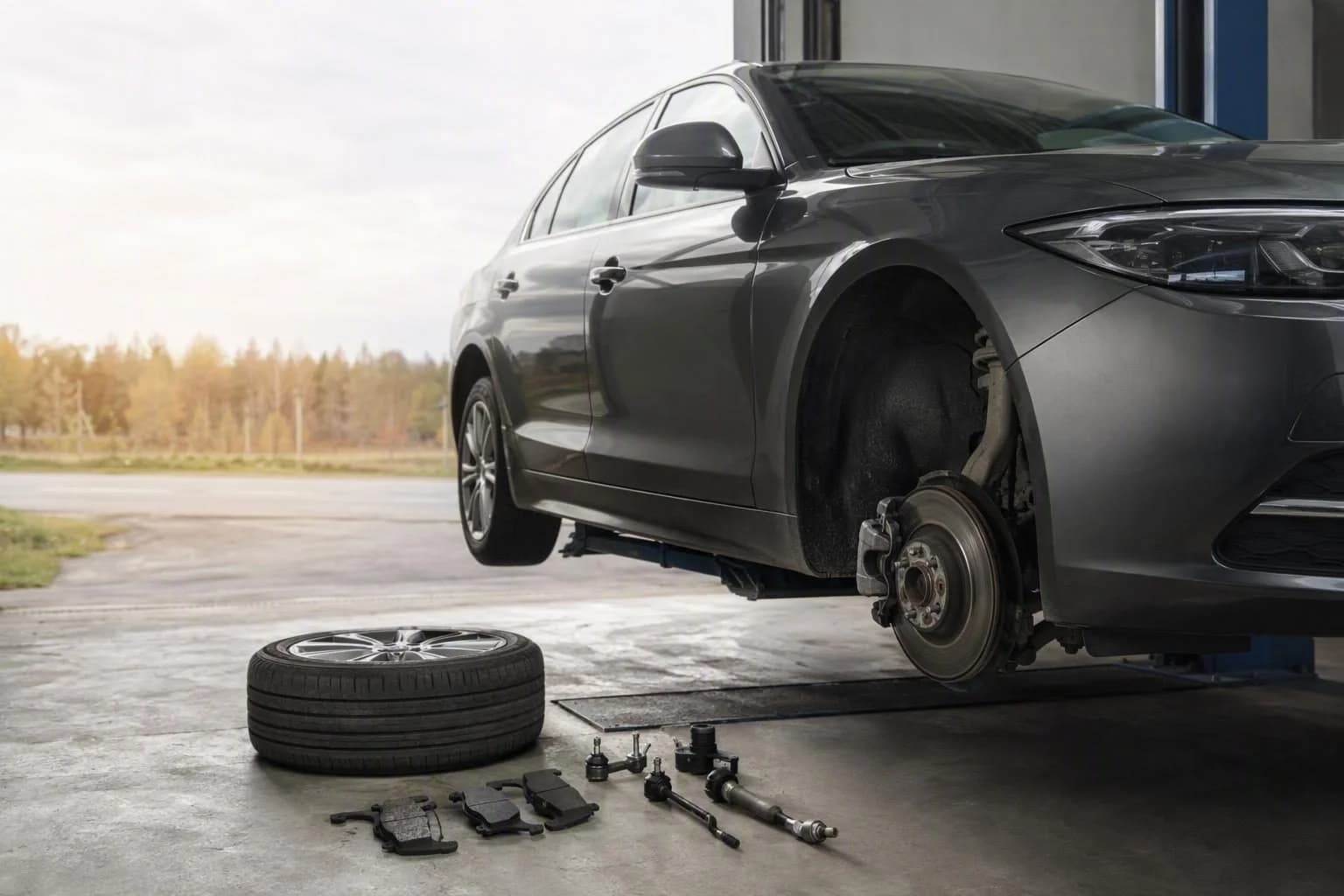
Vibrations in a narrow speed range often do not come from the tread alone. Read about typical causes, how a workshop will diagnose them and when to stop driving.

eCarService · Driver Academy
Learn what a warning light or worrying symptom may mean, what you can check safely and when you should stop driving.
Knowledge base
89
guides to help you prepare for a conversation with a workshop.
Understand first
Learn the possible cause of a symptom
Then decide
Know what to ask during your visit
Choose a location
Book a workshop at the location you prefer
Latest guides
Learn about the possible causes first. Choose a location once you are ready to book a visit.
Vibrations in a narrow speed range often do not come from the tread alone. Read about typical causes, how a workshop will diagnose them and when to stop driving.
Steering-wheel vibration or a pulsing brake pedal have several common causes. This text explains the symptoms, possible fault sources and how professional diagnostics are carried out.
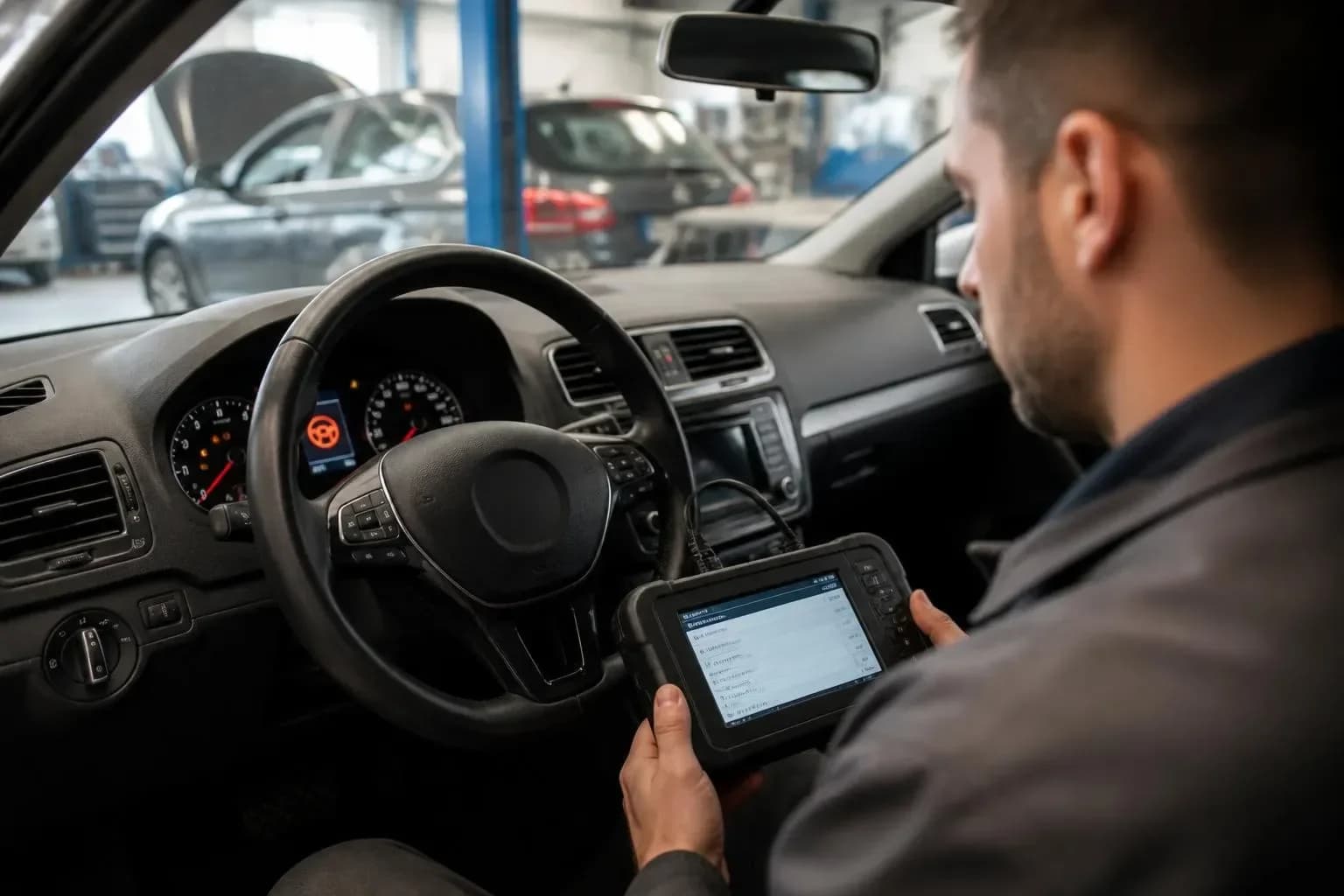
Has the steering suddenly become heavy and a power assist warning or EPS message lit on the dash? Don’t ignore it — causes range from a temporary voltage drop or charging issue to a fault in the assist unit or steering sensors.
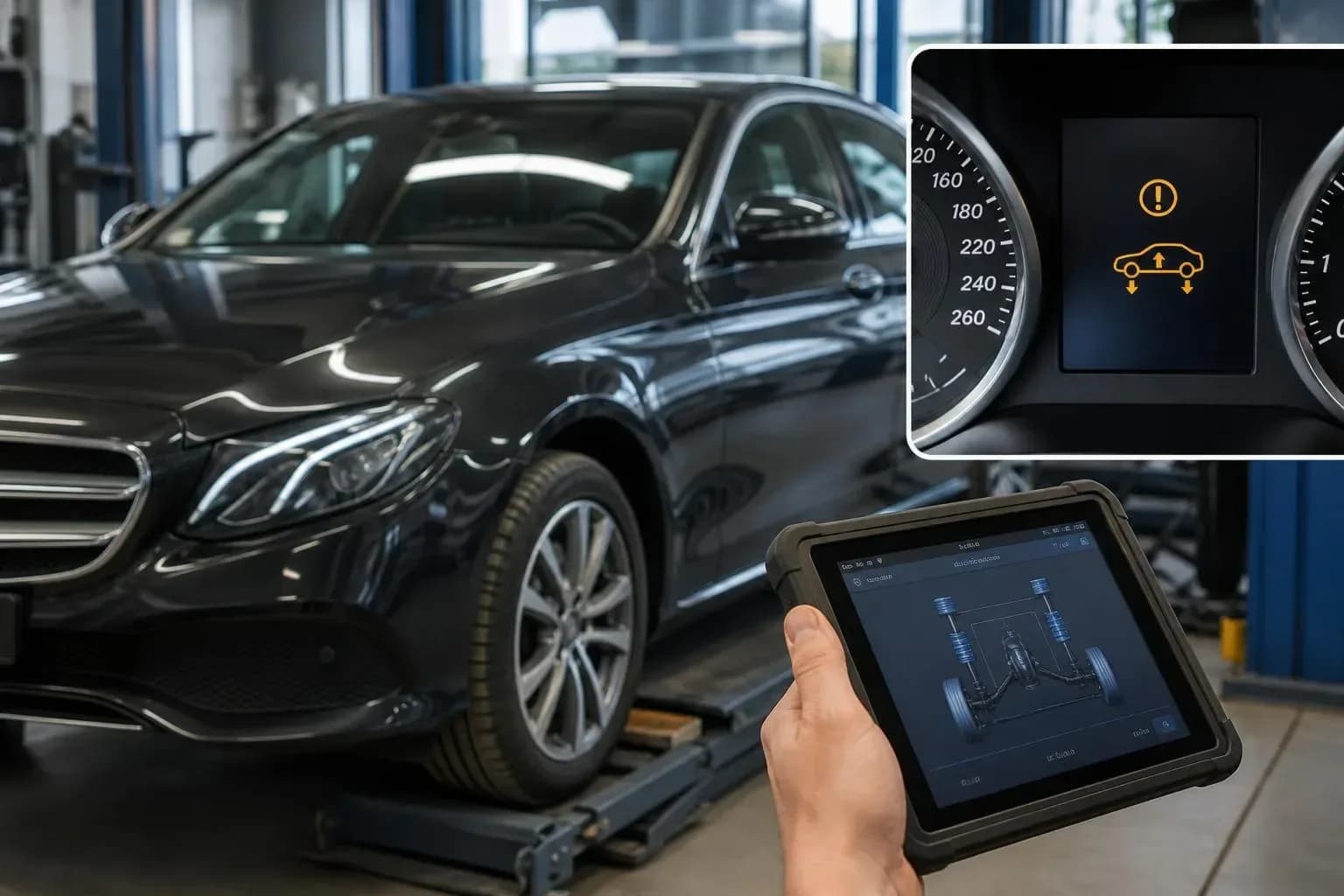
The AIRMATIC warning, sagging after parking or uneven ride height don't always indicate the same fault. We explain when you can cautiously drive to a workshop and when quick diagnostics of the air suspension are needed.
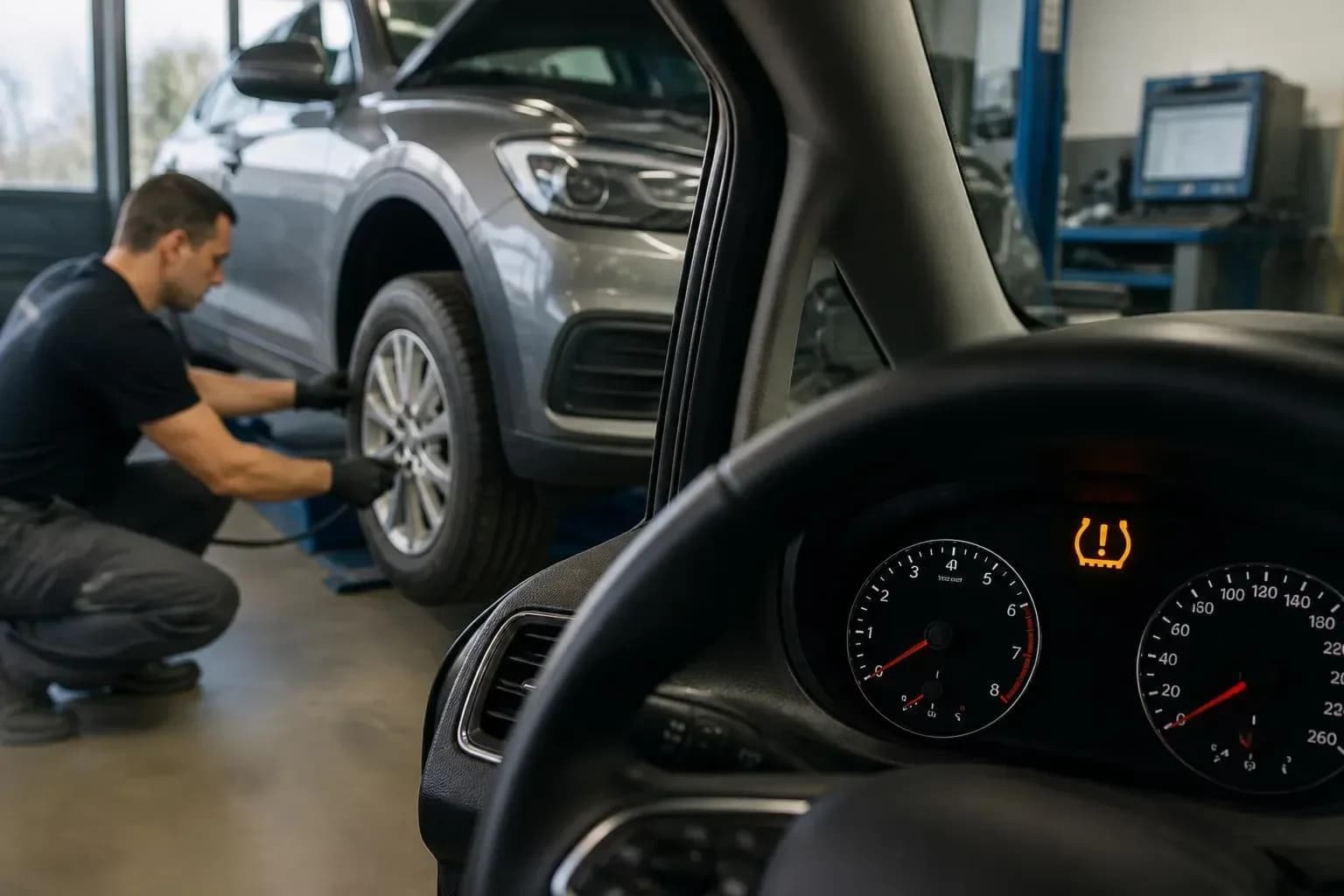
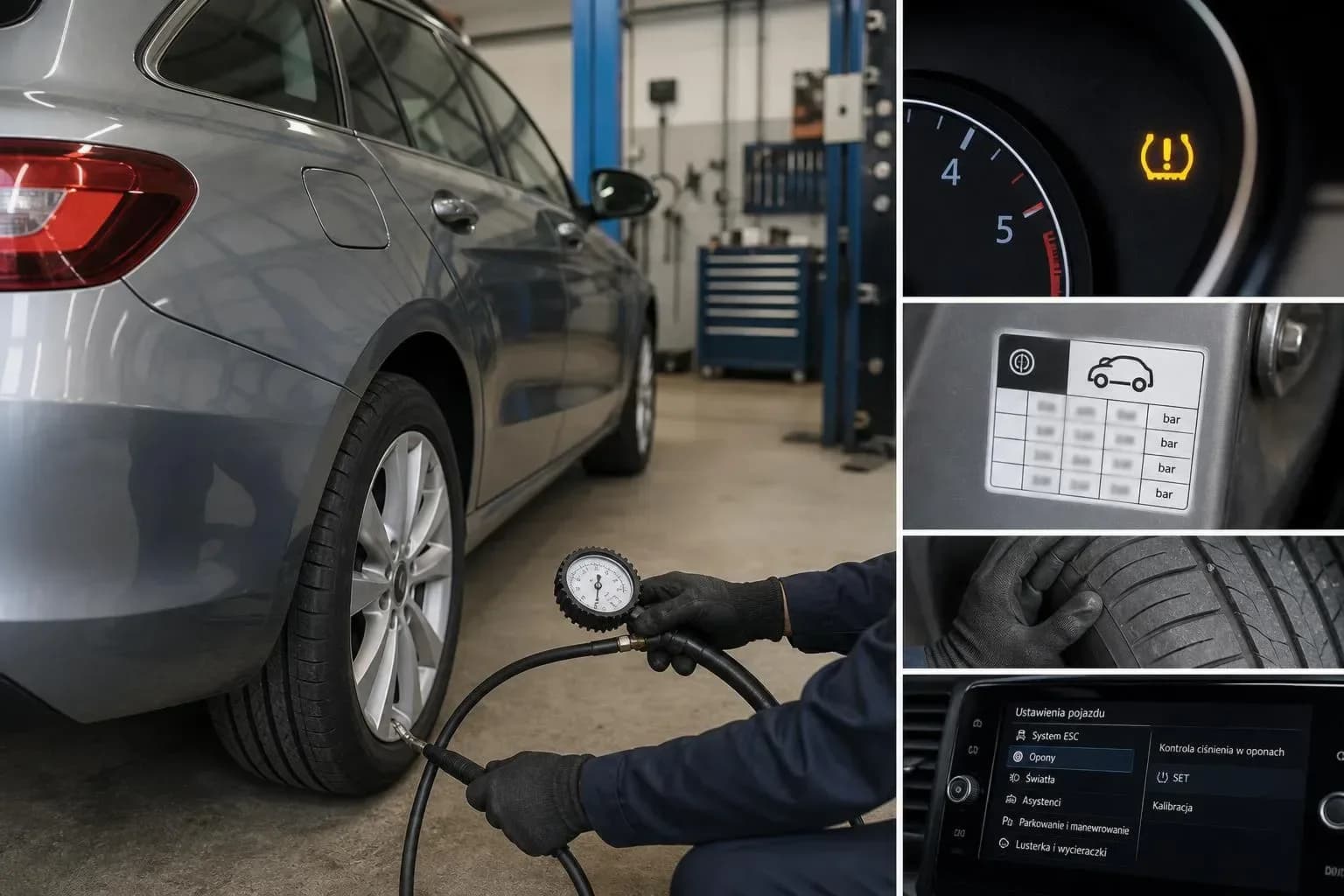
If the tyre pressure warning light is flashing or stays on, don't assume a single cause. In many cars a steady light simply means too-low pressure in at least one tyre, but flashing for about a minute and then staying on usually indicates a fault in the TPMS or its sensors.
If the yellow tyre pressure warning light comes on, slow down and find a safe place to stop. Don’t assume a puncture straight away, but don’t ignore the warning. Check the wheels, measure pressure with a tyre gauge and inflate the tyres to the values on the vehicle placard or in the owner’s manual.
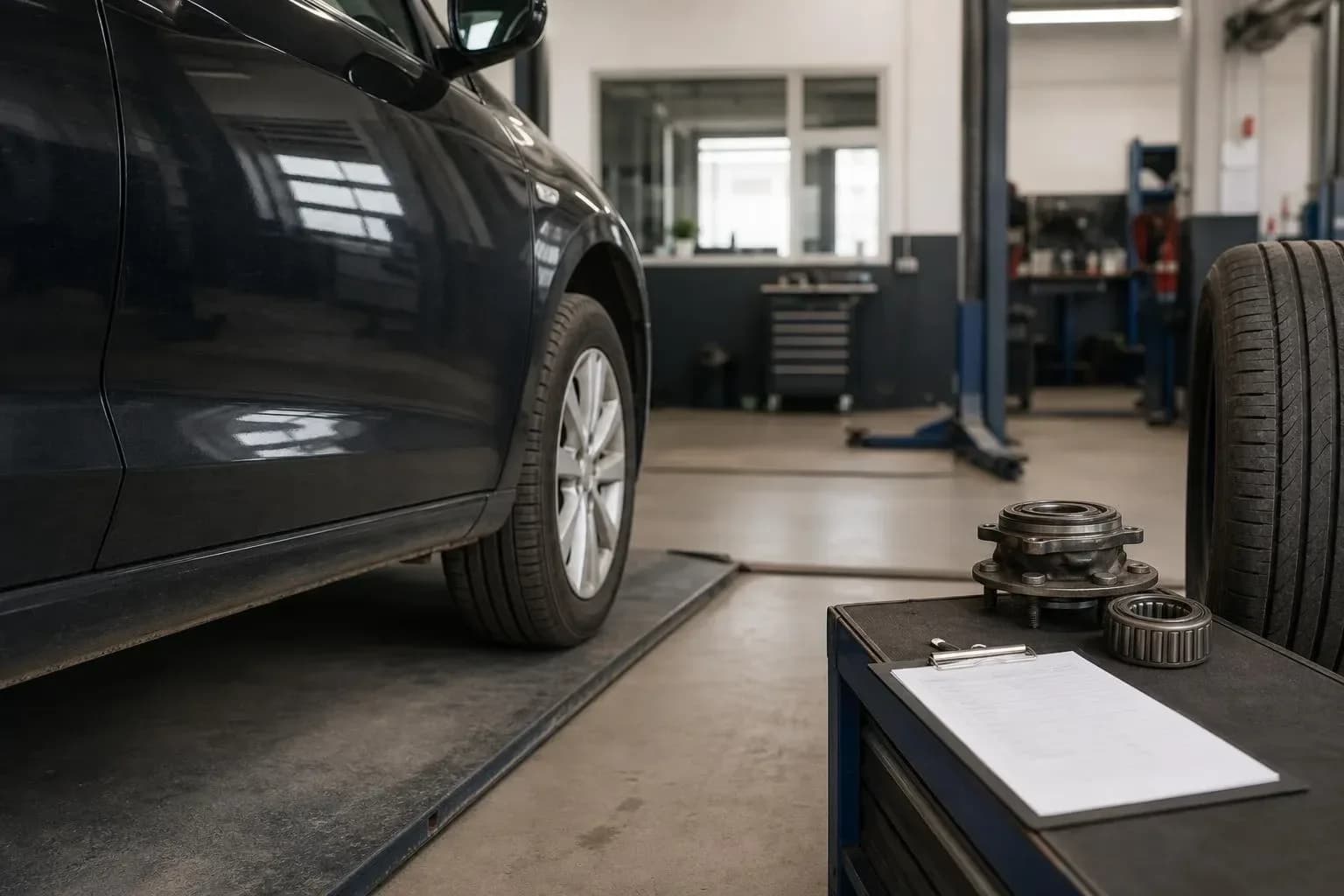
If the car howls or hums louder as speed increases, you should check the tyres, wheel bearing and suspension. Tyre noise usually depends on surface and tread condition, while a worn bearing often changes tone in corners.
Steering wheel vibrations most often start with the wheels and tyres, but can also indicate play in the suspension or steering system. See how to assess the symptom before visiting a workshop.
Car pulling to the side? Learn how to tell a wheel alignment problem from tyre pressure, brakes and play in the suspension.
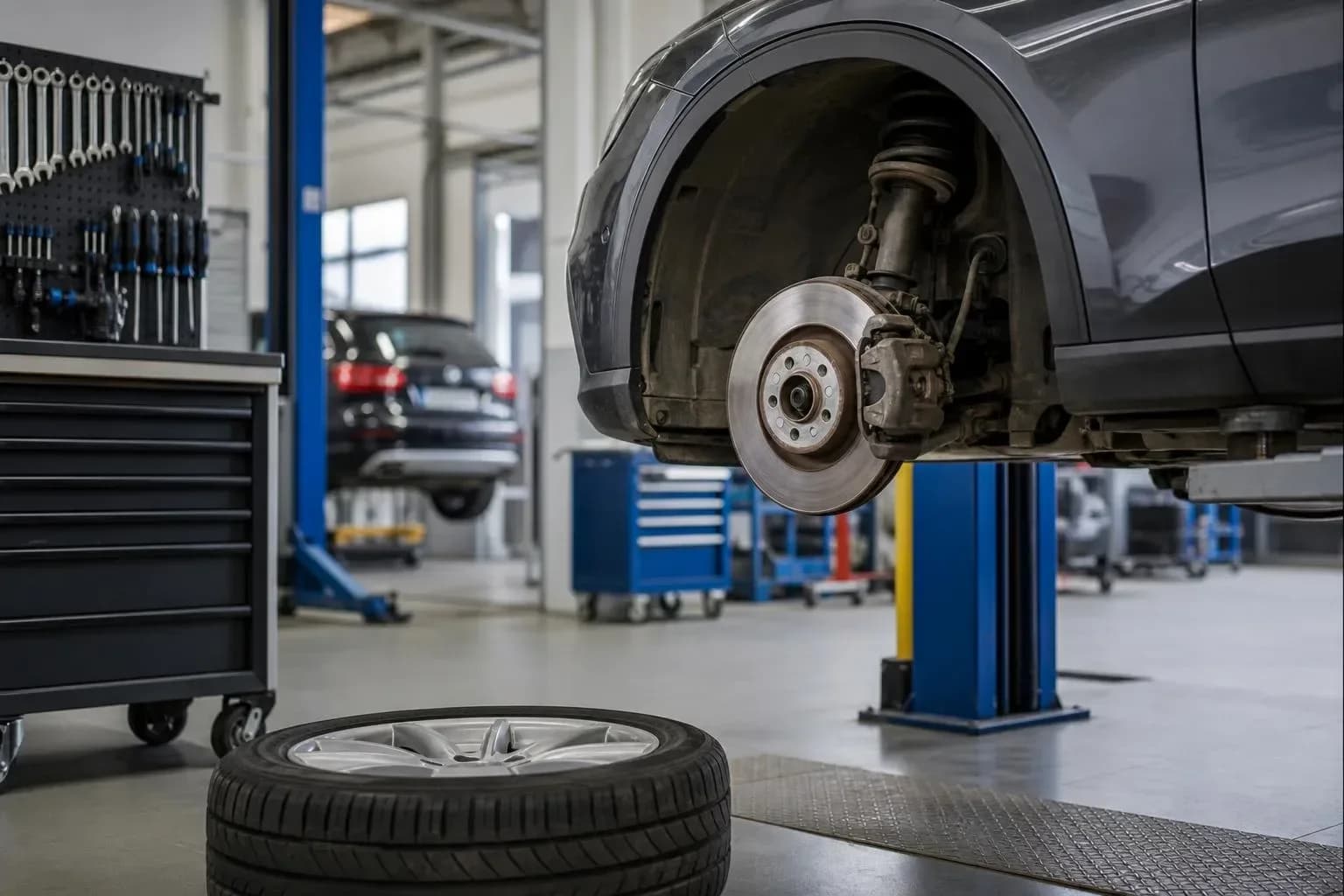
You can sometimes drive carefully to a service centre with a knocking suspension, but it shouldn't be left unattended. Tapping, creaking or metallic impacts can be a minor issue or play in a part that affects vehicle handling. The key is when the sound appears and whether other symptoms occur.
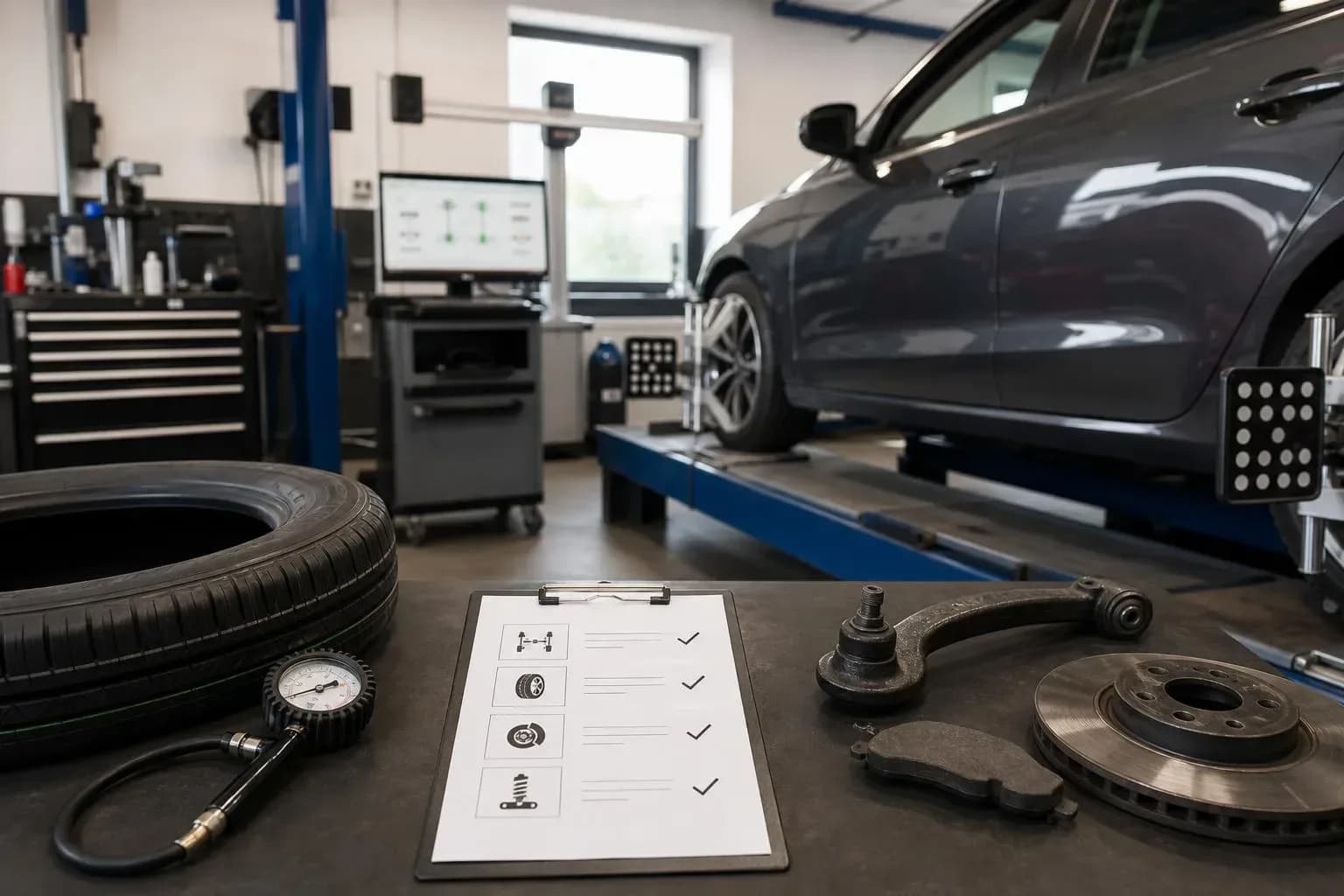
If the car pulls to one side or tyres wear unevenly, a wheel alignment check and an assessment of the tyres and suspension components is usually needed. In many cases you can still drive to get it checked, but there are situations where it’s safer not to risk driving. Below…
Need help?
Choose a workshop and describe the symptoms in the booking form.