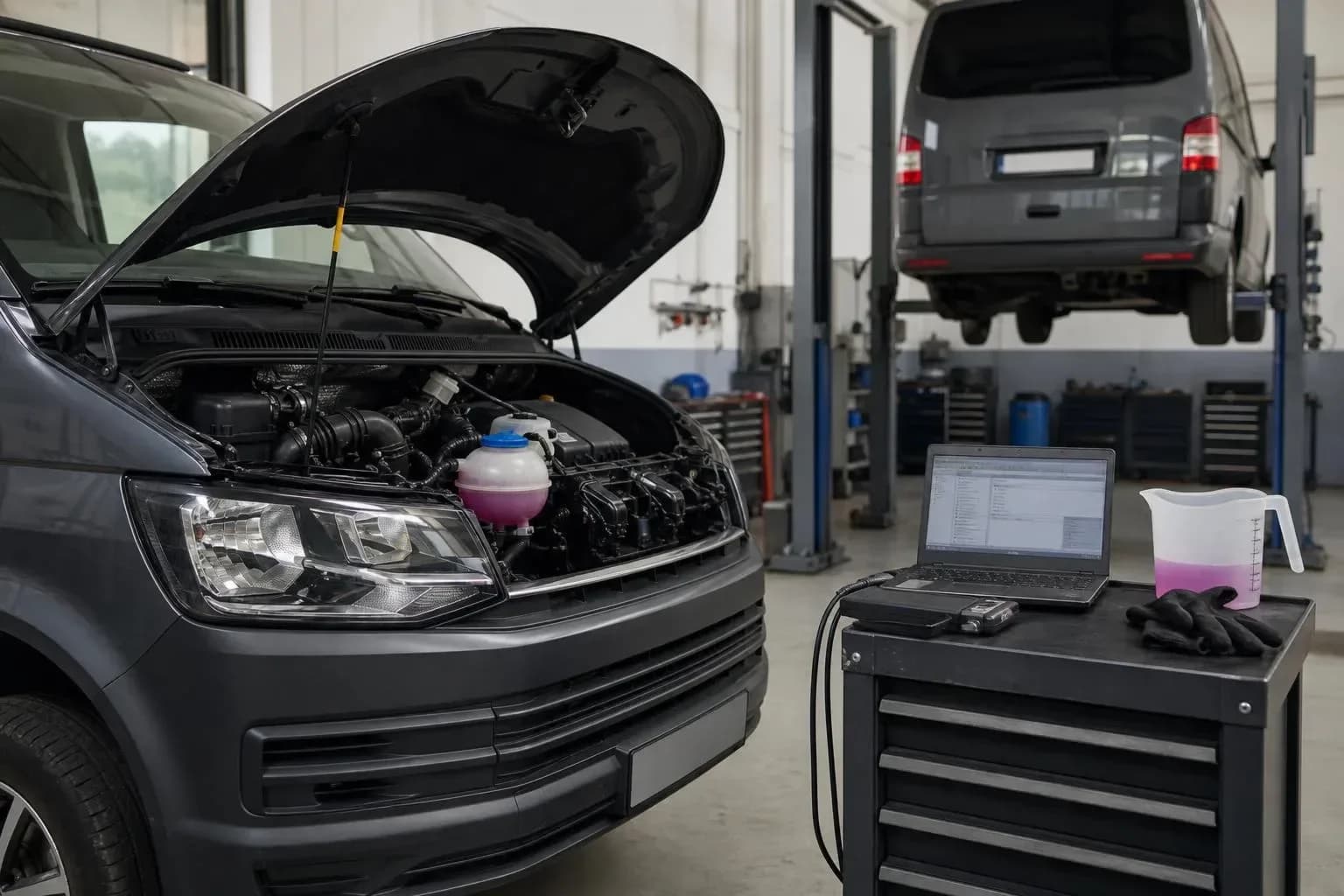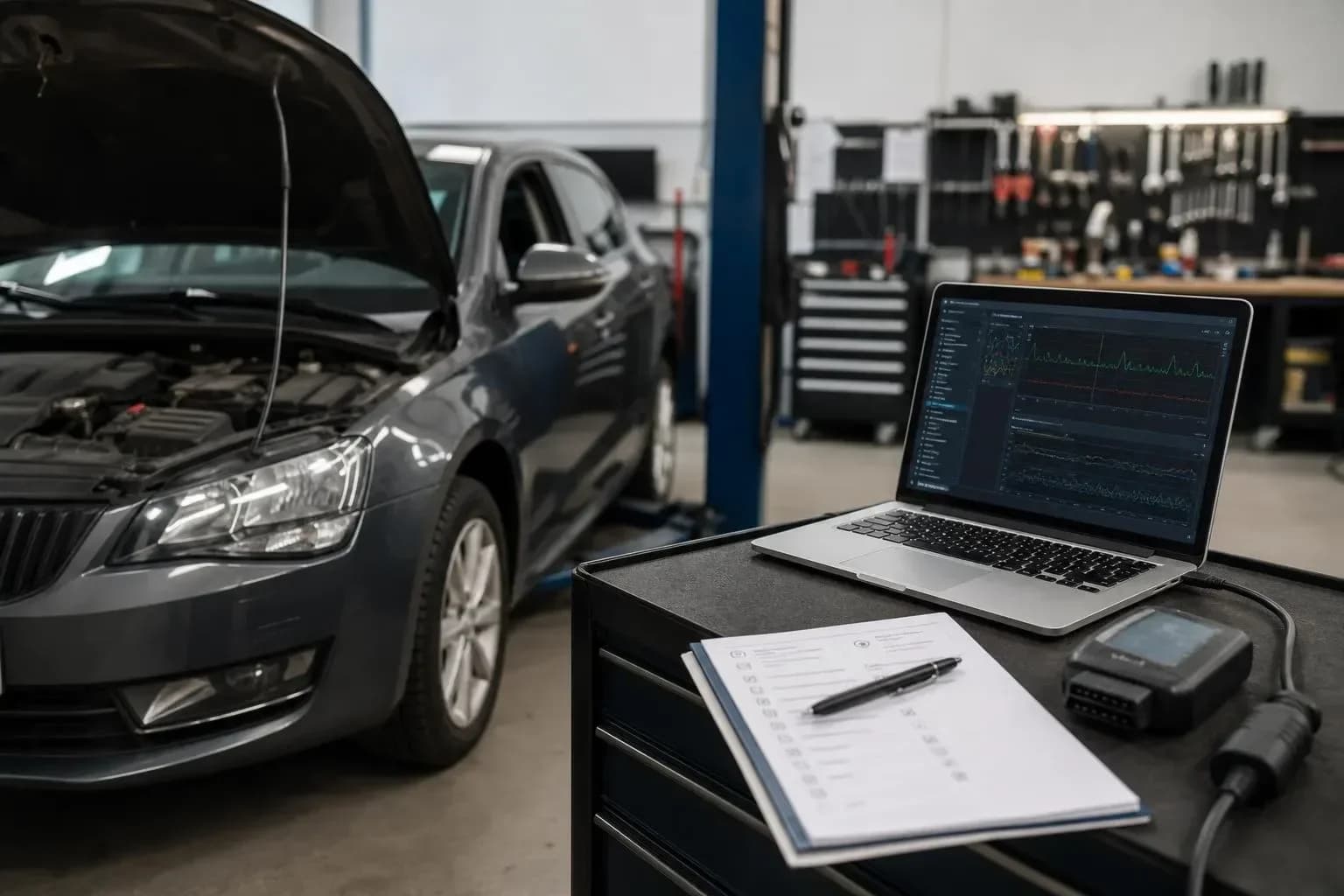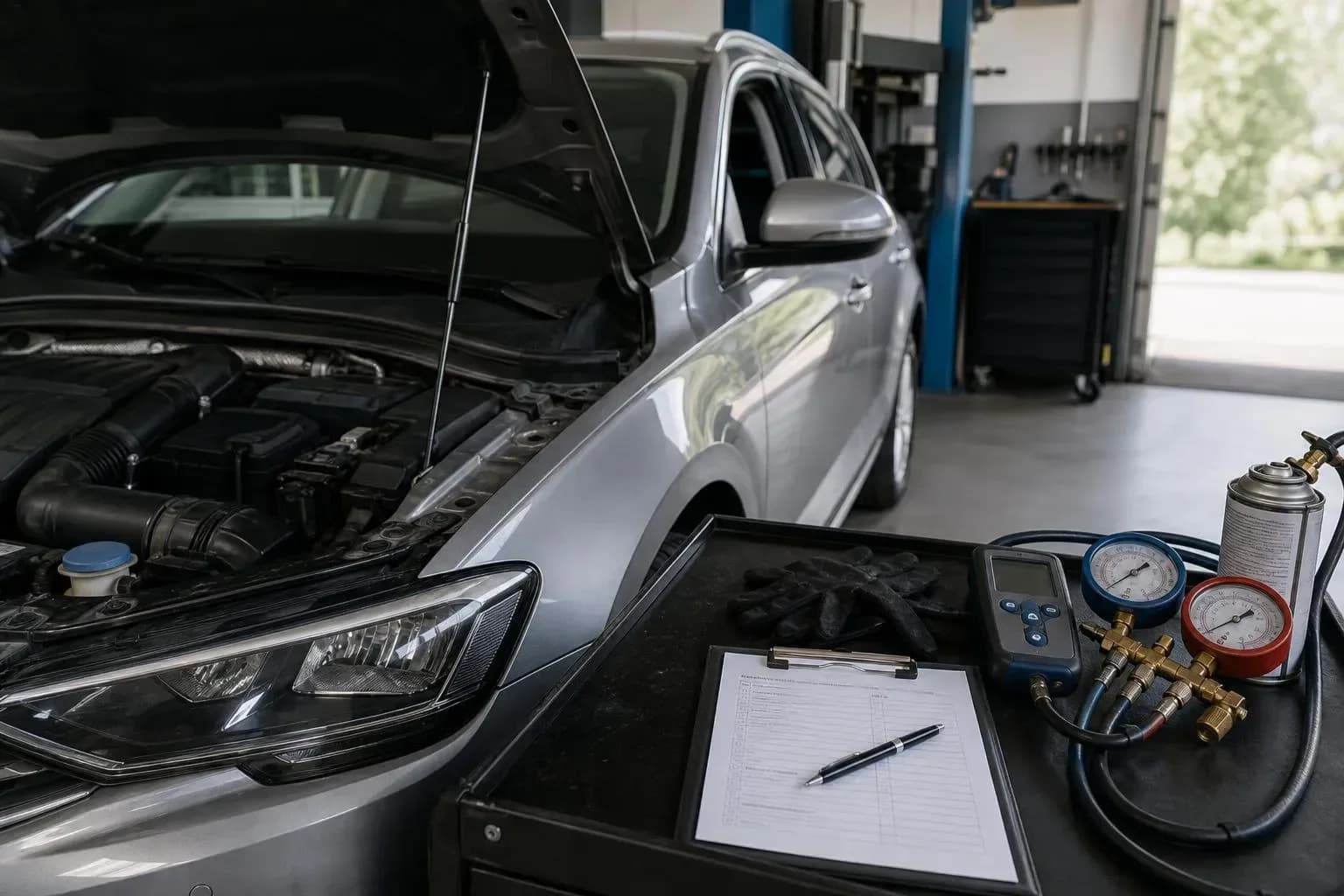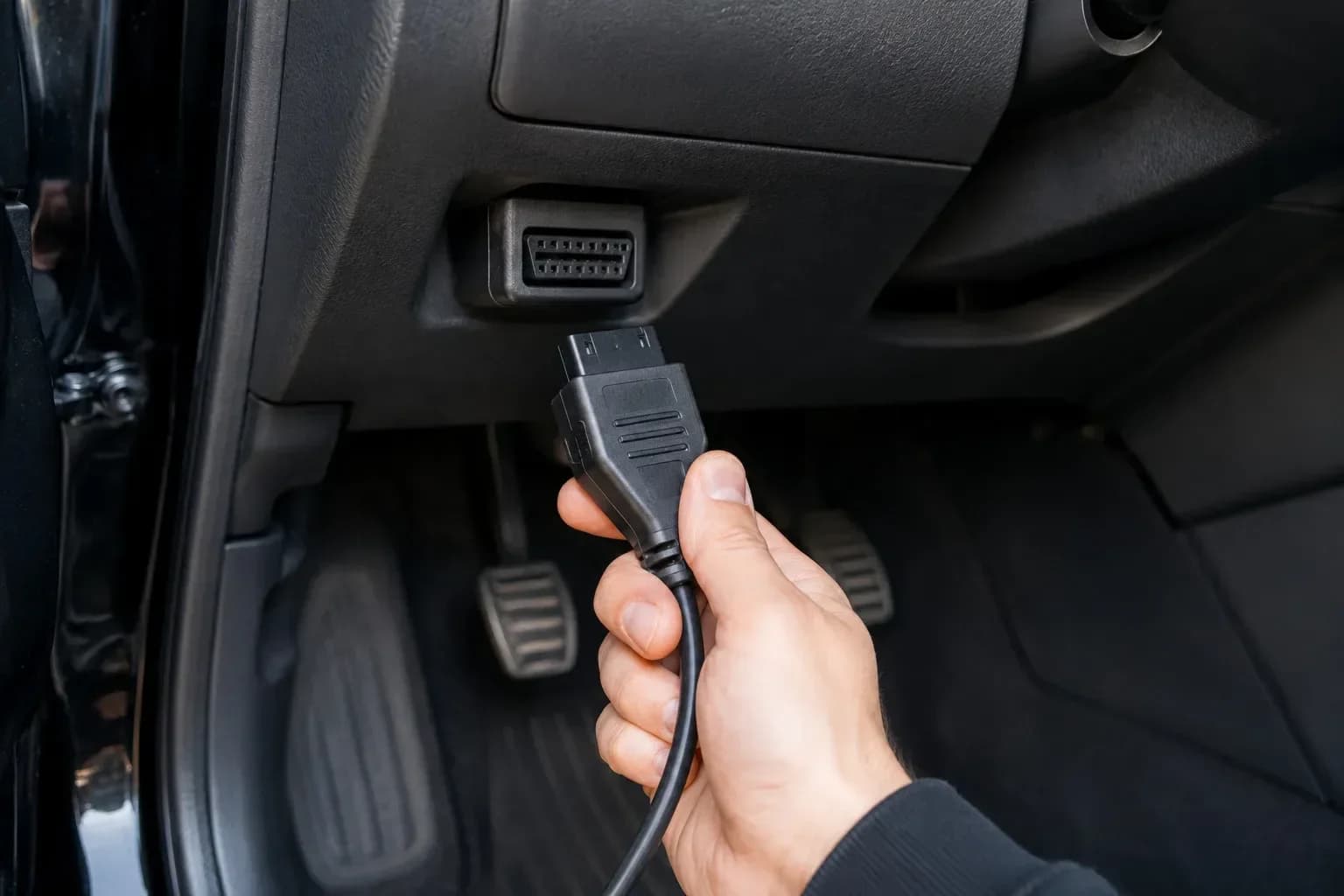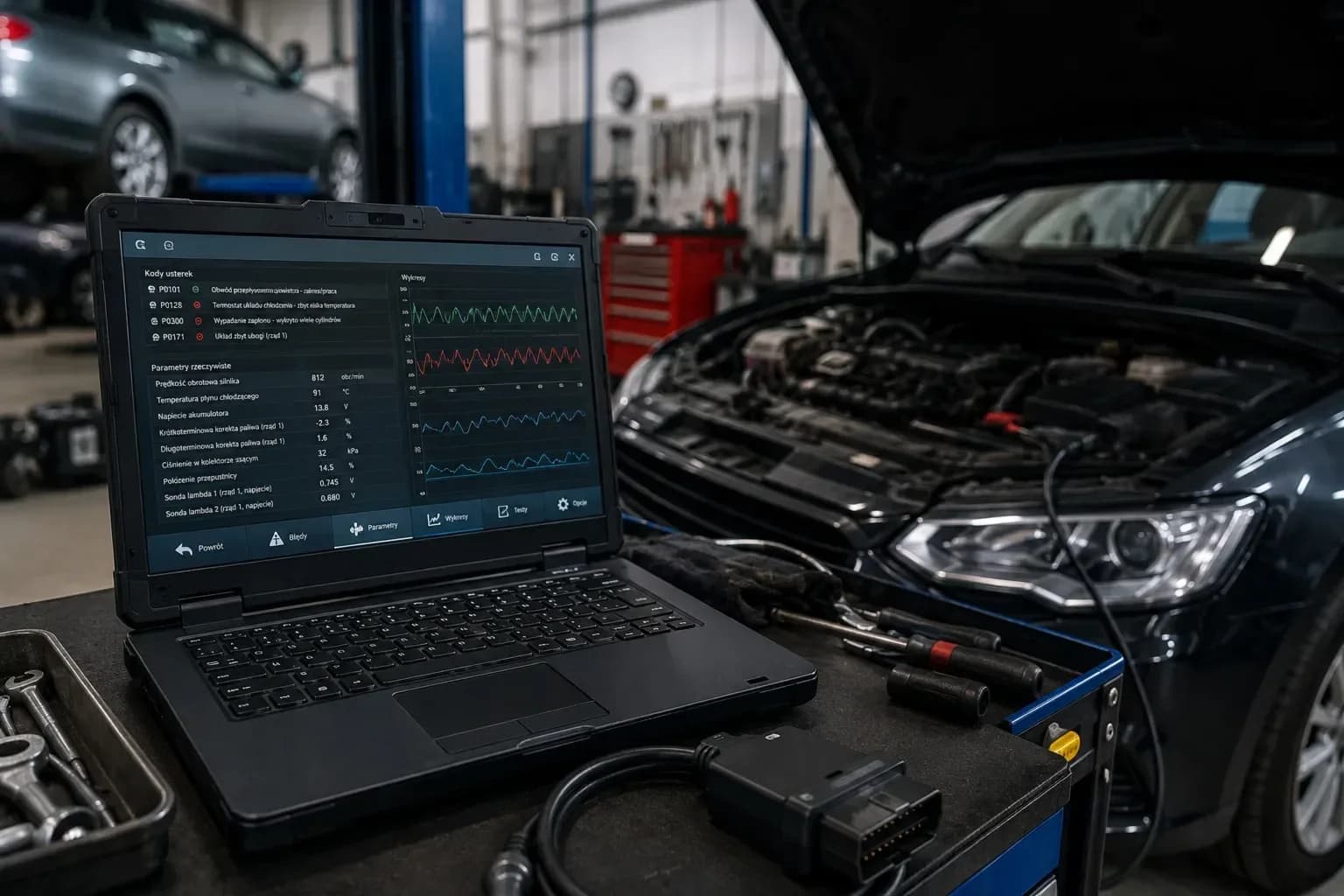

How to prepare your car for diagnostics to make finding a fault easier?
A practical guide on what to do before a workshop visit to shorten diagnostic time and increase the chances of correctly identifying the cause of a recurring symptom.
eCarService · Driver Academy
Learn what a warning light or worrying symptom may mean, what you can check safely and when you should stop driving.
Knowledge base
89
guides to help you prepare for a conversation with a workshop.
Understand first
Learn the possible cause of a symptom
Then decide
Know what to ask during your visit
Choose a location
Book a workshop at the location you prefer
Latest guides
Learn about the possible causes first. Choose a location once you are ready to book a visit.
A practical guide on what to do before a workshop visit to shorten diagnostic time and increase the chances of correctly identifying the cause of a recurring symptom.
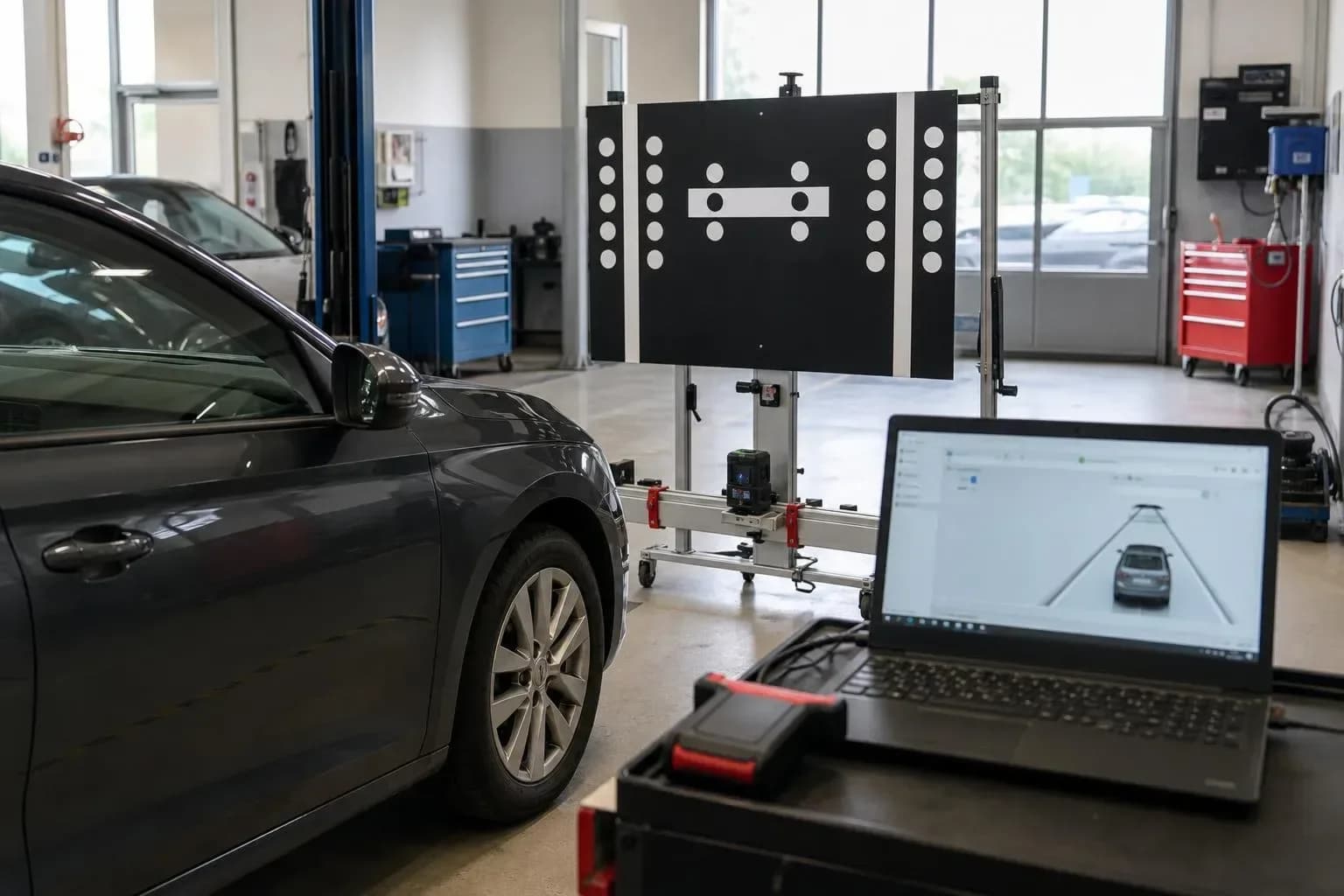
After replacing the front windscreen ADAS calibration may be needed even if no warning light is shown on the dash. The camera behind the rear‑view mirror works through the glass, so its position, mount, field of view and the glass meeting the vehicle's requirements all matter. It's safest not to guess, but to check…
Start‑stop not working doesn't always mean a fault. The system often protects the battery, but with poor starting or warning messages it's worth having a diagnostic check.
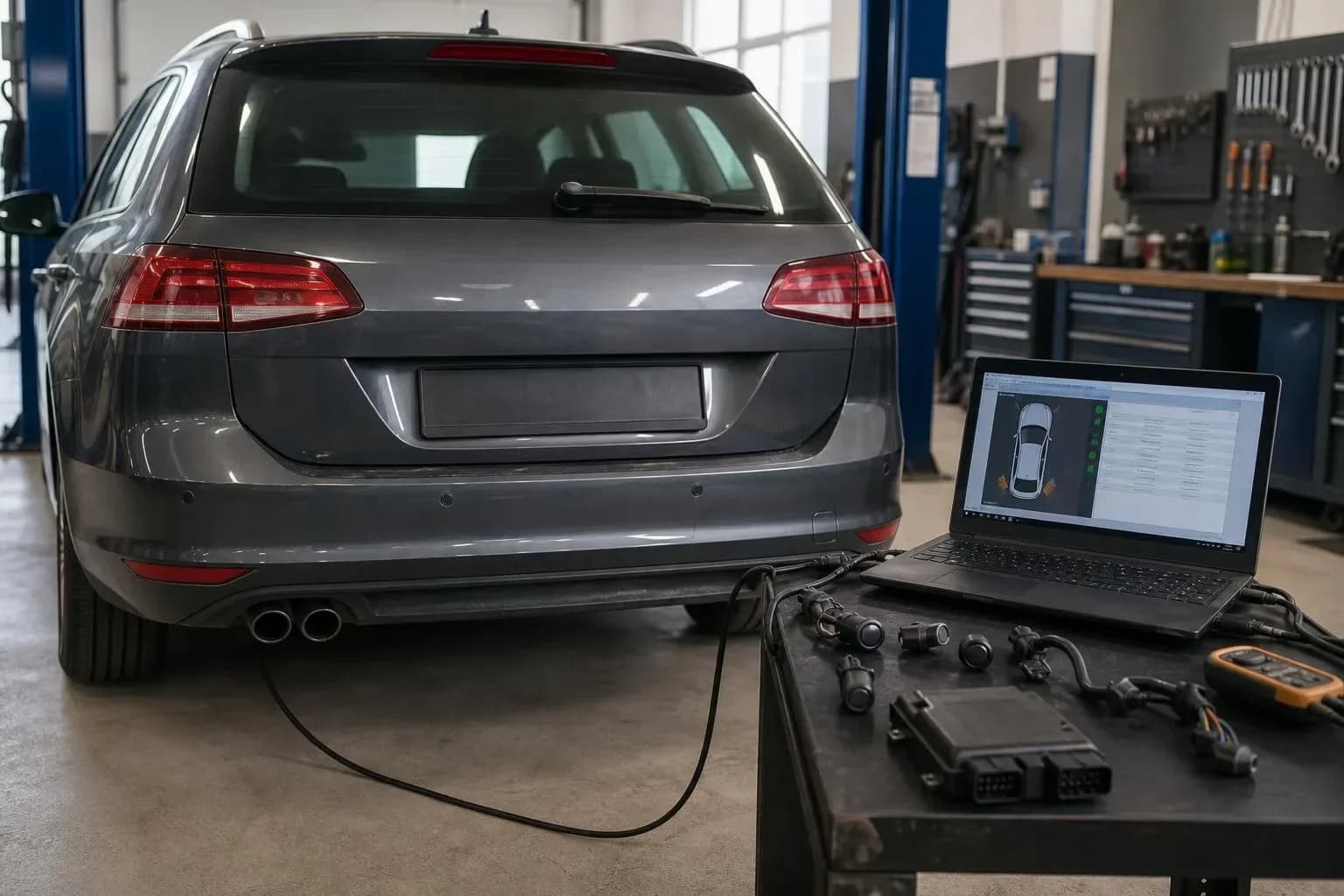
A parking sensor false alarm is often caused by dirt, water or ice, but a recurring signal may require PDC system diagnostics.
If coolant is disappearing from a VW Transporter T6 without an obvious leak, don't assume the worst, but don't ignore the symptom. Coolant can be lost via hoses, the thermostat housing, the water pump or a leak around the EGR and intake. The most important thing is to check for leaks and operating temperature before the vehicle overheats.
If a car jerks during acceleration, it usually means an interruption in smooth power delivery: an issue with ignition, fuel, air, sensors or the drivetrain. A short, gentle drive may still be possible, but strong jerks, a flashing Check Engine light or loss of power require prompt diagnostics.
A visual check in the car park is a good start, but usually not enough to make a safe decision when buying a used car. You may spot repair marks, worn tyres, leaks or worrying warning lights, but many faults appear only during a test drive, computer diagnostics and inspection from underneath.
If the air conditioning (AC) cools poorly or has stopped, first check the symptoms: is the vent airflow normal, does it change when AC is on, and are there unpleasant smells or odd fan behaviour…
Imagine your car could say:
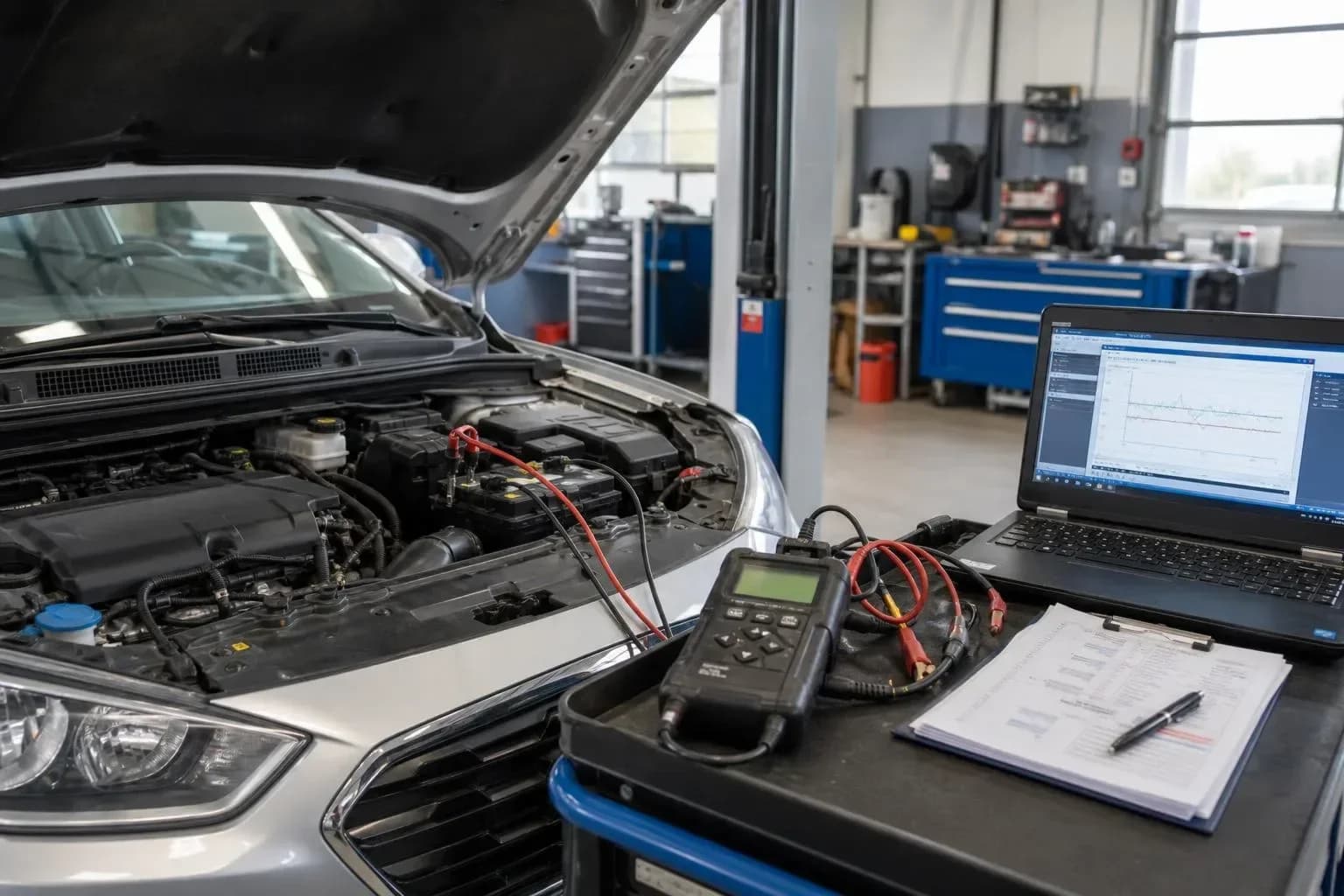
Many drivers think computer diagnostics is connecting a tester, reading a fault code and clearing it. In practice, that's only the beginning.
Need help?
Choose a workshop and describe the symptoms in the booking form.