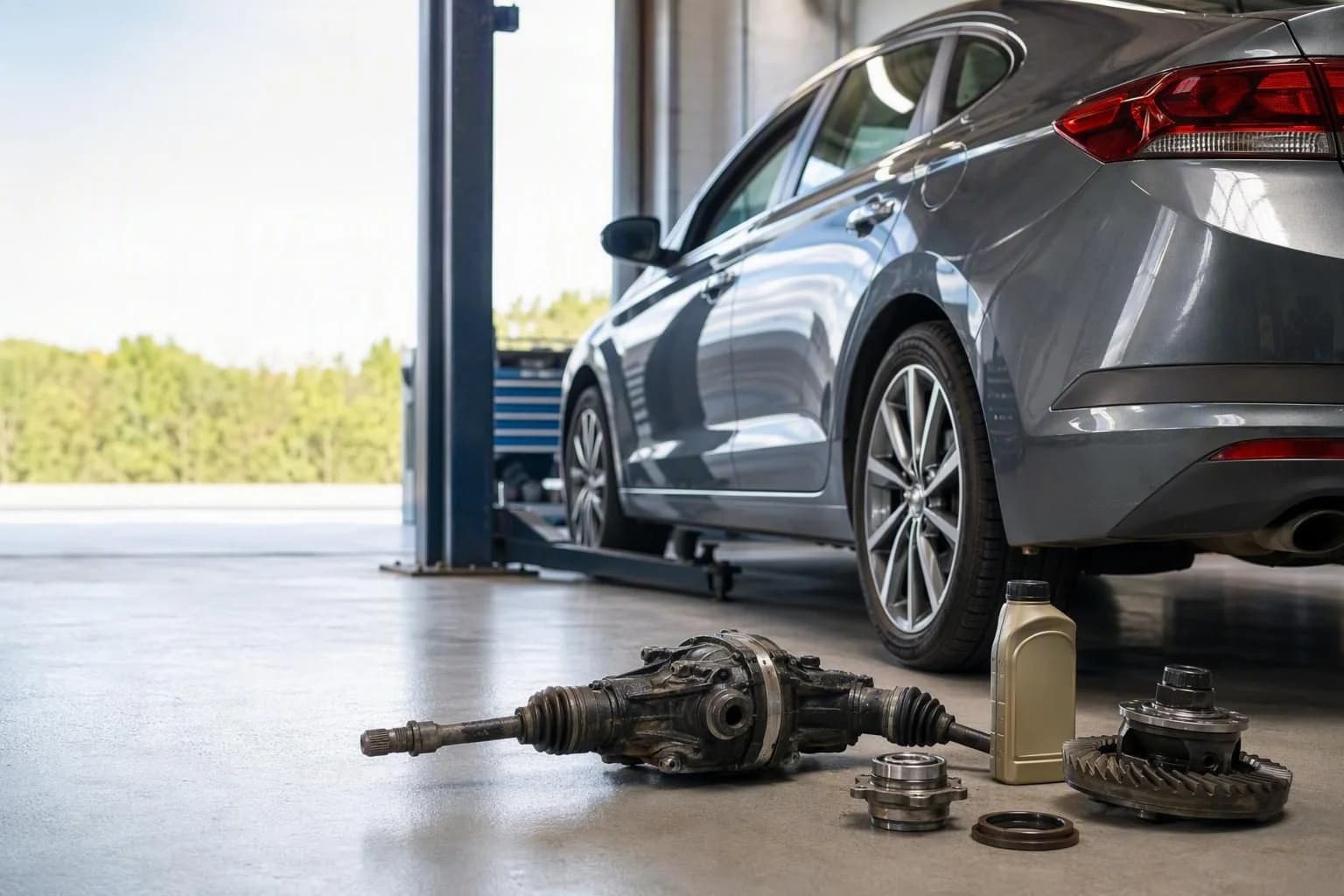
Whine at steady speed - gearbox or differential?
A constant hum or whine at a steady speed often comes from drivetrain components. How to recognise the source, when to stop driving and what the workshop will check?
eCarService · Driver Academy
Learn what a warning light or worrying symptom may mean, what you can check safely and when you should stop driving.
Knowledge base
90
guides to help you prepare for a conversation with a workshop.
Understand first
Learn the possible cause of a symptom
Then decide
Know what to ask during your visit
Choose a location
Book a workshop at the location you prefer
Latest guides
Learn about the possible causes first. Choose a location once you are ready to book a visit.
A constant hum or whine at a steady speed often comes from drivetrain components. How to recognise the source, when to stop driving and what the workshop will check?
After an ECU update new error codes, loss of functions or communication issues can appear. This article explains typical symptoms, possible causes, what to check before a garage visit and how professional diagnostics proceed.
False braking, failure to detect vehicles or intermittent ACC often relate to the camera, radar or ADAS module calibration. What to check yourself and how professional diagnostics look.
A metallic knock, humming or vibrations from the rear axle when turning can have various causes - from wheel bearings to internal differential damage. We explain the symptoms, when to stop driving and how professional diagnostics work.
Clunks and metallic grinding when changing gears can have many causes - from gearshift mechanism adjustment to worn synchronisers or clutch problems. What to check and when to go to a workshop.
Limp mode limits engine power to protect components. Learn the typical symptoms, possible cause groups, when to stop driving and how professional diagnostics proceed.
If a DSG or S-tronic jerks on take-off, delays engagement of D or R, drags gears, vibrates during manoeuvres or you don't know when the oil was last changed, don't assume a single fault. The same symptom in Audi, Volkswagen, Skoda, Seat or Cupra can have several causes: from oil service to clutches, mechatronics or engine and drive mounts.
If a DSG or S-tronic jerks on take-off, delays shifts, vibrates when manoeuvring or shows a gearbox warning, don’t assume a single cause. In VAG cars the same symptom can come from oil, clutches, mechatronics, mounts, adaptations or even uneven engine running.
If the automatic transmission jerks when moving, during slow manoeuvring or after shifting from P to D or R, don't assume a single cause. A light single jerk can result from operating conditions, but repeated knocks, slip, a transmission warning, limp mode, a fluid leak or an overheat message require diagnostics.
If engine revs rise while the car accelerates poorly, it usually means a slipping clutch or a problem transferring drive. A short, calm trip to a workshop may be possible, but further driving under load can quickly worsen the fault and increase the repair scope.
If you wonder whether it’s already time for a transmission oil service and whether you can still drive, the answer is: first you must establish if the symptoms fit an oil problem or rather a hydraulic/electrical fault. Delayed shifts, jerking and “different” behaviour can occur, but just as often the cause is control and sensors…
Need help?
Choose a workshop and describe the symptoms in the booking form.