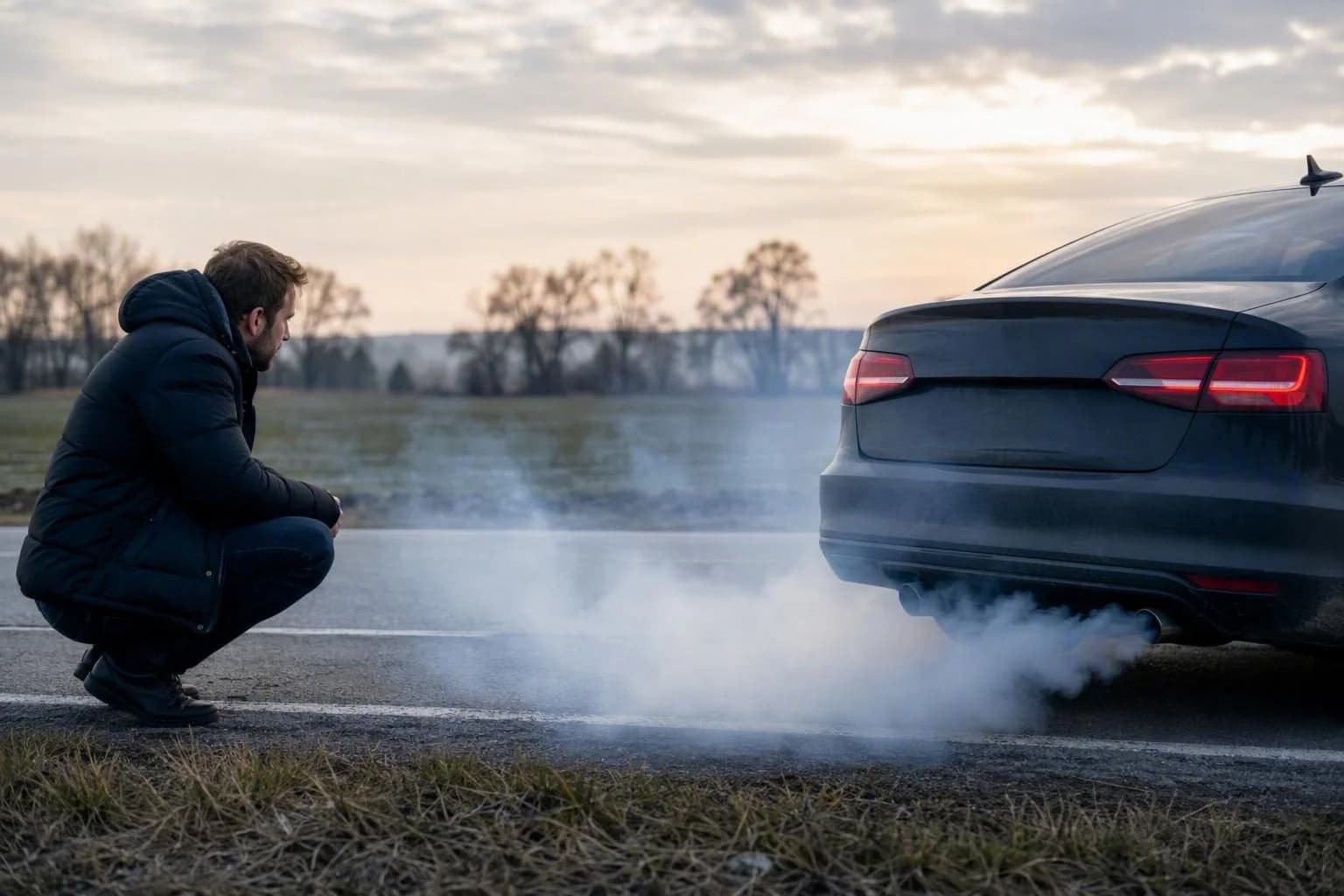
Blue, white or black exhaust smoke — what do the colours mean?
The colour of exhaust smoke helps narrow down the causes: burning oil, burning coolant or excess fuel. The article explains what to observe and what tests a workshop will perform.
eCarService · Driver Academy
Learn what a warning light or worrying symptom may mean, what you can check safely and when you should stop driving.
Knowledge base
83
guides to help you prepare for a conversation with a workshop.
Understand first
Learn the possible cause of a symptom
Then decide
Know what to ask during your visit
Choose a location
Book a workshop at the location you prefer
Latest guides
Learn about the possible causes first. Choose a location once you are ready to book a visit.
The colour of exhaust smoke helps narrow down the causes: burning oil, burning coolant or excess fuel. The article explains what to observe and what tests a workshop will perform.
Steering-wheel vibration or a pulsing brake pedal have several common causes. This text explains the symptoms, possible fault sources and how professional diagnostics are carried out.
A clear increase in fuel use has many causes — from driving style and tyre pressure to sensor faults or fuel system issues. We explain what to check and what information to give the workshop before computer diagnostics.
Limp mode limits engine power to protect components. Learn the typical symptoms, possible cause groups, when to stop driving and how professional diagnostics proceed.
A practical guide: from symptoms through common causes (compressor, belt, electrics, fuel, cooling) to safe checks and workshop diagnostic steps.
A practical guide on what to do before a workshop visit to shorten diagnostic time and increase the chances of correctly identifying the cause of a recurring symptom.
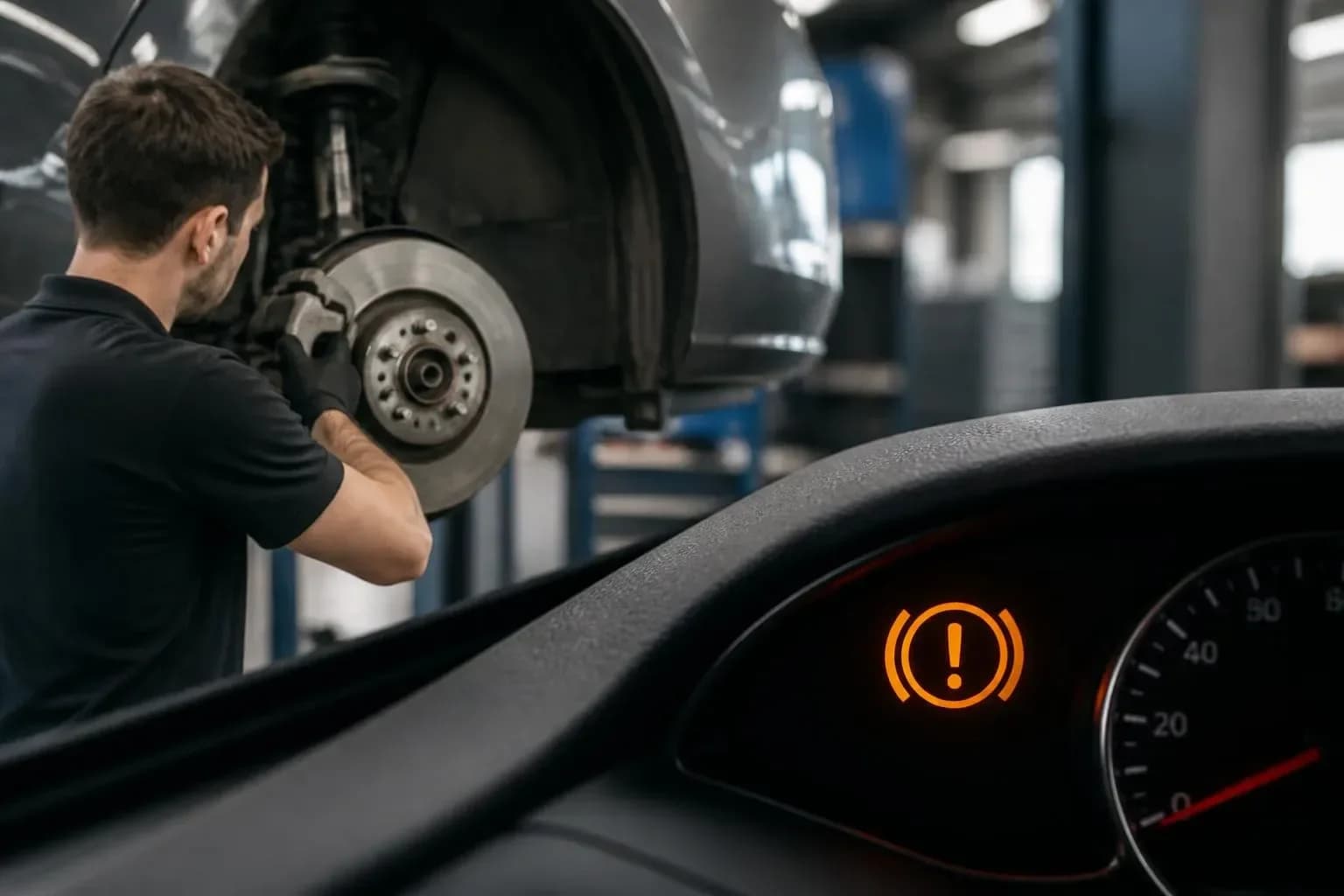
A brake pad wear warning light or a 'service brakes' message usually does not indicate an immediate failure, but signals that the braking system is approaching a service threshold. In practice it is most often worn pads, sometimes a wear sensor, and in some cars a different issue with fluid level, hoses or the warning electronics.
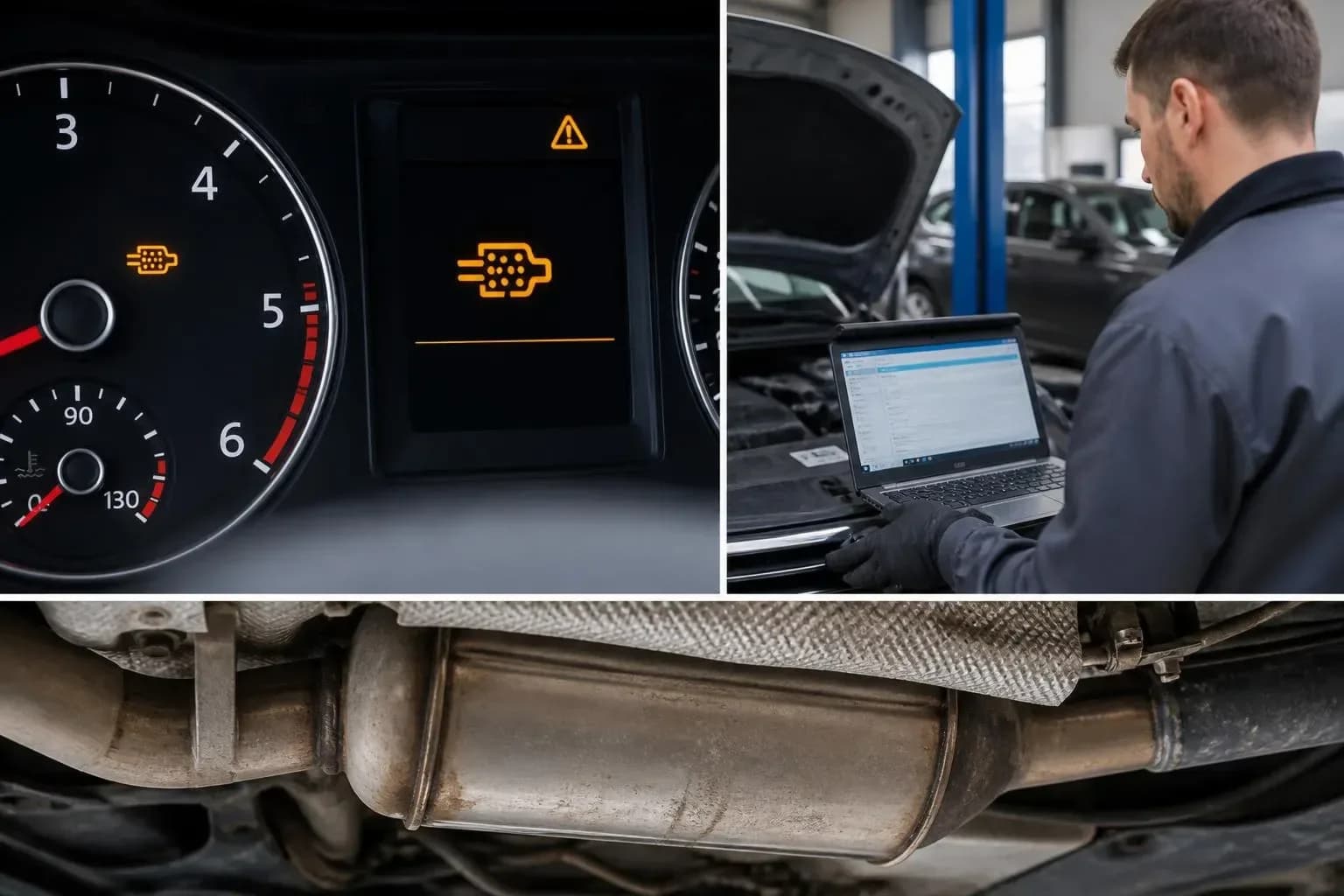
The DPF warning light, a diesel particulate filter message or a noticeable loss of power after many short trips usually mean the filter has started to fill up or that regeneration has failed. The symptom alone does not yet tell whether it’s just the driving style or also the EGR, the injection system, pressure sensors or the exhaust system itself.
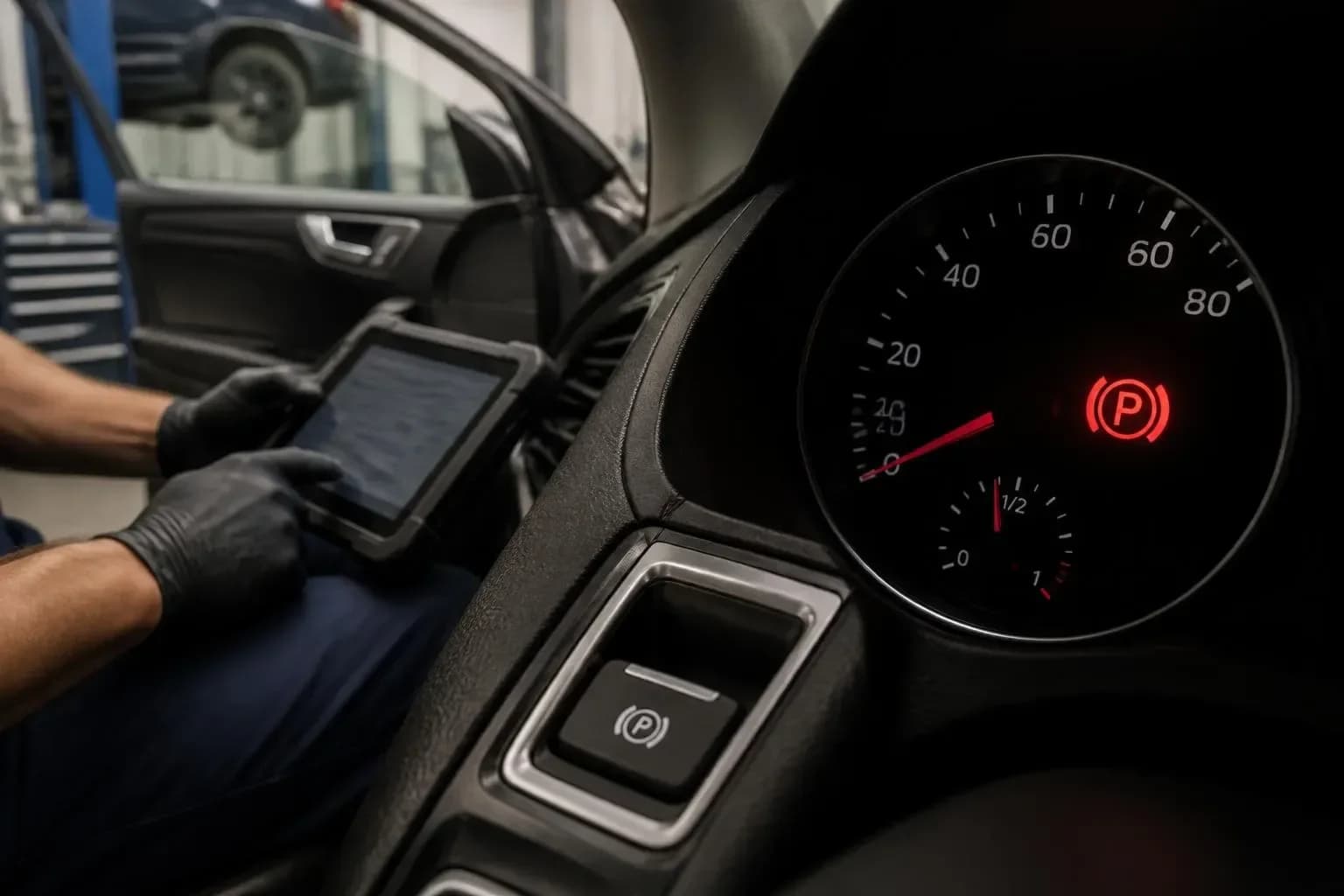
If the handbrake won't hold, sticks or the EPB warning light is on, don't assume a single fault. On cars with an electric parking brake the issue can be the switch, power supply or control unit, or calipers, actuators at the wheels, or the mechanical condition of the brakes.
If the brake pedal has become soft, has a longer travel, or requires noticeably more force than usual, don’t assume a single fault straight away. The symptom can be related to vacuum assistance, but also to air in the hydraulic system, a brake fluid leak, a faulty brake servo (booster) or a vacuum pump.
A petrol smell shouldn't be ignored: sometimes it's just transient vapour after refuelling, but it can also signal a fuel leak or a problem with the EVAP system. We explain when you can cautiously drive on and when to stop and get a diagnostic check.
The radiator fan running after engine shutdown doesn't always indicate a fault. We explain when it's normal cooling and when it points to a problem with a sensor, relay, coolant or control and requires diagnostics.
Need help?
Choose a workshop and describe the symptoms in the booking form.