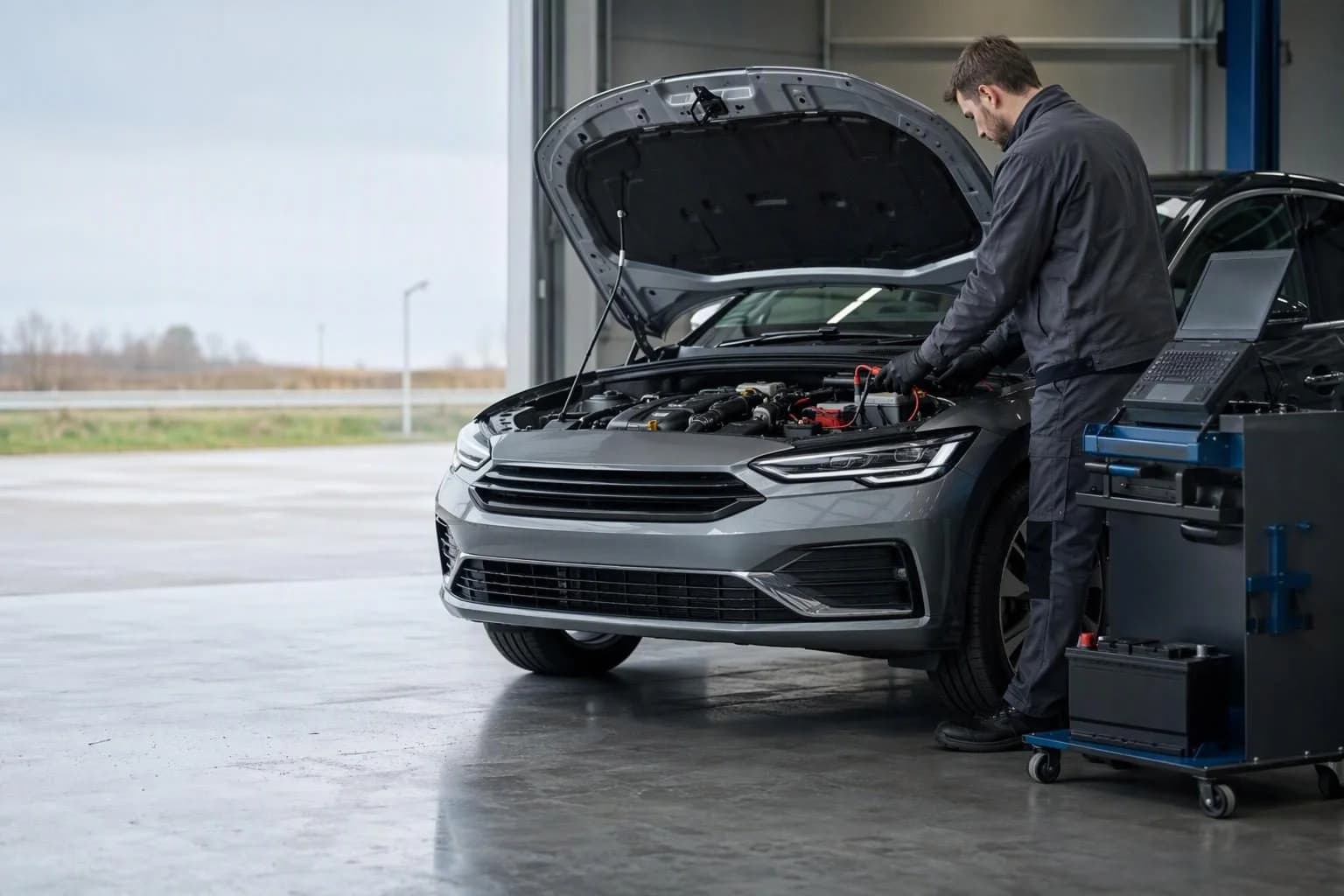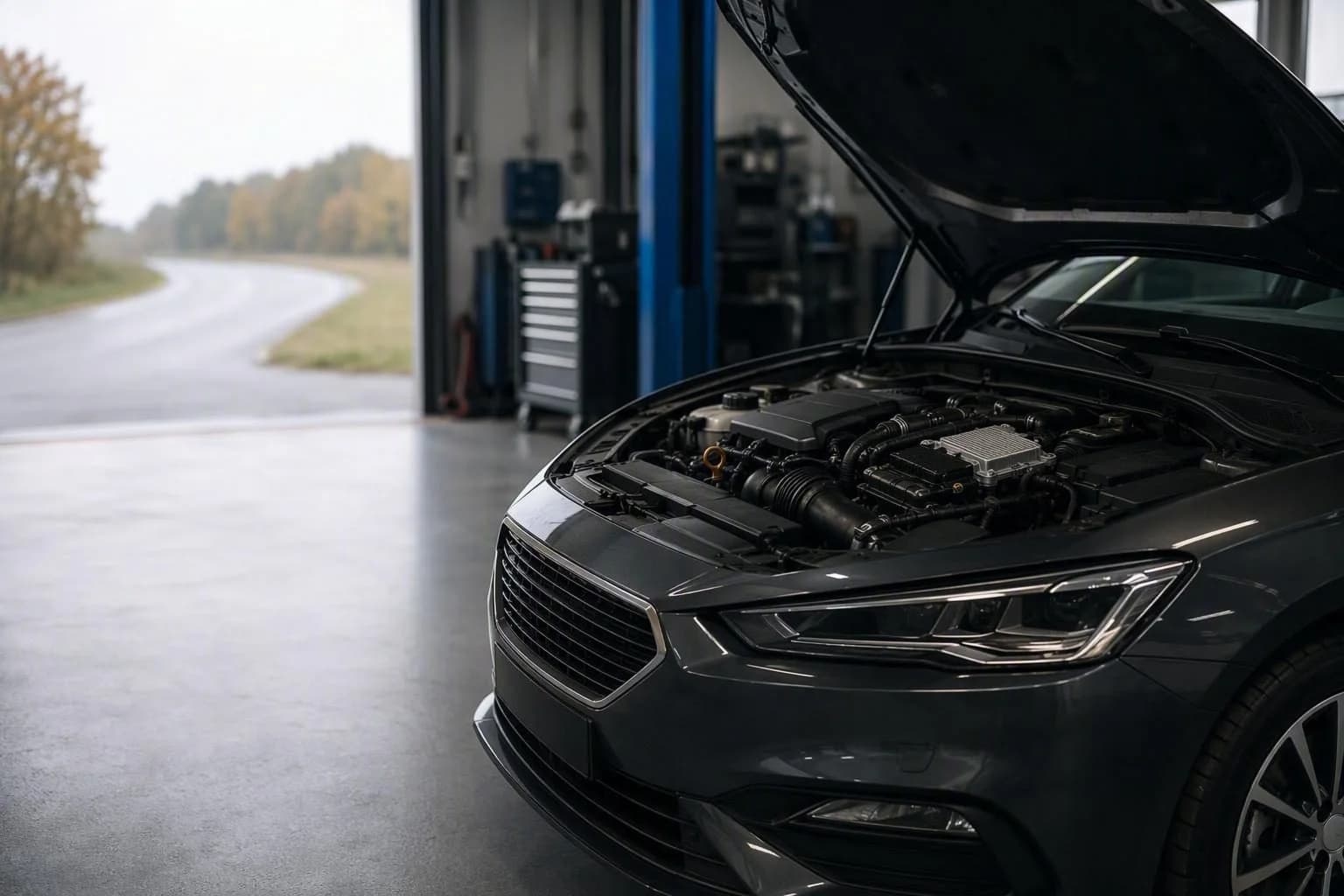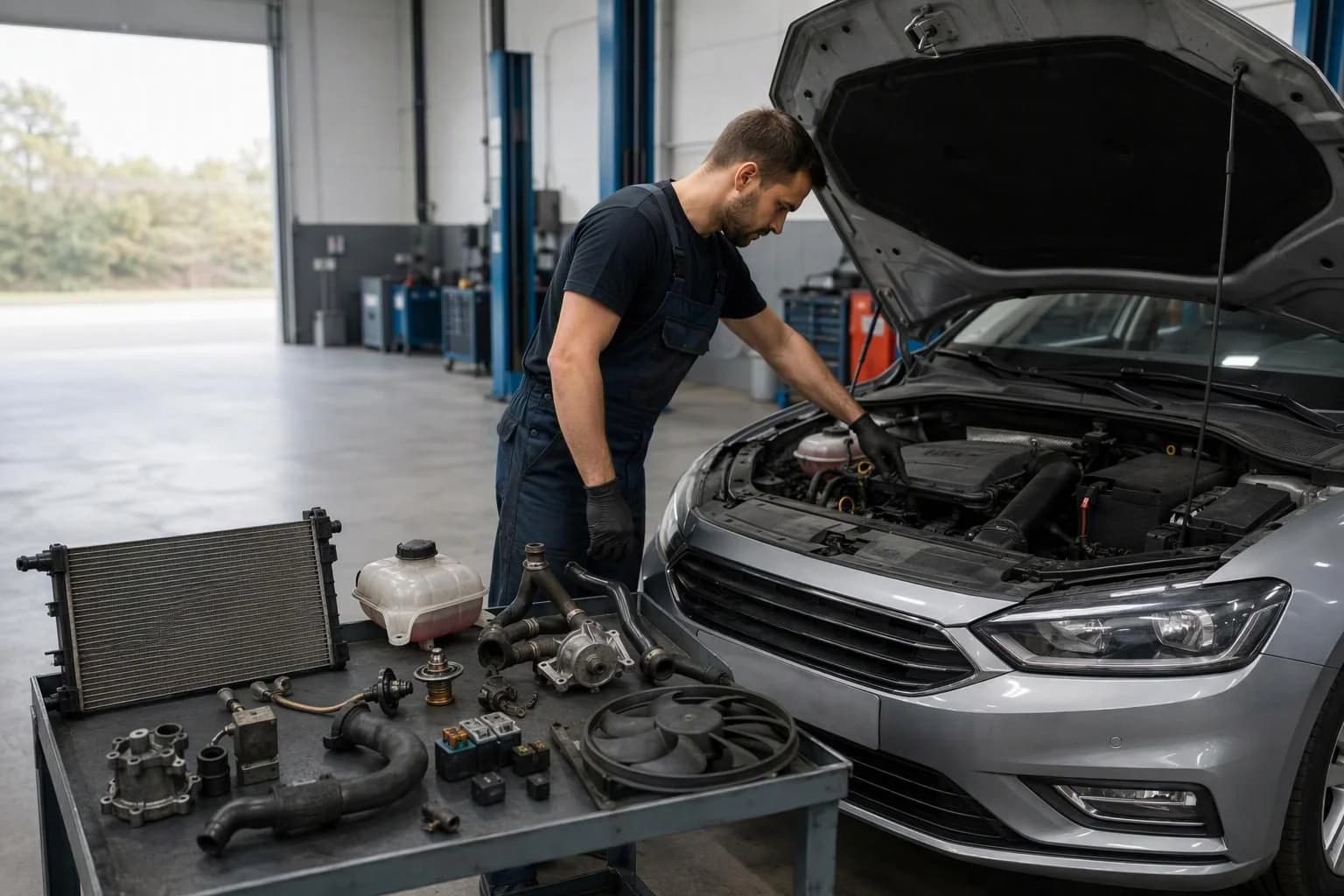
Engine takes a long time to warm up - what to check before the workshop
The temperature gauge stays below normal for a long time or the cabin heats up slowly. Check the symptoms, common cause groups and what the workshop will do during diagnostics.

eCarService · Driver Academy
Learn what a warning light or worrying symptom may mean, what you can check safely and when you should stop driving.
Knowledge base
89
guides to help you prepare for a conversation with a workshop.
Understand first
Learn the possible cause of a symptom
Then decide
Know what to ask during your visit
Choose a location
Book a workshop at the location you prefer
Latest guides
Learn about the possible causes first. Choose a location once you are ready to book a visit.
The temperature gauge stays below normal for a long time or the cabin heats up slowly. Check the symptoms, common cause groups and what the workshop will do during diagnostics.
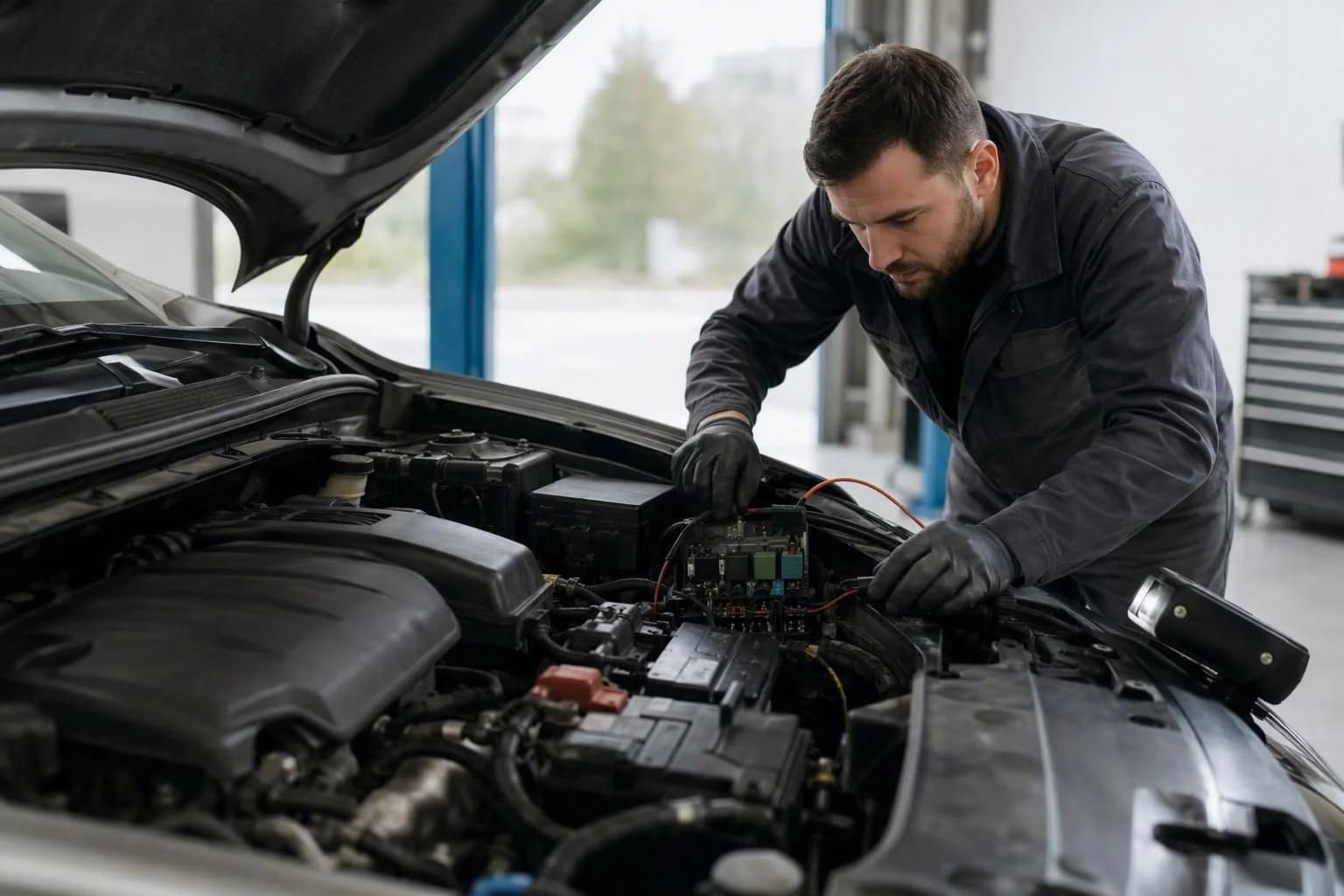
After a battery replacement the car may change behaviour due to loss of adaptations and lack of battery registration. What to check before a workshop visit and when to stop driving.
Problems with starting only when the engine is warm have a few typical causes. This article helps recognise symptoms, collect useful observations and decide if you can drive to the workshop.
Metal flakes in oil can be normal wear or a sign of a serious fault. The article explains causes, when to stop driving and how workshop diagnostics proceed.
A brake fluid leak is a serious fault. We explain the symptoms, common leak locations, what you can safely check yourself and how diagnostics are carried out in a workshop.
The air conditioning gives cool air while driving, but at standstill the airflow is weak or warm. Causes range from radiator fans to refrigerant loss. What to check and when to go to the workshop.
Flickering lights, blinking warning lamps and random device shutdowns usually point to unstable voltage or intermittent connections. How to identify the cause, when to stop driving and what the workshop will do during diagnostics.
A drop in oil level can come from external leaks, oil burning inside the engine, problems with the crankcase ventilation (PCV) system or the turbo. We explain how to assess the scale of the problem and when to go to a workshop.
An unstable fuel gauge usually means a measurement or electrical connection fault. We explain common causes, what you can safely check and how professional diagnostics are carried out.
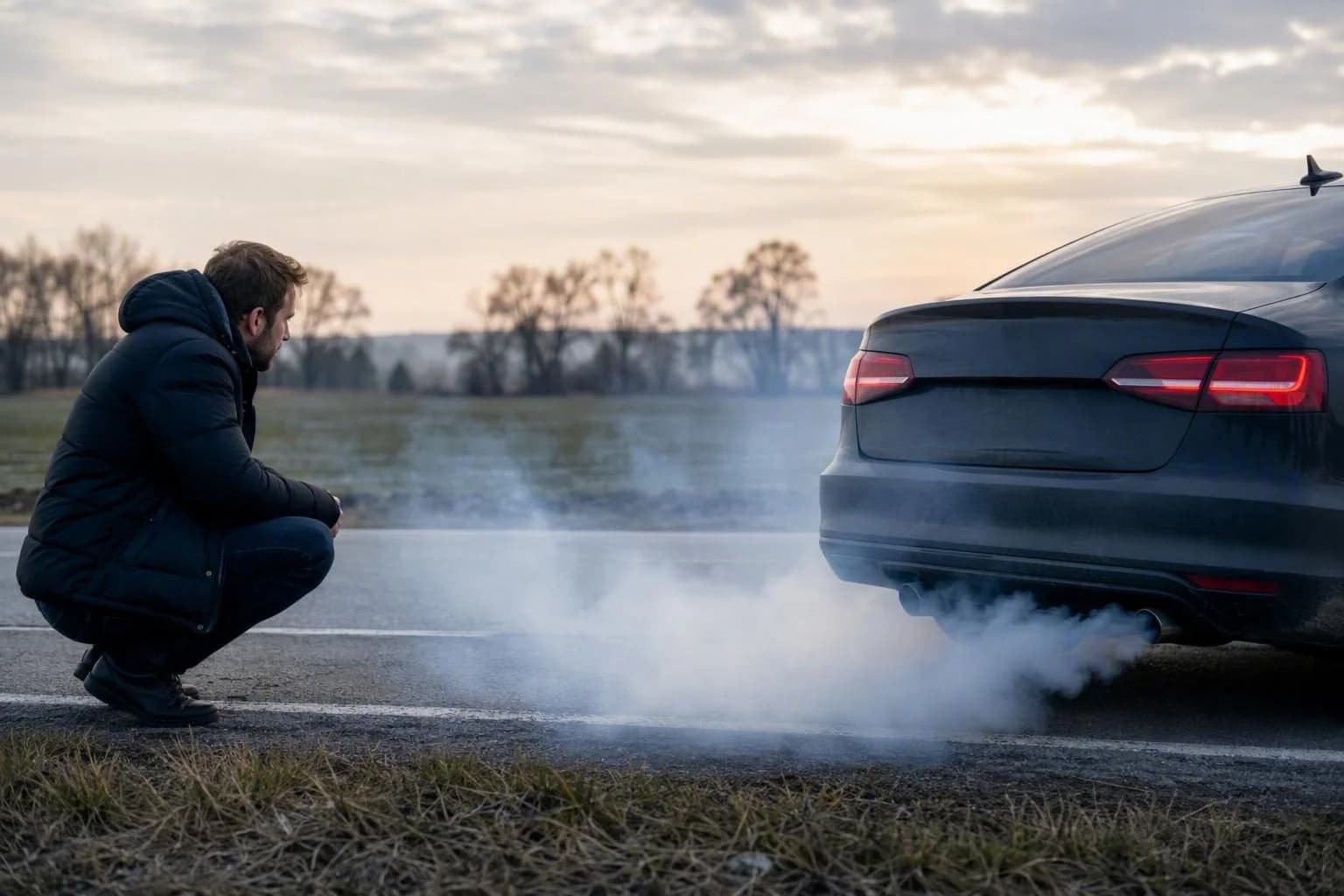
The colour of exhaust smoke helps narrow down the causes: burning oil, burning coolant or excess fuel. The article explains what to observe and what tests a workshop will perform.
A clear increase in fuel use has many causes — from driving style and tyre pressure to sensor faults or fuel system issues. We explain what to check and what information to give the workshop before computer diagnostics.
Limp mode limits engine power to protect components. Learn the typical symptoms, possible cause groups, when to stop driving and how professional diagnostics proceed.
Need help?
Choose a workshop and describe the symptoms in the booking form.